
TSS Software for Freight Forwarders, Hauliers & Traders: How Manual Filing Slows Your Operations
- John Hall
- Customs Specialist at iCustoms.ai
Every GB to NI movement needs its declarations in place before the goods can move smoothly. When those declarations are keyed by hand into the TSS portal, the paperwork sets the pace for the whole operation: trucks wait for data, teams stay late at month-end, and growth means hiring more people to type.
That pressure lands differently on freight forwarders, hauliers and traders, but the cause is the same. Manual filing turns every shipment into a data-entry task.
This guide explains where manual TSS filing slows each of these businesses down, what TSS declaration software changes, and how to switch from the TSS portal to customs software without disrupting live movements. Throughout, we use iTSS by iCustoms as the example.
Stop re-keying. Start reviewing.
Key takeaways
- Manual filing has hidden costs: re-keying, waiting on paperwork, rework after rejections and peaks that land on the same few people.
- Forwarders, hauliers and traders feel it differently, from client data chaos to ferry cut-offs to supplementary declarations.
- TSS declaration software removes the typing, not the control. iTSS prepares, checks and submits declarations through TSS in around 90 seconds, with your team approving each one.
- Switching is a project, not a leap. Prepare your data, test with real documents, run iTSS alongside the TSS portal, then widen.
- You keep TSS. There’s no need to deregister, and most teams file their first iTSS declaration within a week.
How manual TSS filing slows your operations
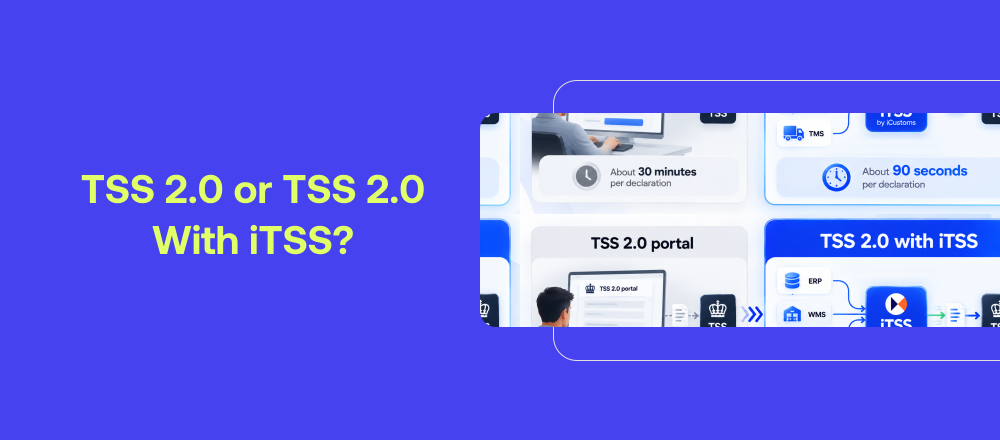
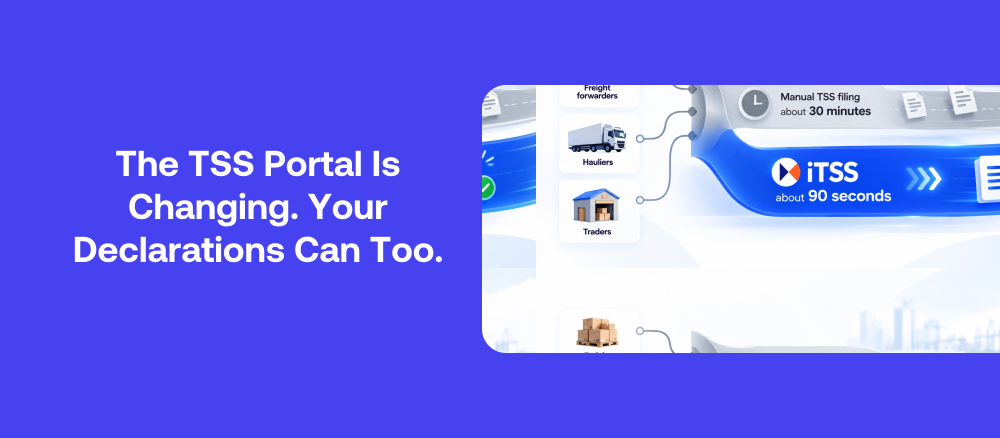
The TSS portal is free, and for occasional movements it does the job. The cost of manual filing only becomes visible as volumes grow. iCustoms benchmarks a manually keyed TSS declaration at around 30 minutes, against around 90 seconds in iTSS. At 200 declarations a month, that’s roughly 100 hours of keying versus 5.
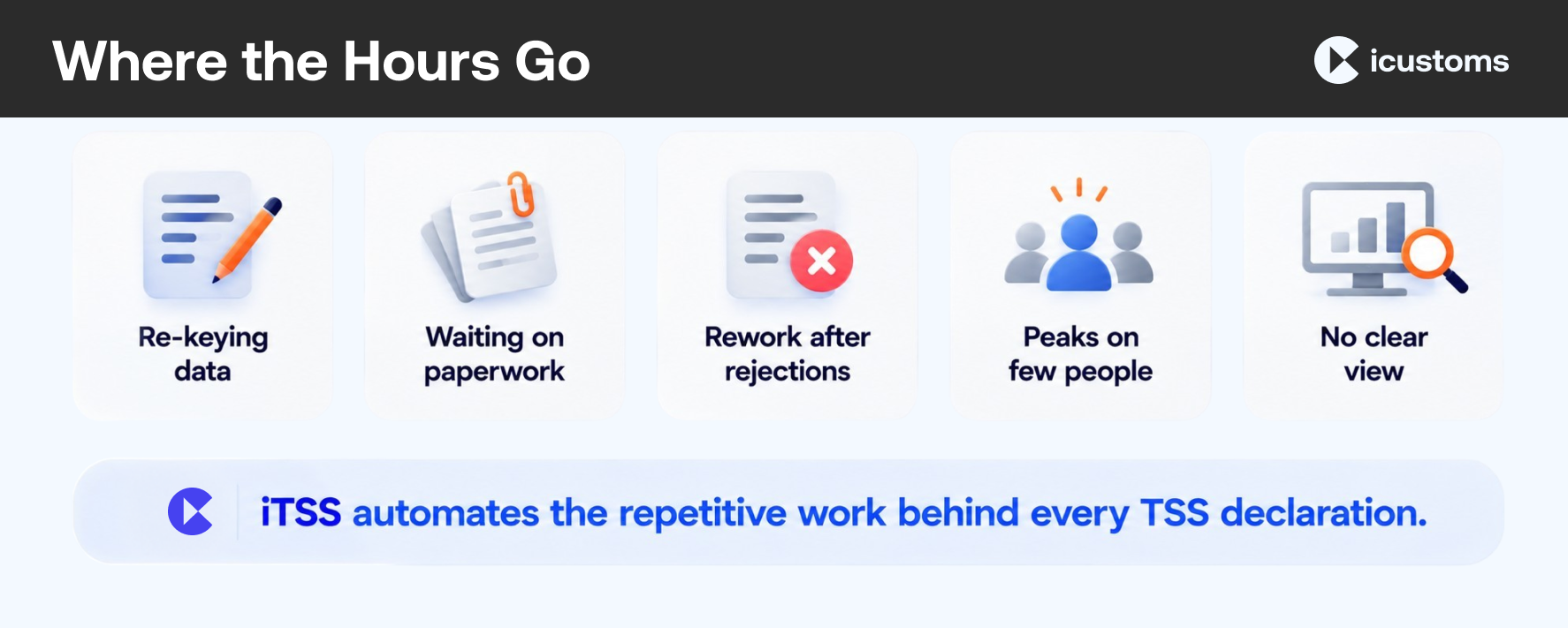
The time shows up in five places:
- Re-keying data you already have. Parties, goods descriptions, values and weights already sit in invoices, spreadsheets and business systems, then get typed again into the portal.
- Waiting on paperwork. A declaration can’t be finished until the last document arrives, so one late invoice holds up a movement.
- Rework. A wrong commodity code or a weight that doesn’t match the packing list comes back for correction, often when the team has moved on.
- Peaks on the same people. Busy sailings and the monthly supplementary declaration cycle fall on the few people who know the portal best.
- No clear view. It’s hard to see what’s filed, what’s pending and what needs attention without asking someone.
None of this is a TSS problem. It’s what happens whenever skilled people spend their day typing. And the stakes are high: the Government Digital Service’s alpha assessment of the new TSS describes the service as underpinning most GB to NI freight movements and “critical to maintaining compliant trade flows”.
Where it hurts most: forwarders, hauliers and traders
Freight forwarders
Forwarders handle many clients, each with its own document formats, product ranges and habits. Manual filing means every new client adds keying hours, and every busy week adds overtime. Margins stay flat because headcount grows with shipment count. Intermediaries matter to TSS too: the GDS assessment names customs intermediaries alongside traders as core users of the service.
With iTSS: documents from any client are read by AI, structured into declarations and checked before submission, so your team reviews instead of retypes. iTSS connects with 200+ systems, including ERP, WMS, carrier APIs and spreadsheets. For intermediary-specific rules, see our guide to TSS software for freight forwarders.
Hauliers and road carriers
For hauliers, the movement doesn’t wait for the paperwork. Safety and security data and movement details need to be right before goods travel, often from incomplete customer paperwork arriving close to departure. Every minute spent keying is a minute closer to a missed cut-off.
With iTSS: data is captured from documents in seconds, and built-in validation shows what’s missing before submission, so gaps surface while there’s still time to fix them.
Traders and importers
Traders know their products best, but still re-key the same product data, codes and values shipment after shipment, then keep supplementary declarations up to date on top.
With iTSS: iDP reads commercial invoices, iClassification suggests HS codes with up to 99% accuracy, and data mirroring with CDS and Ireland’s AIS and AES means one entry per shipment instead of two. Real-time dashboards and a full audit trail show exactly where every declaration stands.
What TSS declaration software changes
TSS declaration software prepares, checks and submits declarations, so your team’s job moves from typing to approving. TSS still handles the declaration process. iTSS prepares, checks and submits.
Accuracy is a shared goal. HMRC lists “increasing the accuracy of submissions” among the aims of the new TSS platform, and iTSS supports the same aim before your data ever reaches TSS, by validating every field and flagging anything that needs attention.
| Step | Manual TSS portal | With iTSS |
|---|---|---|
| Getting data in | Typed from the invoice, field by field | iDP and iMagic read invoices, photos and CSV files and fill the declaration |
| Building the declaration | Several screens | One page with every field, built for keyboard entry |
| Commodity codes | Looked up by hand | AI-assisted classification at up to 99% accuracy |
| Checking | Spotted by eye, or after a rejection | Every field validated before submission, including Windsor Framework checks |
| Approval | Often none, under time pressure |
Comparison based on the iTSS product page. For the full eight-step walkthrough, see our guide to the TSS portal in 2026.
Your first iTSS declaration could be live within a week. Book your iTSS demo and bring a real invoice.
Switching from the TSS portal to iTSS declaration software: a practical migration guide
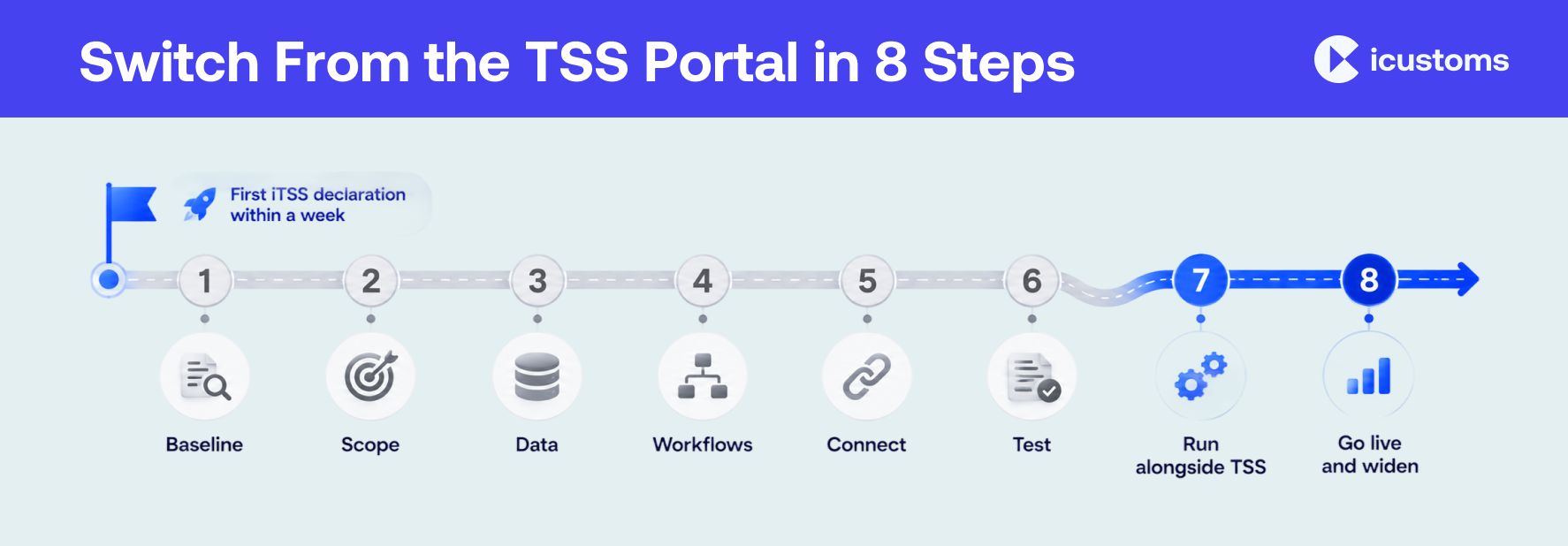
The biggest worry about switching is disruption. A careful switch avoids it, because you never have to turn the TSS portal off. Here’s how to move from manual portal filing to iTSS in eight steps.
1. Record your baseline
Before anything changes, measure today: declarations per month, average minutes per declaration, how often submissions come back and who does the work. This is how you’ll prove the switch worked.
2. Choose where to start
Pick one route, customer or product range with steady volume and familiar goods. Starting narrow keeps the first weeks calm and gives your team quick wins.
3. Prepare your data
Clean data makes everything faster. Gather your regular parties, product descriptions, commodity codes and a set of real invoices and packing lists, including the messy ones. Our guide to TSS data validation explains what good data looks like.
4. Map your user workflows
Decide who uploads documents, who reviews flagged items and who approves submissions. Agree how exceptions are handled, so nothing waits for “whoever is free”.
5. Connect your data sources
Start with uploads: PDFs, photos and CSV files work from day one. Connect ERP, WMS or other systems once the basics run smoothly. Most iTSS teams file their first declaration within a week of signing up, with full ERP or WMS integration usually following in the weeks after.
6. Test with real documents
Run your real invoices through iTSS, including the awkward ones. Check the extracted data, suggested codes and validation flags against what your team would have filed.
7. Run iTSS alongside the TSS portal
Keep the TSS portal as your fallback while iTSS handles the chosen route. There’s no need to deregister from TSS, and many businesses keep it in place for good. Compare results against your baseline as you go.
8. Train, go live and widen
Train the people who upload, review and approve, then move more routes and customers across as confidence grows. Keep measuring, so every step is backed by your own numbers.
Your switching checklist
| Stage | Who’s involved | Done when |
|---|---|---|
| Baseline | Operations lead | You know your declarations per month, minutes per declaration and rejection rate |
| Scope | Operations and customs leads | One route, customer or product range is chosen |
| Data | Customs team | Parties, product data, codes and sample documents are gathered |
| Workflows | Operations and customs leads | Upload, review, approval and exception owners are agreed |
| Connections | IT and iCustoms | Uploads work, and system connections are planned |
| Testing | Customs team | Real documents produce declarations your team would sign off |
| Parallel running | Whole team | iTSS handles the first route with the TSS portal as fallback |
| Go-live | Whole team | More routes move across, with results tracked against the baseline |
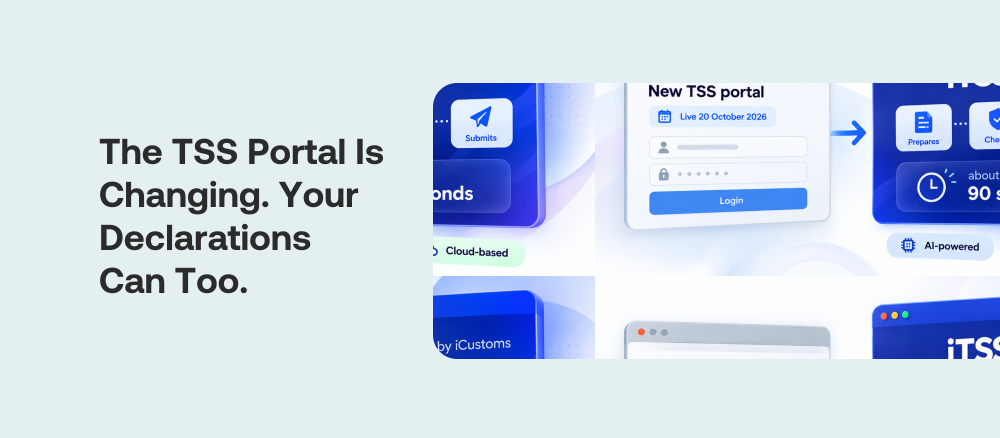
Timing tip: the new TSS platform, built on ERMIS and rated Green in its GDS alpha assessment, goes live on 20 October 2026, and every user needs a new TSS login anyway. If your team is retraining on a new portal, it’s the natural moment to switch how declarations get done.
Common switching worries, answered
“TSS is free. Why pay for software?” Manual filing costs more than you think: staff time, repeated effort and a greater risk of errors. iTSS is priced by declaration volume for businesses of every size, while iCustoms reports up to 50% reduction in time and cost.
“Will it work with our systems?” iTSS connects with 200+ systems, and uploads work from day one while deeper connections are set up.
“Do we lose TSS?” No. TSS stays free and available, and you can keep the portal as a fallback.
“Will my team cope?” iTSS keeps every field on one page, and AI does the typing. Your team does what it’s best at: checking and approving.
“Is now the right time?” With TSS moving to a new platform on 20 October 2026, your team is learning new screens anyway. Learn once, and learn the faster way.
Why iTSS is the TSS declaration software built for your operation
iTSS by iCustoms is a cloud-based SaaS product powered by the latest AI. There’s nothing to install or maintain: iCustoms runs the platform, the AI, updates and integrations, and your team focuses on getting declarations out quickly.
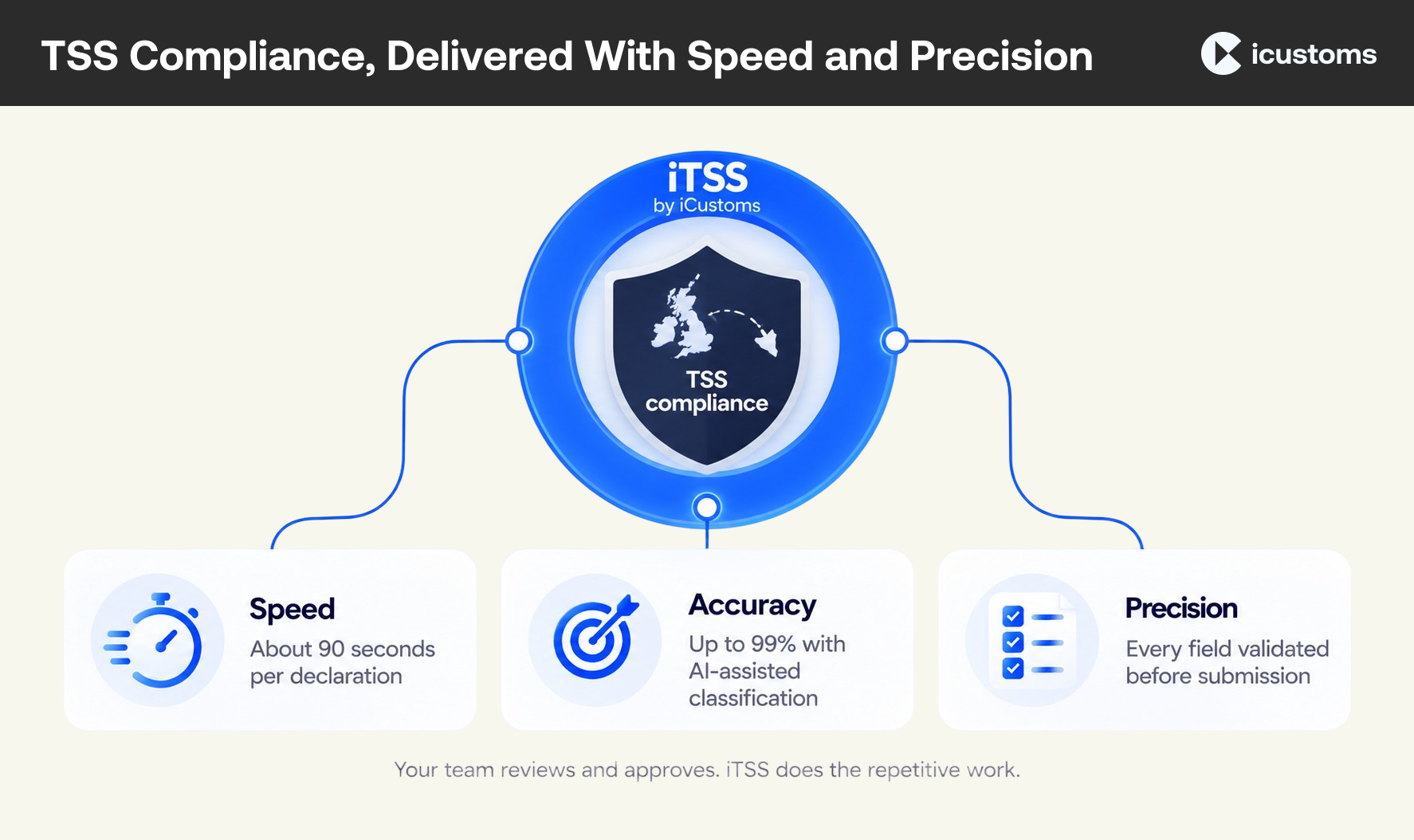
- Around 90 seconds per declaration on average, against around 30 minutes keyed by hand
- Up to 99% accuracy with AI-assisted classification and compliance checks
- Up to 50% reduction in time and cost
- 200+ system connections, plus data mirroring with CDS and Ireland’s AIS and AES
- The same speed at 10 declarations or 10,000
- Team review, real-time dashboards and a full audit trail
- Works with TSS, with no need to deregister
- ISO 27001:2022, ISO 9001:2015 and Cyber Essentials certified, and recognised by HMRC and Irish Revenue
Manual filing is slowing you down. Take a faster lane. Book your iTSS demo and see your own invoice become a TSS declaration, or explore iTSS.
Frequently Asked Questions
What is TSS declaration software?
TSS declaration software prepares, checks and submits customs declarations for goods moving between Great Britain and Northern Ireland. Tools like iTSS use AI to read documents, build declarations, suggest commodity codes and validate data, while your team approves each submission.
How does manual TSS filing slow operations?
It turns every shipment into a data-entry task. Teams re-key data they already hold, wait on paperwork, fix rejections after the fact and absorb peaks with overtime.
Can freight forwarders, hauliers and traders all use iTSS?
Yes. iTSS is built for customs agents, traders, carriers and postal operators across every industry, and is priced by declaration volume for businesses of every size.
How do I switch from the TSS portal to customs software?
Record a baseline, start with one route, prepare your data, agree who reviews and approves, test with real documents, then run iTSS alongside the TSS portal before widening.
How long does it take to switch to iTSS?
Most teams file their first declaration through iTSS within a week of signing up. Full ERP or WMS integration usually follows in the weeks after.
Do I need to stop using the TSS portal?
No. TSS stays free and there's no need to deregister. Many businesses keep the TSS portal as a fallback while filing most of their volume through iTSS.
You may also like:
Still Filing TSS Declarations Manually?

Stop re-entering shipment data and simplify GB-to-NI customs declarations. Let iTSS automate data.
Subscribe to our Newsletter
About iCustoms
iCustoms is an all-in-one solution helping businesses automate customs processes more efficiently. With AI-powered and machine-learning capabilities, iCustoms is designed to streamline your all customs procedures in a few minutes, cut additional costs and save time.
Ready to Process TSS Declarations Faster?
Turn invoices and shipment documents into prepared customs declarations in around 90 seconds.