
HS Code Extraction Software: How AI Reads and Classifies Tariff Codes from Trade Documents
- John Hall
- Customs Specialist at iCustoms.ai
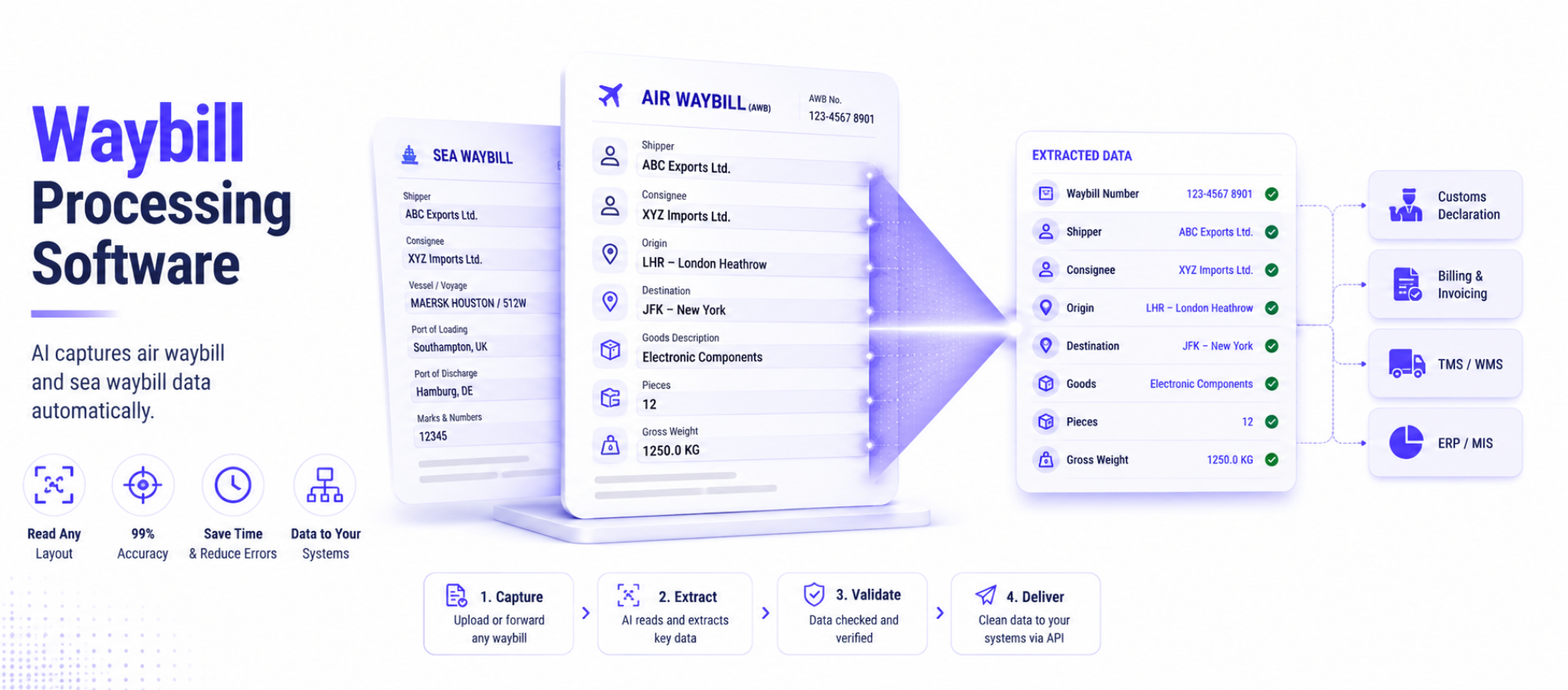
HS code extraction software uses AI to read the goods description on a trade document, then find and validate the correct tariff code for it, with little manual effort. Instead of a person reading an invoice and searching a tariff database line by line, the software captures the document, pulls out each product, and matches it to the right harmonised system code. This guide explains how HS code extraction software works, why it matters for compliance, and what to look for when you choose one.
For customs compliance managers, classification specialists, and brokers, getting the tariff code right is one of the highest-stakes tasks in trade. A wrong code can mean overpaid duty, penalties, or held shipments. Automating it with intelligent document processing removes the slow, error-prone step of keying and looking up codes by hand.
What Is HS Code Extraction Software?
HS code extraction software is a tool that reads product information from trade documents and assigns the matching harmonised system (HS) code. It combines two jobs: pulling the goods description out of the document, and classifying that description into the correct tariff code. Some people call it commodity code extraction software or a tariff classification software; the goal is the same, to turn a written product description into an accurate code.
This is different from a manual HS code lookup. A lookup tool still needs a person to read the invoice, type the product in, and pick a code. HS code software for customs that uses AI does the reading and the matching for you, and it can handle many products at once. If you want the basics of the codes themselves first, see our guide to HS codes on trade documents.
Why Extracting HS Codes From Documents Is Hard
Classifying goods by hand is slow and easy to get wrong, for a few reasons:
- Goods descriptions vary. The same product can be written a dozen ways across suppliers, so matching a description to a code takes judgement.
- Invoices hold many line items. A single commercial invoice can list dozens of products, each needing its own code.
- Codes differ by country. The first six digits are global, but the UK, EU, US, and others add their own digits, so a product needs the right regional code.
- The tariff is huge. There are millions of product variations, and the rules change, so manual lookup rarely scales.
This is exactly the gap automated tariff code extraction closes: it reads the goods description to HS code mapping consistently, at volume, across regions.
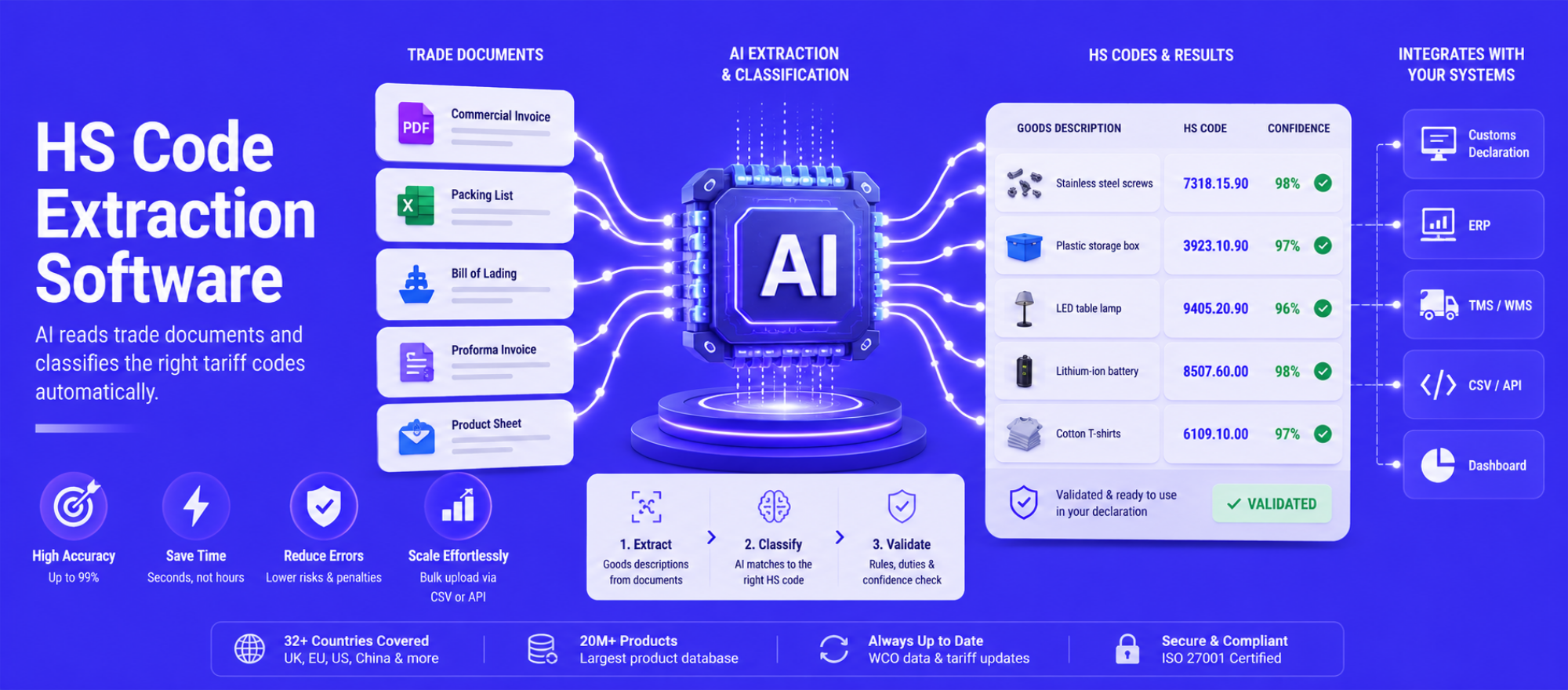
How AI HS Code Extraction Works
Good HS code extraction software follows a clear sequence, blending document AI with classification AI.
- Capture the document. The tool ingests the commercial invoice, packing list, or product sheet in any format, including scans.
- Extract the goods description. HS code data extraction pulls each product line, its description, material, and use from the document.
- Match to a tariff code. AI HS code classification suggests the correct code from a large product database, adapting to the destination country.
- Validate. HS code validation checks the code against current rules and flags anything uncertain for a quick human review.
- Output and file. The verified codes flow into your declaration or systems, ready to submit.
In practice, an AI tariff code reader lets a specialist confirm suggestions rather than research every product from scratch, which is where the time saving comes from.
Manual Lookup vs AI HS Code Extraction
| Factor | Manual Lookup | AI Extraction |
|---|---|---|
| Speed | Minutes per product | Seconds, processing many products at once |
| Consistency | Varies by person and experience | Applies consistent classification rules |
| Volume | Difficult to scale for large product catalogues | Supports bulk uploads via CSV or API |
| Error risk | Higher, increasing the risk of costly mistakes | Lower when combined with automated validation |
| Multi-country support | Requires separate manual research for each jurisdiction | Adapts classifications and tariff data by region |
Want the right HS code every time, straight from your documents?
Watch a demo and see AI extract and classify codes from a real invoice.
What to Look for in HS Code Extraction Software
- High accuracy on your own products, confirmed on a real sample.
- Multi-country coverage, so one tool handles UK, EU, and other markets.
- Bulk classification via CSV or API for large catalogues.
- Built-in HS code validation and confidence scoring.
- Restricted-goods and duty checks alongside the code.
- Integration that pushes codes into your declaration or ERP.
The Benefits of Automating HS Code Extraction
Done well, harmonised system code automation pays back quickly. Teams cut the hours spent on manual classification, reduce the risk of penalties from wrong codes, and clear goods faster because declarations are right first time. It also brings consistency: the same product is classified the same way every time, which matters for audits.
Security and data residency
iCustoms pairs two tools to do this end to end. Its intelligent document processing extracts goods descriptions and line items from your trade documents, and iClassification assigns and validates the HS or HTS code.
The key points for customs teams:
- Coverage: finds HS codes across 32+ countries, including the UK, EU, US, and China, adapting to regional code differences.
- Accuracy: up to 99% accuracy, drawing on a database of more than 20 million products, with codes kept current from World Customs Organisation sources.
- Scale: classify large catalogues at once through bulk upload by CSV or API, and validate against a master list.
- Compliance: checks tax and duty, screens for restricted goods, and cuts classification time and costs by around 50%.
For the wider picture of how each document is read and verified, our guide to finding the right HS code is a useful companion read.
Frequently Asked Questions
What is HS code extraction software?
It is AI software that reads product descriptions from trade documents and assigns the matching harmonised system code, combining document data extraction with tariff classification so you do not look codes up by hand.
Can AI extract HS codes from a commercial invoice?
Yes. The software reads each line on the invoice, pulls the goods description, and suggests the correct HS code from a commercial invoice automatically, then validates it before use.
How accurate is AI HS code classification?
Leading tools reach around 99% accuracy on suitable data, but a human review step should confirm any code the system flags as uncertain. Always test on your own products.
Does it work across different countries?
Yes. Good tariff classification software adapts to regional code differences, covering markets such as the UK, EU, US, and China from one platform.
Is this the same as a manual HS code lookup?
No. HS code lookup automation removes the manual search: the software reads the document and proposes the code, rather than a person typing each product into a database.
How does iCustoms classify goods?
iCustoms uses intelligent document processing to extract descriptions from documents and iClassification to assign and validate HS or HTS codes across 32+ countries with up to 99% accuracy.
You may also like:
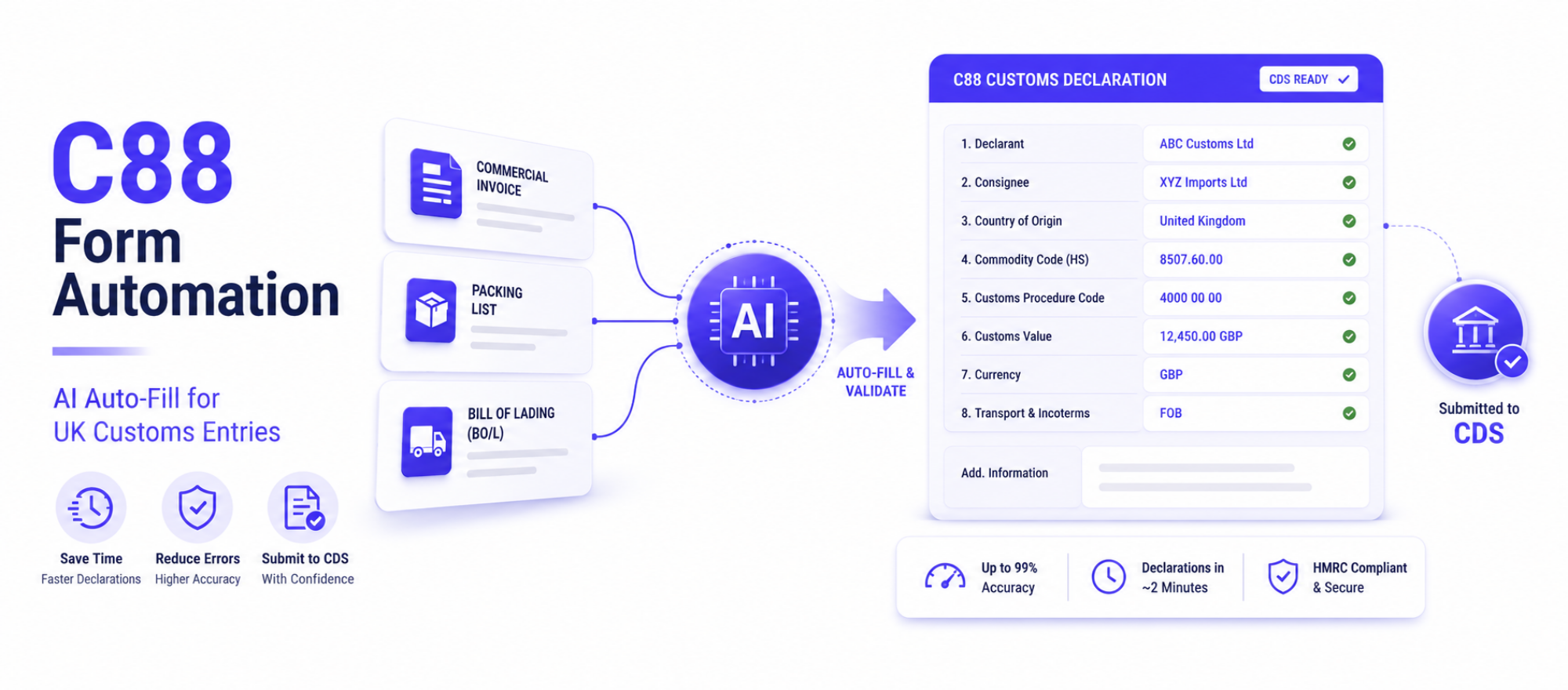
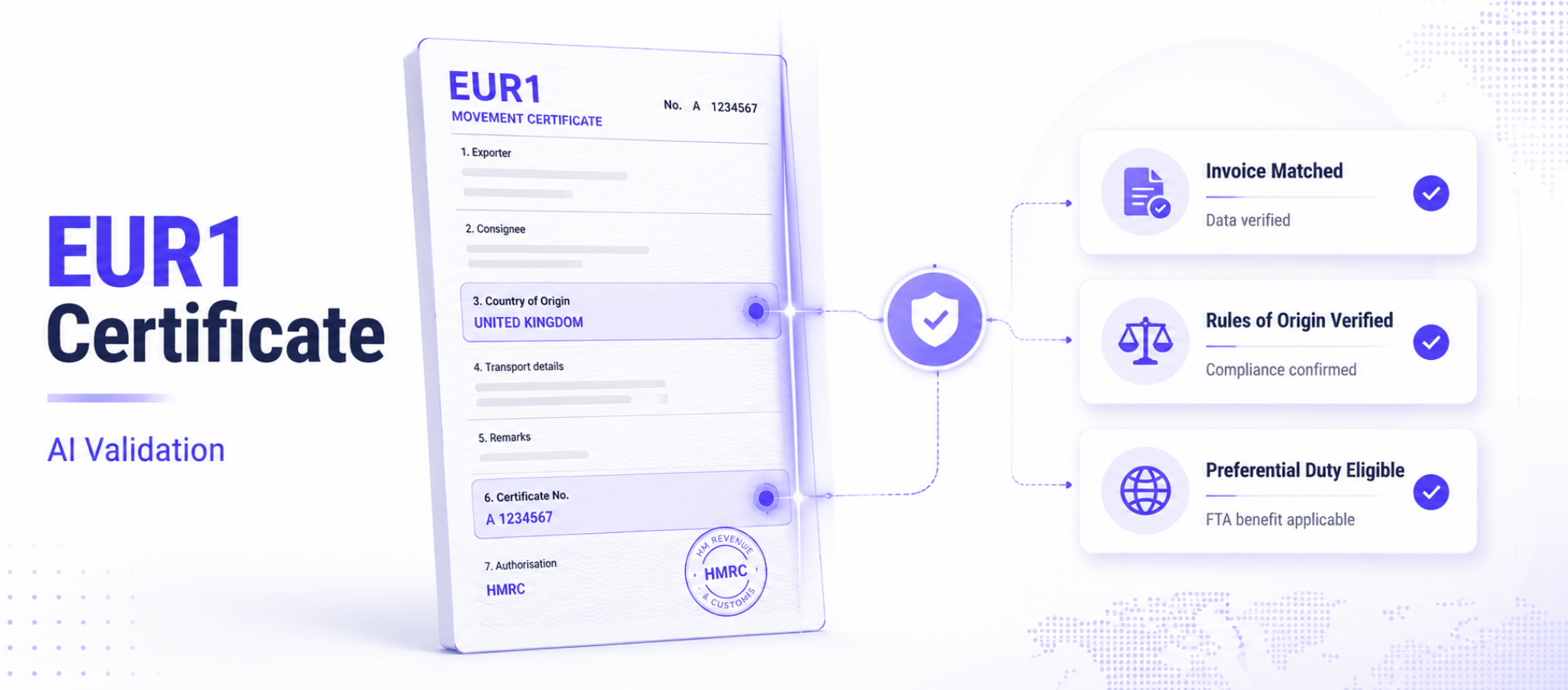
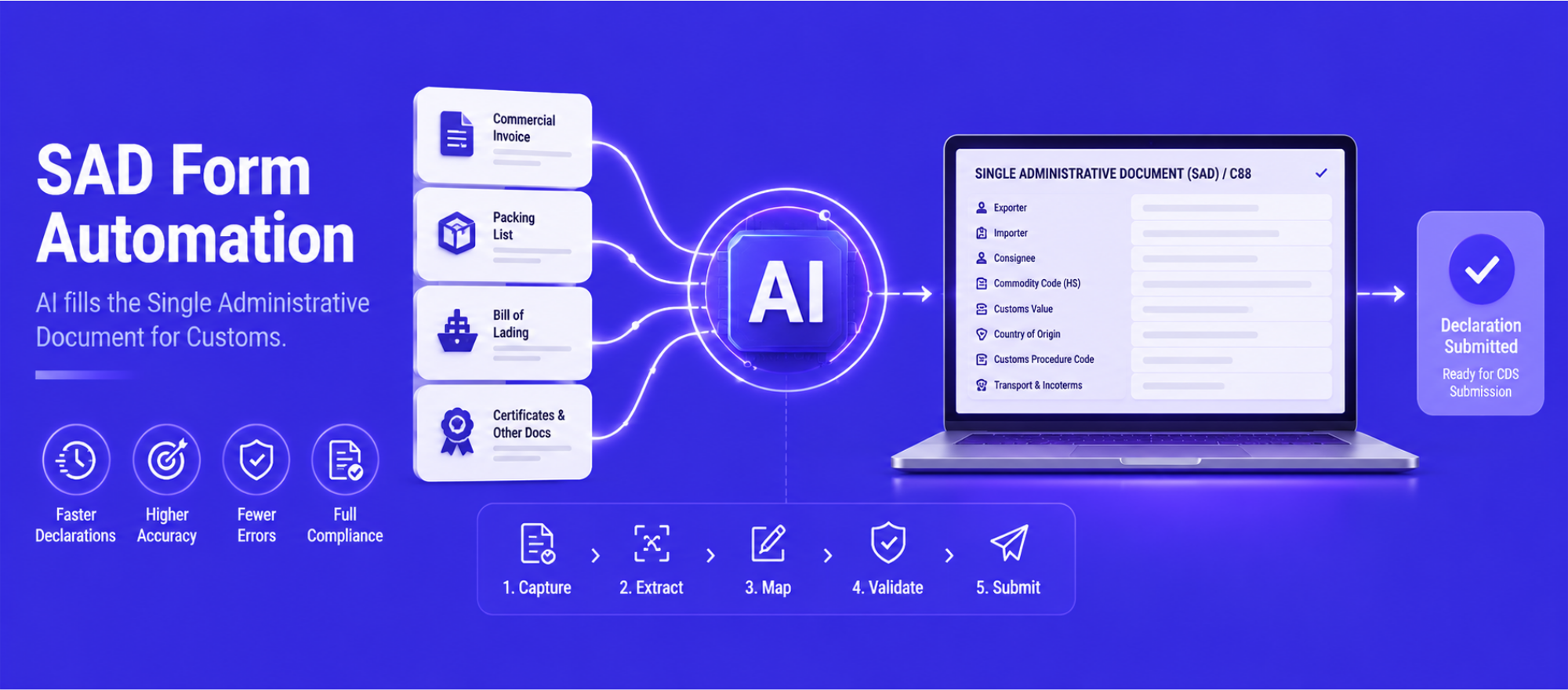
Struggling to Extract, Catagorise & Validate Your Documents?

Capture & Upload Data in Seconds with AI & Machine Learning
Subscribe to our Newsletter
About iCustoms
iCustoms is an all-in-one solution helping businesses automate customs processes more efficiently. With AI-powered and machine-learning capabilities, iCustoms is designed to streamline your all customs procedures in a few minutes, cut additional costs and save time.
Struggling to Extract, Catagorise & Validate Your Documents?
Capture & Upload Data in Seconds with AI & Machine Learning