
EUDR Traceability for Cocoa and Coffee: Getting Plot Data from Smallholders
- John Hall
- Customs Specialist at iCustoms.ai
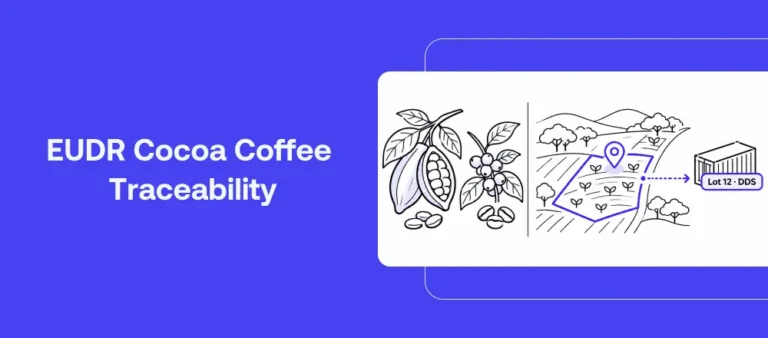
EUDR traceability for cocoa and coffee means linking every lot you place on the EU market to the plots of land where it was grown. For each shipment, you need the geolocation of every plot, the production period, the quantity, the country, legality evidence, and proof that the beans were never mixed with beans of unknown origin. Most of that data sits with cooperatives, exporters and smallholders at origin, which is why collecting it is the real work. Large and medium companies apply the rules from 30 December 2026.
EUDR Traceability Requirements: What EU Buyers Need from Origin
| Data | Usually held by | Common gap |
|---|---|---|
| Plot geolocation (points, polygons over 4 ha) | Cooperative field agents, exporters | Missing polygons, too few decimal places |
| Production date or period | Cooperative purchase records | Season given instead of a date range |
| Quantity per lot | Exporter, warehouse | Lot mixed with other suppliers’ beans |
| Legality evidence (land use, labour, permits) | Cooperative, national authorities | No land title, which is not fatal if local law allows the sale |
| Supplier and buyer details | Exporter, importer | Rarely a gap |
Who Is the Operator: Importers, Grinders, Roasters and Chocolate Makers
- Importer of cocoa beans (1801) or green coffee (0901 11): the operator. Files the DDS before release for free circulation.
- Grinder or roaster that imports directly: the operator for the import and, when it sells cocoa butter, powder or roasted coffee, also the first downstream operator in the same legal entity. The Commission’s FAQ confirms it does not then need to pass on the reference for the derived product.
- Roaster or chocolate maker buying in the EU: a downstream operator, because roasting or grinding changes the CN code. It keeps its supplier’s reference and records for five years.
- Trader reselling unchanged: a trader, with record-keeping duties only.
Our EUDR role and deadline check covers each role in full, and our guide to EUDR HS codes explains how a code change sets your role.
Cocoa and Coffee Supply Chain Traceability: Collecting Plot Data from Smallholders
- Map your supply base by cooperative and exporter, ranked by volume.
- Agree the format up front: GeoJSON, points for plots up to four hectares and polygons above, at least six decimal places.
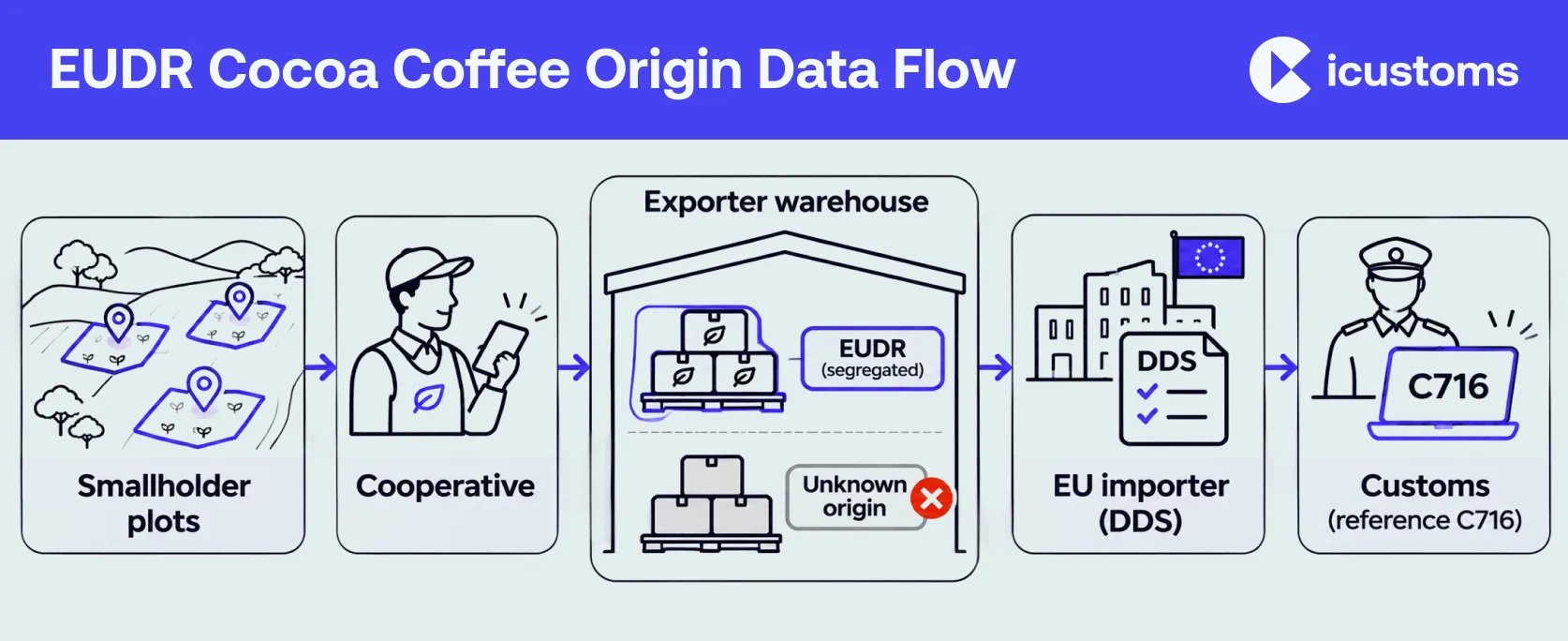
- Let the cooperative collect. Field agents with a phone GPS app can map plots on farm visits. Farmers without land titles can still be geolocated, and no personal data is needed from farmers who are not your direct suppliers.
- Use national systems where they exist. Côte d’Ivoire and Ghana both run national cocoa traceability programmes. You can use the producer’s data, but you stay responsible for its accuracy.
- Validate before the beans ship, not when the container arrives.
- No data, no shipment. If a supplier cannot provide the information, the product cannot be placed on the EU market.
Author’s view · John Hall: start narrow, then widen |
|---|
If I were setting this up for a mid-size importer today, I would not try to map every farm at once. I would start with the two or three cooperatives behind most of the volume, get their plot data clean and validated, and file real statements for those lots first. That gives you a working process before the deadline, and a template the smaller suppliers can follow in the second wave. |
Segregation, Not Mass Balance
The Commission’s FAQ is explicit: mass balance is not allowed. Beans from known, deforestation-free plots cannot be mixed with beans of unknown origin at any step. Full identity preservation is not required, so compliant lots from different known plots can be combined, as long as every plot is declared.
Silos and warehouses need care. If compliant beans from many plots go into one silo, you declare every plot whose beans entered since it was last empty. If the silo is never fully emptied, the FAQ suggests declaring all inputs up to at least 200% of its capacity. For a chocolate bar (1806), due diligence covers the cocoa, not other ingredients such as palm oil.
Author’s view · John Hall: don’t fight the segregation rule |
|---|
Many buyers hoped mass balance would survive the simplification. It did not, and I would plan as if it never will. Segregating EUDR lots at the exporter’s warehouse costs money, but it is cheaper than trying to defend a mixed lot to a competent authority. The practical win is that you do not need single-farm identity preservation, only clean separation from unknown sources. |
Country Notes for Cocoa and Coffee
| Origin | Commodity | EUDR risk category | What it means |
|---|---|---|---|
| Ghana | Cocoa | Low | Simplified due diligence; geolocation still required |
| Vietnam | Coffee | Low | Simplified due diligence; geolocation still required |
| Côte d’Ivoire | Cocoa | Standard | Full risk assessment and mitigation |
| Brazil, Colombia, Honduras, Peru | Coffee | Standard | Full risk assessment and mitigation |
| Ethiopia, Uganda | Coffee | Standard | Full risk assessment and mitigation |
Ratings come from Implementing Regulation (EU) 2025/1093. Authorities check at least 1%, 3% and 9% of operators sourcing from low, standard and high-risk countries each year. Low risk never removes the need for plot geolocation.
Soluble Coffee Joins on 30 December 2027
Delegated Regulation (EU) 2026/2102 adds soluble coffee and coffee extracts (2101 11) to the EUDR from 30 December 2027. Importers of instant coffee become operators for those imports, and EU producers making soluble coffee from green coffee become downstream operators. Plan EUDR coffee traceability for those flows during 2027, not after.
Why EUDR Traceability Is a Data Problem
iCustoms CEO and co-founder Adnan Zaheer put it simply in a recent LinkedIn post: “The hard part of EUDR is the data, not the rule. AI handles the volume. People handle the judgment.”
Author’s view · John Hall: why I agree with Adnan |
|---|
For cocoa and coffee, that line is exactly right. The rules fit on a page; the hard part is thousands of plot records arriving in different formats from cooperatives that are not your employees. Software should take the repetitive checking off people so they can spend time on the judgment calls: a polygon that overlaps forest, a lot with a gap in its paperwork. Looking further ahead, iCustoms already connects its customs platform to Claude through an MCP server, and bringing that conversational way of working to EUDR data is on our roadmap. |

What an EUDR Traceability Solution Should Do for Cocoa and Coffee
Whatever cocoa supply chain traceability software, agriculture traceability software or EUDR traceability app you consider, check that it can:
- Give cooperatives and exporters their own portal to enter plots and lots.
- Validate every point and polygon against the EUDR rules and produce GeoJSON.
- Link each lot to its plots, including silo and warehouse inputs.
- Build a DDS per batch and submit in bulk.
- Retrieve and verify DDS from suppliers who file their own.
- Send each reference to the forwarder before the customs declaration.
Our guide to EUDR software gives the full checklist for choosing the best EUDR compliance tool for supply chain traceability.
How iEUDR by iCustoms Helps
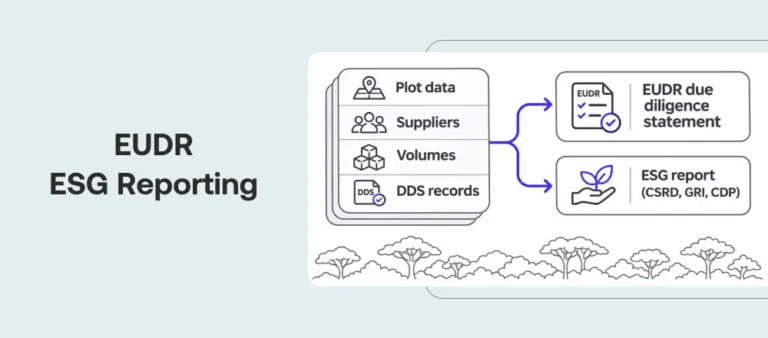
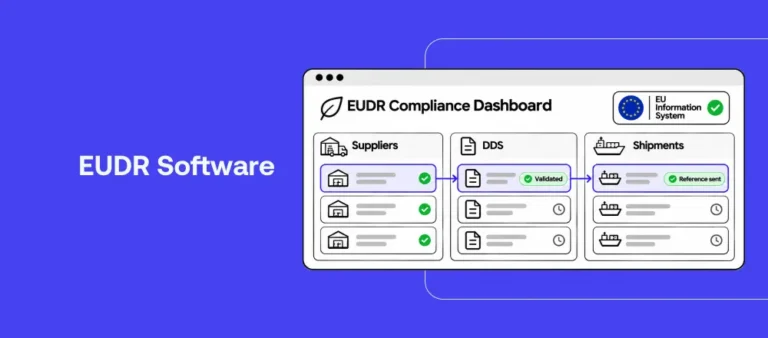
iEUDR by iCustoms is an EUDR traceability solution built for exactly this flow. Cooperatives and exporters, many already onboarded in iEUDR, are checked against official EU TRACES records and enter plots and lots in their own portal, free of charge. Every point and polygon is validated against the EUDR geolocation rules and converted to GeoJSON. Your team approves each submission, iEUDR creates, validates and submits a DDS per batch, singly or in bulk, and supplier statements are retrieved, verified and validated. Each reference reaches your forwarder before they file, with a five-year audit trail. Satellite imagery comparison is planned for the next phase. See the EUDR compliance software page.
For example, a German roaster importing green coffee from 25 cooperatives in Brazil and Honduras can have each cooperative upload its plots once, file one DDS per container lot, and send each reference to its customs agent without retyping.
Frequently Asked Questions
How do cocoa importers comply with the EUDR?
Collect plot geolocation and legality evidence for every lot, keep EUDR beans segregated from unknown sources, assess and mitigate risk, and file a DDS before release for free circulation.
What does EUDR coffee compliance mean for roasters?
If you import green coffee, you are the operator and file the DDS. If you buy green coffee in the EU, roasting changes the CN code, so you are a downstream operator and keep your supplier's reference.
How do you collect geolocation from smallholders?
Usually through cooperative field agents using phone GPS apps, or national traceability systems, in GeoJSON with polygons for plots over four hectares.
Is mass balance allowed under the EUDR?
No. EUDR beans must be segregated from beans of unknown origin at every step, though full single-farm identity preservation is not required.
Do low-risk countries such as Ghana still need geolocation?
Yes. Low risk allows simplified due diligence, but plot geolocation is always required.
You may also like:
Plots in. EUDR-Ready

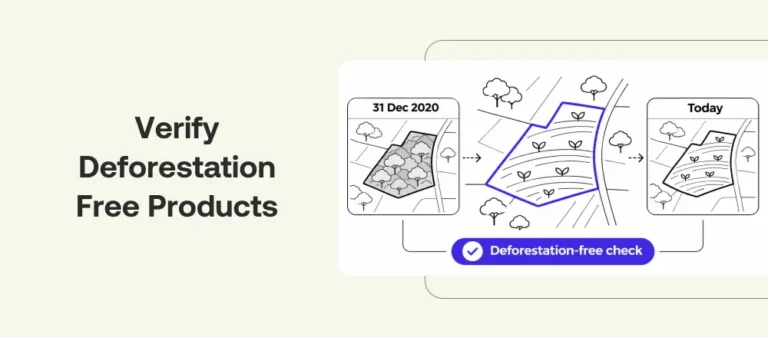
iEUDR validates every point and polygon against the EUDR rules before it reaches your DDS
Subscribe to our Newsletter
About iCustoms
iCustoms is an all-in-one solution helping businesses automate customs processes more efficiently. With AI-powered and machine-learning capabilities, iCustoms is designed to streamline your all customs procedures in a few minutes, cut additional costs and save time.
Satellite checks are coming to iEUDR
Satellite imagery comparison joins iEUDR in the next phase. See the platform today.