
How AI Tools Reduce Financial Burden in Customs Operations
- John Hall
- Customs Specialist at iCustoms.ai
Customs processes have always been a crucial part of global trade. From import declarations to tariff classifications and compliance documentation, every step adds up in time, resources, and risk.
For businesses, managing these tasks manually or using outdated systems can lead to delays, penalties, and overpayments.
This is why more companies are now turning to AI-powered customs solutions from classification engines and document automation systems to modern Customs Declaration Software (CDS) to not just manage these tasks, but to master them, cutting costs and gaining strategic control.
These tools don’t just make customs processes faster; they make them smarter, more accurate, and easier to manage.
In this blog, we’ll explore how intelligent tools can help reduce customs costs.
Role of AI-driven tools in reducing customs costs

Let’s break down how AI tools are helping businesses reduce operating costs:
Accurate HS code classification and duty avoidance
Misclassification of Harmonised System (HS) codes is a prime cause of overpaying duties or triggering audits.
Intelligent tools like iClassification analyse product descriptions, historical customs data, or even images to suggest the most accurate HS codes, reducing expensive misclassifications. That accuracy helps companies avoid unexpected duty charges and compliance penalties in advance.
Intelligent document processing and reduced manual work
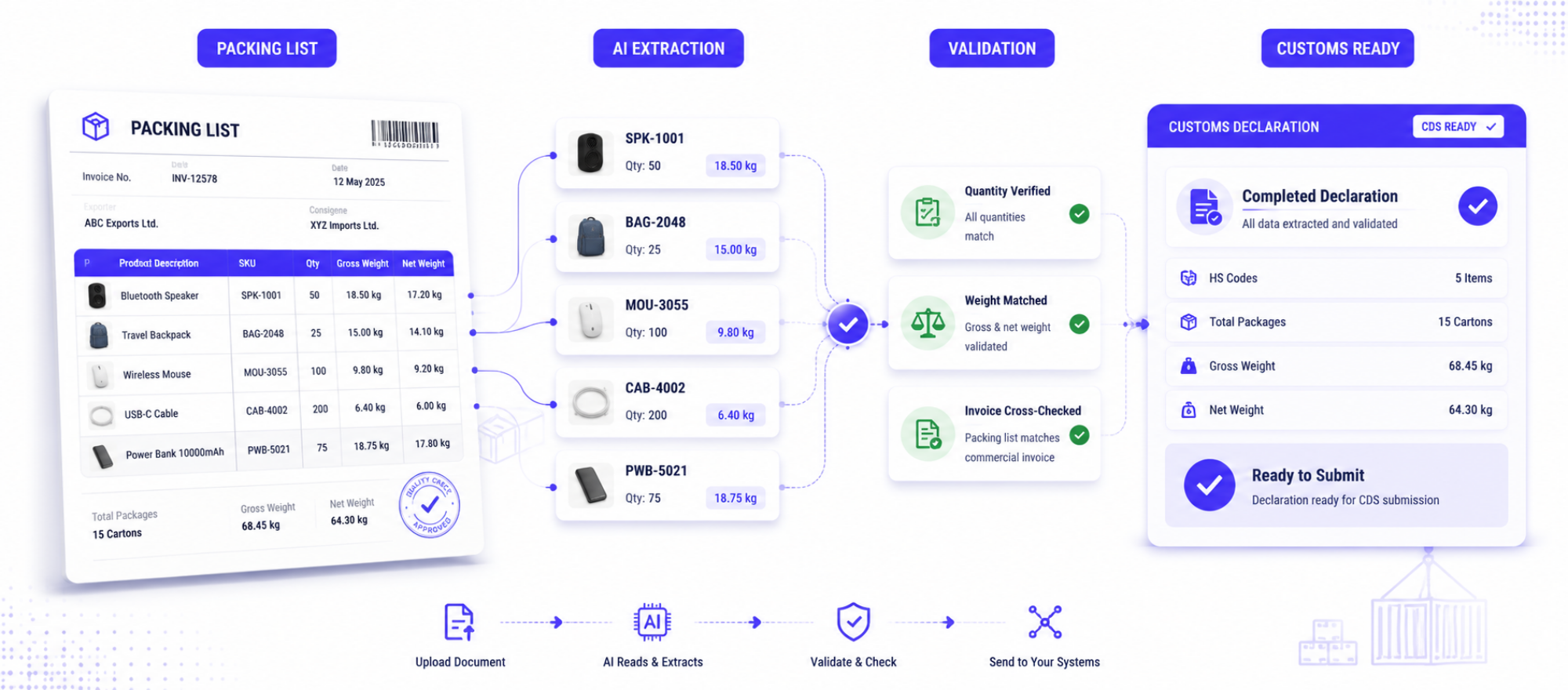
Trade compliance historically involves mountains of paperwork: invoices, packing lists, certificates of origin, bills of lading, license documents, etc. Many of these reside in various formats.
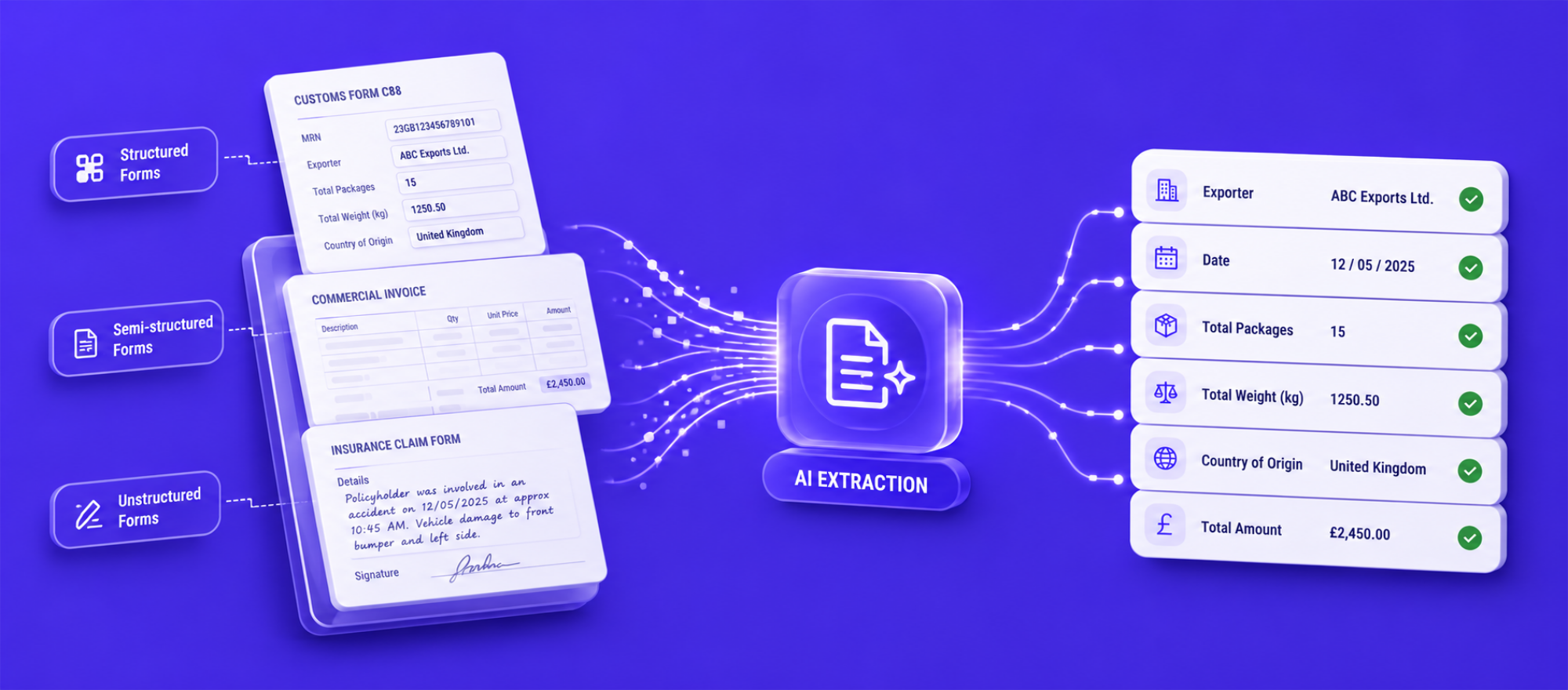
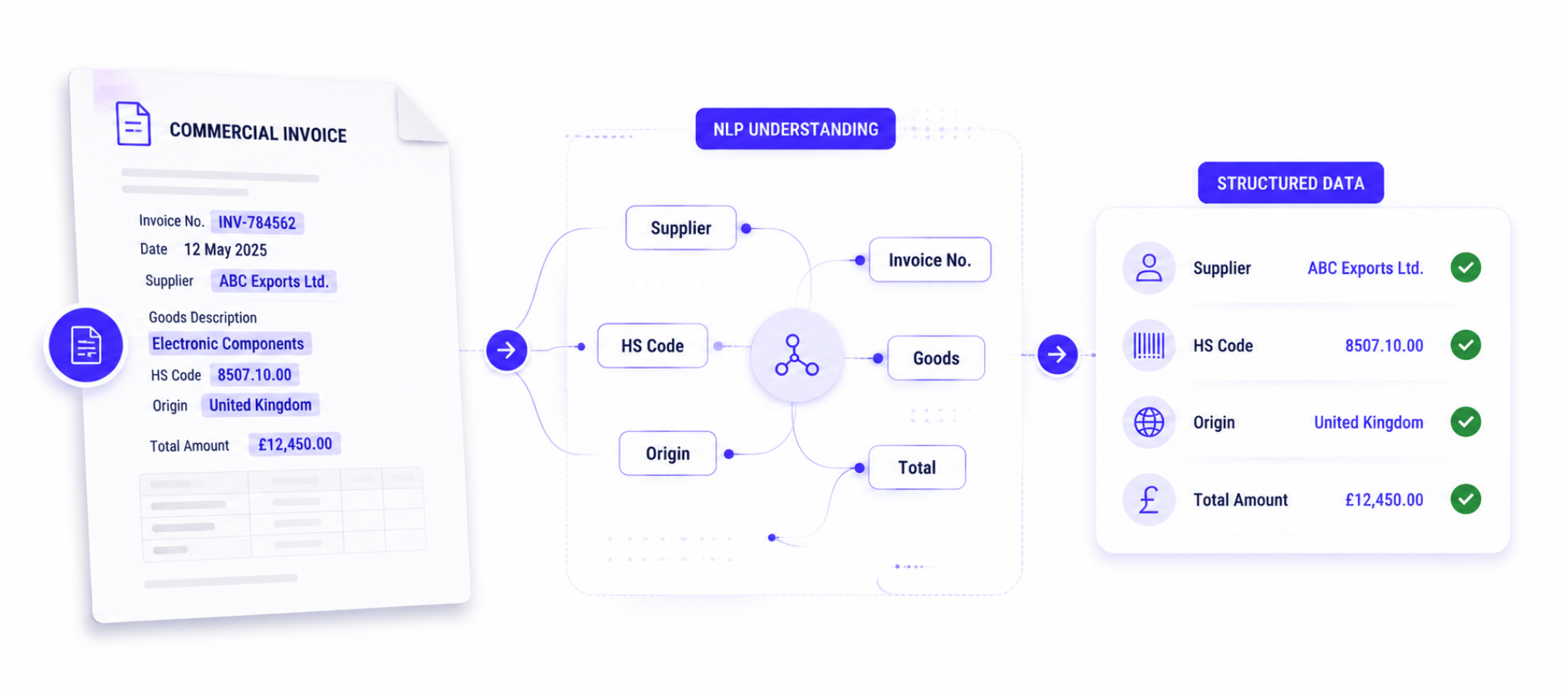
Intelligent automation tools such as IDP, powered by OCR and NLP scans and extract relevant details automatically, cutting manual data‑entry time, reducing errors, and significantly lowering labour costs.
With faster, more reliable intake of data, customs declarations get completed more precisely and quickly, translating into fewer delays and lower storage or demurrage fees at the border.
Businesses that streamline customs document workflow through IDP eliminate the sequential bottlenecks of manual processing — where each document had to be opened, read, re-keyed, and checked individually — replacing that chain with a parallel, automated intake that processes multiple document types simultaneously and routes validated data directly to the declaration fields that need it.
Denied party and watchlist screening
Screening importers, suppliers, or consignees against sanctions and denied‑party lists is an essential compliance step. Manual screening often generates false alerts, wasting compliance team time.
AI‑assisted screening tools, such as iDPS, dramatically reduce false positives while maintaining accurate flagging of real risks, resulting in fewer delays and compliance costs.
Predictive risk management and pre-clearance intervention
Rather than reacting to issues, intelligent systems proactively flag shipments likely to face compliance issues based on patterns, such as inconsistencies in supplier data, routing anomalies, or missing licenses.
Teams can then address them before delays or penalties occur. This shift from reactive to preventive compliance means fewer costly holds or customs interventions.
Faster clearance through paperless trade and automation
Central to lowering customs costs is speeding up clearance times. AI tools integrated into electronic single‑window systems (and paperless trade frameworks) automate the submission of declarations and documents, accelerating the customs clearance process and reducing delays.
That leads to lower warehousing fees, fewer demurrage charges, and reduced customs examination time.
Automated classification and auto‑submission modules reduce manual review and improve accuracy, further boosting efficiency.
Streamlined customs broker workflows
Customs brokers and freight forwarders reside at the heart of import/export operations, and their use of AI helps deliver faster, more accurate customs clearance at a lower operational cost.
Machine learning enables them to manage huge data volumes, speed document processing, and standardise workflows across diverse formats and languages. Clients benefit through lowered per‑shipment handling costs and improved service quality.
For brokers specifically, AI customs compliance tools go further than speed they maintain an auditable trail of every classification decision, document check, and declaration submission, giving compliance teams the evidence base they need for HMRC audits and post-clearance reviews without manual record reconstruction.
Fewer penalties and audit issues
Ultimately, the combination of error reduction, predictive risk screening, automated document compliance, and accurate classification leads to fewer compliance failures. That translates to fewer fines, fewer audit hassles, and a stronger compliance posture, saving businesses significant expense over time.
How can automation increase accuracy in customs filings?
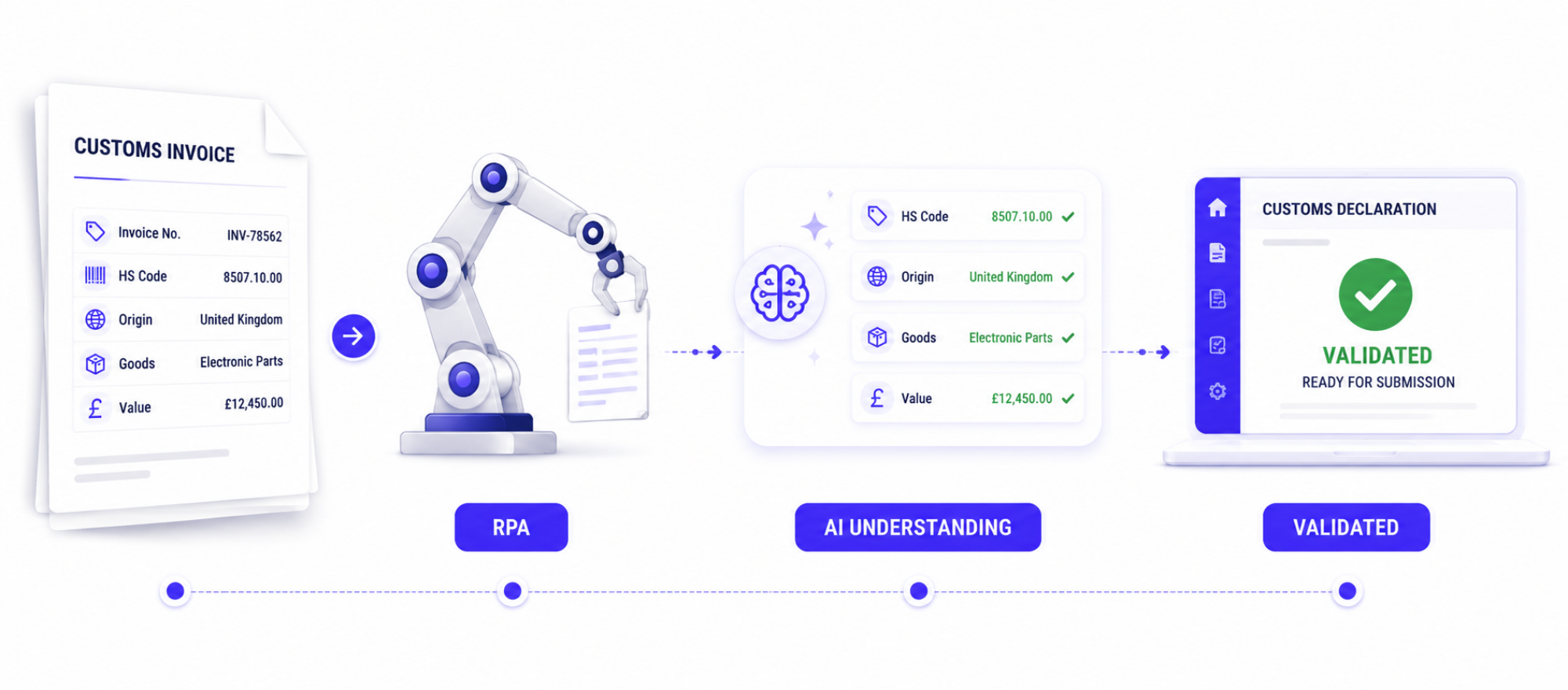
Automation removes the manual steps where errors most commonly occur. Declaration fields populated from system-extracted data eliminate transcription mistakes entirely, while AI classification tools match commodity descriptions to HS codes consistently across every shipment. Built-in validation rules catch missing fields, implausible values, and regulatory inconsistencies before submission — not after HMRC flags them. The result is a filing accuracy rate that manual processes cannot match at scale.
Beyond cost savings: The strategic advantage
While much of this discussion has focused on the tangible cost reductions offered by smart tools, it’s crucial to understand that the benefits extend far beyond your balance sheet. Embracing these technologies is a strategic move that can fundamentally transform your business operations.
Consider the agility you gain. With faster clearances and proactive risk management, you can respond more quickly to market shifts, unexpected disruptions, and emerging opportunities.
Furthermore, the enhanced compliance posture that these tools provide offers significant peace of mind. Knowing that your operations are robust and less prone to penalties frees up valuable internal resources, allowing your teams to focus on core business growth initiatives rather than constantly firefighting compliance issues.
Smart tools don’t just cut costs; they empower you to operate more intelligently, strategically, and competitively in the global arena.
Frequently Asked Questions
How does iCustoms help reduce customs-related costs?
iCustoms automates customs processes such as document handling, classification, screening, and declaration filing, helping businesses reduce labour costs, avoid penalties, and minimise clearance delays.
How does iCustoms improve HS code classification accuracy?
The iClassification tool uses AI to analyse product information and recommend accurate HS codes, helping businesses avoid misclassification risks, duty overpayments, and compliance issues.
Can iCustoms reduce manual document processing work?
Yes. iCustoms Intelligent Document Processing (IDP) automatically extracts and validates data from invoices, packing lists, bills of lading, and other trade documents, significantly reducing manual data entry.
How does iCustoms help prevent customs penalties and compliance risks?
iCustoms uses automated validation, denied party screening, and compliance checks to identify potential issues before submission, reducing the likelihood of fines, audits, shipment holds, and delays.
Why do customs brokers and freight forwarders use iCustoms?
iCustoms streamlines customs workflows through automation, maintains audit-ready records, improves filing accuracy, and helps brokers and freight forwarders process shipments faster and more efficiently.
You may also like:
Simplify Customs with our Powerful Customs Management Software

Automate declarations, track shipments, & ensure compliance.
About iCustoms
iCustoms is an all-in-one solution helping businesses automate customs processes more efficiently. With AI-powered and machine-learning capabilities, iCustoms is designed to streamline your all customs procedures in a few minutes, cut additional costs and save time.
Simplify Customs with our Powerful Customs Management Software
Automate declarations, track shipments, & ensure compliance.