
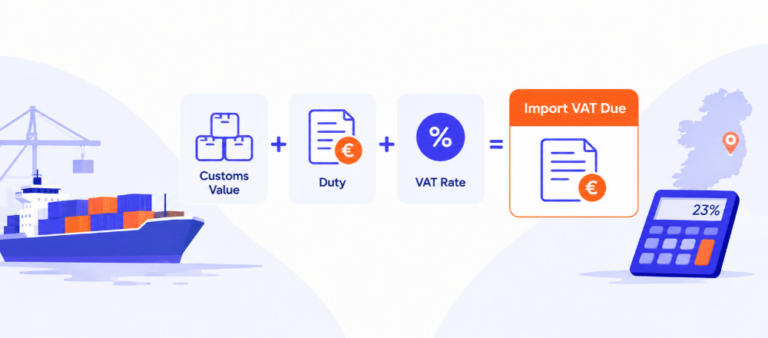
AIS vs AES Ireland: What’s the Difference and Which Do You Need?
- John Hall
- Customs Specialist at iCustoms.ai
If you’ve come across both “AIS” and “AES” while researching Irish customs and you’re not sure which one applies to you, you’re not alone. The two names look similar, sit under the same authority, and get used almost interchangeably in casual conversation even though they are two entirely separate systems. Getting this wrong matters: registering for the wrong one, or assuming one covers what the other actually handles, is a common way businesses discover a gap in their customs setup only after a shipment is already stuck.
This guide gives you the direct comparison: what each system actually does, who needs which one, and, for the majority of freight forwarders and trading businesses who move goods in both directions, why you’ll likely end up needing both.
What is AIS?
AIS, the Automated Import System, is Revenue’s electronic system for declaring goods coming into Ireland. It replaced the older Automated Entry Processing (AEP) system for imports in November 2020 and is built on the EU Customs Data Model (EUCDM), the shared data structure that underpins import systems across EU member states. AIS covers a family of declaration types: H1 for standard release into free circulation being by far the most common, alongside H2 through H7 and I1/I2 for more specific scenarios like customs warehousing, temporary admission, or low-value consignments.
If your business only ever brings goods into Ireland from Great Britain or outside the EU, AIS is the system you need. We cover what AIS is and how it works in full in our dedicated AIS guide and our Pillar guide to Irish customs for freight forwarders.
What is AES?
AES, the Automated Export System, is the counterpart system for goods going out of Ireland. It went live later than AIS, on 21 March 2023, and, like AIS, replaced AEP, this time on the export side. AES governs the export declaration itself, the confirmation that goods have physically left, and, depending on the destination and goods involved, an accompanying safety and security dataset.
AES and AIS share the same underlying philosophy: both are electronic-only, both comply with the Union Customs Code, and both sit on Revenue’s infrastructure. But the declaration types, the sequence of events, and the point in the shipment’s life where the paperwork has to be ready are all different from the import side. Our dedicated AES guide covers the export-specific detail this article doesn’t.
AIS vs AES at a Glance
| Aspect | AIS (Automated Import System) | AES (Automated Export System) |
|---|---|---|
| Direction | Goods entering Ireland | Goods leaving Ireland |
| Went live | November 2020 (replaced AEP for imports) | 21 March 2023 (replaced AEP for exports) |
| Core declaration types | H1 (standard), H2–H7, I1/I2 | Export declaration, exit confirmation, optional safety and security dataset |
| Who typically files | Importers, freight forwarders, clearing agents | Exporters, freight forwarders, clearing agents |
| Connects to | Revenue’s import risk-assessment and release process | Revenue’s export confirmation and exit-point process |
| Underlying standard | EU Customs Data Model (EUCDM) | Built to the same UCC-compliant, electronic-only philosophy |
This table covers the structural differences only. For the full step-by-step mechanics of either process, including exactly what happens at each stage, see our Ireland customs clearance process guide, which walks through both directions in operational detail, and our Pillar guide for how AIS and AES fit into the wider picture alongside EORI, VAT, and registration.
Who Uses AIS?
AIS is for anyone bringing goods into Ireland commercially from Great Britain or any country outside the EU. That includes importers bringing in their own stock, and freight forwarders or clearing agents filing import declarations on behalf of client businesses. If your trade is entirely inbound (you buy from overseas suppliers but don’t sell goods out of Ireland to non-EU destinations), AIS alone may be all you need, though it’s worth checking against the “do you need both” section below before assuming.
Who Uses AES?
AES is for anyone sending goods out of Ireland to Great Britain or any non-EU destination. That includes exporters shipping their own goods and freight forwarders or clearing agents filing export declarations for clients. Businesses that manufacture or source goods in Ireland and sell internationally, but don’t import raw materials or stock from outside the EU, may find AES is their primary, or only, system.
In practice, pure single-direction traders are the exception rather than the rule. Most freight forwarders, in particular, handle both directions across their client base even if any single client only moves goods one way.
Do You Need Both?
If your business, or your client base if you’re a freight forwarder or clearing agent, moves goods in both directions across Ireland’s external border, you need both AIS and AES access, and you need to register for and manage both separately. A few situations to check against:
- You import raw materials and export finished goods. Extremely common in manufacturing: you need AIS for the inbound materials and AES for the outbound product.
- You’re a freight forwarder with a mixed client book. Even if no single client needs both, your business as a whole almost certainly needs both systems set up and ready.
- You currently only import, but are expanding into export markets (or vice versa). Registering for the second system before you need it avoids a scramble when the first outbound shipment is already booked.
- You only ever move goods one direction, with no plans to change. In this narrower case, registering for only the relevant system is reasonable; just revisit the decision if your trade pattern changes.
Registration for AIS and AES is a separate process for each system, though both build on the same EORI number and Revenue Online Service (ROS) account. Our step-by-step guide to registering for AIS and AES covers the full sequence for whichever combination applies to you.
How AIS Connects to Revenue
Every AIS declaration is submitted electronically to Revenue, where it’s registered, risk-assessed, and moved through a defined sequence of statuses before goods are released or held for further checks. The system is built to comply with the Union Customs Code’s requirement for electronic customs communication, and every import declaration ultimately gets a release decision from Revenue’s system, whether that decision comes back in minutes or after a documentary or physical control. Our Union Customs Code explainer covers the legal framework behind this in more depth.
How AES Connects to Revenue
AES declarations follow a parallel path on the export side: the declaration is lodged before or at the point of departure, Revenue or the relevant exit point confirms the goods have actually left, and an exit certification is generated once departure is confirmed. The key operational difference from the import side is timing: export declarations generally need to be in place before goods physically leave the country, which puts more pressure on having documentation ready early rather than resolving gaps after departure, as can sometimes happen on the import side.
Can One Piece of Software Handle Both?
Yes, and for any business or agency handling both directions, this is usually the more practical setup than running two separate tools or manual processes for what are, after all, two halves of the same customs relationship with Revenue. A platform that handles both AIS and AES means one place to manage EORI details, one place to track declaration status across every shipment regardless of direction, and one consistent set of validation checks rather than two different manual processes that are easy to let drift out of sync with each other.
How iCustoms Automates Both
iCustoms’ iAIS and iAES platform handles import and export declarations from the same interface: commodity classification, EORI validation, and declaration submission all run through the same automated checks whether a shipment is coming in under AIS or going out under AES. For freight forwarders and clearing agents managing a client book that moves goods in both directions, that means no re-keying data between two separate systems, no maintaining two different sets of manual checklists, and one place to see declaration status across an entire client portfolio, imports and exports together.
Frequently Asked Questions
What’s the main difference between AIS and AES?
AIS handles declarations for goods entering Ireland; AES handles declarations for goods leaving Ireland. They’re separate systems with separate registrations, built to the same underlying UCC-compliant, electronic-only standard.
Do I need to register for both AIS and AES?
Only if your business (or your client base, if you’re an agent) moves goods in both directions. Single-direction traders can register for the relevant system alone, though most freight forwarders end up needing both.
Which came first, AIS or AES?
AIS. It replaced AEP for imports in November 2020, more than two years before AES replaced AEP for exports on 21 March 2023.
Can the same EORI number be used for both AIS and AES?
Yes. Your EORI number identifies your business to customs authorities generally; it’s the same number underlying both your AIS and AES access, though the system registrations themselves are separate steps.
Is one system harder to use than the other?
Not inherently. The underlying complexity comes from your goods, your documentation, and your declaration type, not from which of the two systems you’re using. The practical difference traders notice most is timing: export declarations need to be ready before departure, while import declarations are lodged as goods arrive.
Does software that handles AIS also handle AES?
Not automatically. It depends on the platform. Some tools are built for one system only. iCustoms’ iAIS and iAES platform is built to handle both from one interface, which is worth checking for if you need both directions covered.
You may also like:
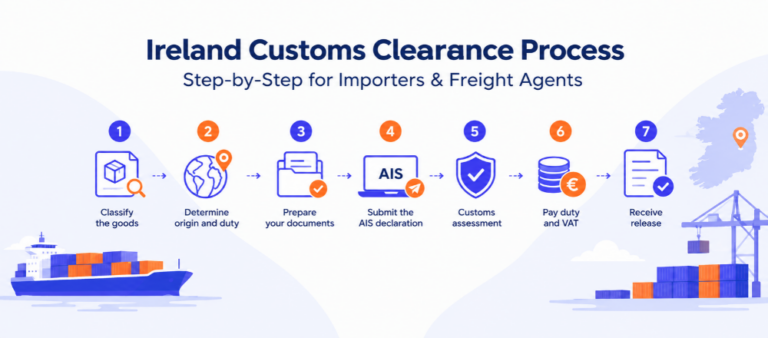
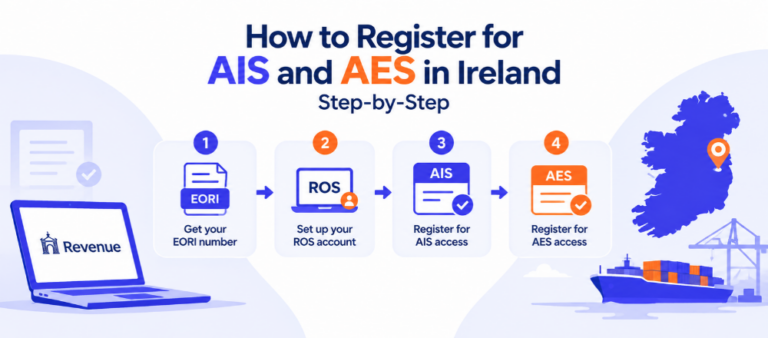
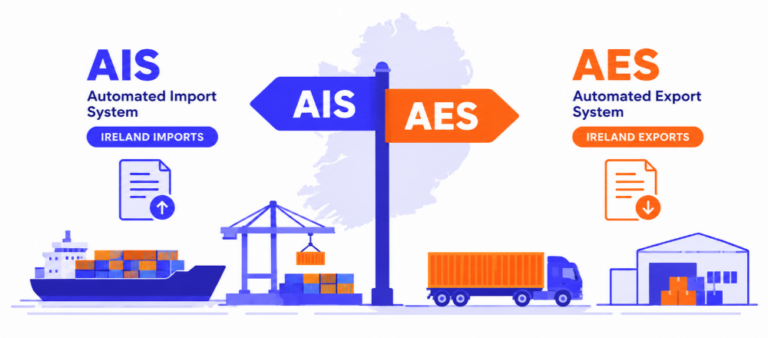
Handling Both AIS and AES Filings?

iCustoms files both from a single platform, so your team stops duplicating data entry across two separate systems.
Subscribe to our Newsletter
About iCustoms
iCustoms is an all-in-one solution helping businesses automate customs processes more efficiently. With AI-powered and machine-learning capabilities, iCustoms is designed to streamline your all customs procedures in a few minutes, cut additional costs and save time.
See the Comparison in Action
Watch how one workflow covers both AIS import declarations and AES export declarations without switching tools.