TARIC Codes Explained for EU Customs Declarations and Trade Compliance
- John Hall
- Customs Specialist at iCustoms.ai
International freight rarely fails because trucks stop moving. Instead, shipments stall because data fails to move correctly across EU customs systems. Incorrect tariff classification triggers inspections, storage fees, and post clearance audits. Therefore, understanding TARIC codes is not academic. It is an operational control point that directly affects duty exposure, VAT accuracy, and border release timelines.
For freight forwarders, customs brokers, and import teams handling EU trade flows, this guide explains how EU TARIC codes work, how to use the TARIC database, and how classification accuracy reduces financial and compliance risk. It also outlines how TARIC integrates with EU customs systems and why automation is becoming essential.
What Are TARIC Codes and Why They Matter in EU Trade
TARIC codes are the European Union’s 10 digit tariff classification codes used to determine customs duties, trade defence measures, quota controls, and import restrictions. While global trade relies on the Harmonised System for broad classification, TARIC extends this structure to activate EU specific regulatory measures during customs clearance.
In practical terms, TARIC codes define how EU customs systems calculate payable duty, apply anti dumping rules, and validate compliance requirements. This becomes particularly important in IOSS EU imports, where many operators assume VAT simplification removes classification complexity. In reality, TARIC codes for IOSS shipments still determine duty exposure, quota applicability, and regulatory controls beyond VAT handling.
As a result, classification is not a documentation step. It is a core data input that drives enforcement decisions across EU customs infrastructure.
What is Product Classification in EU Customs Context
Product classification is the structured process of assigning goods to standardised categories based on their composition, function, and technical characteristics. In EU trade, this process connects internal product data with customs requirements through layered classification systems.
Each product must move from a general classification level to a highly specific one. This ensures that duties, quotas, and regulatory controls are applied accurately during customs clearance. Without structured classification, customs systems cannot validate declarations or apply correct fiscal treatment.
Classification Systems That Support TARIC Mapping
Several classification frameworks contribute to how products are ultimately mapped to valid TARIC codes for EU customs declarations. These systems operate at different levels, but must align to ensure accurate duty calculation and regulatory compliance.
Harmonised System (HS)
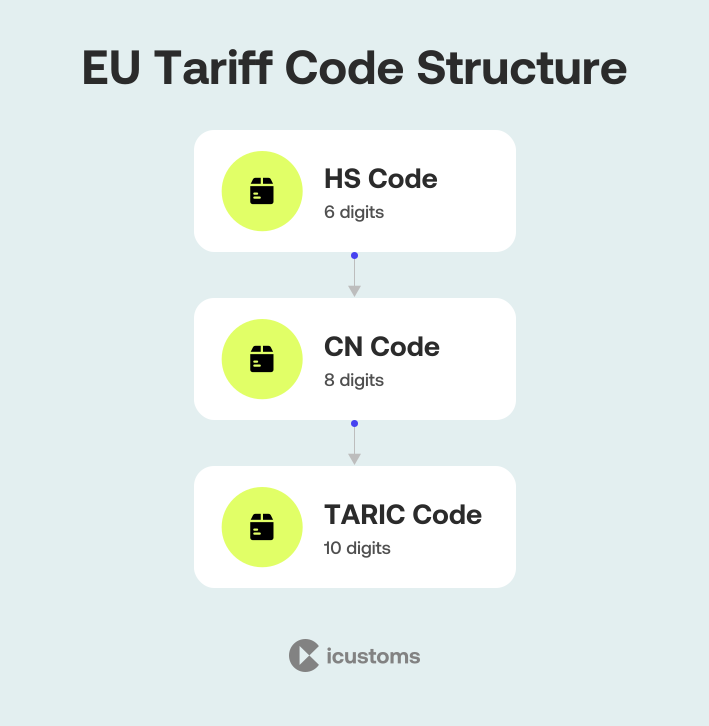
The Harmonised System provides the global 6 digit classification baseline used to identify goods in international trade. It defines the product category but does not include EU specific duty or regulatory measures.
Combined Nomenclature (CN)
The Combined Nomenclature extends HS classification to 8 digits within the European Union. This level supports statistical reporting and introduces additional product specificity required for EU trade monitoring.
TARIC Classification Codes
TARIC codes extend classification to 10 digits and represent the final, declarable level for EU customs. At this stage, duty rates, tariff quotas, anti dumping measures, and import restrictions are applied, making TARIC the enforcement layer of classification.
GS1 Global Product Classification (GPC)
Systems such as GS1 Global Product Classification and internal ERP or PIM taxonomies are used by businesses to organise product data. However, these structures are not customs compliant by default and must be translated into HS, CN, and ultimately TARIC codes.
Internal Taxonomies and PIM Systems
Misalignment between internal product classifications and TARIC codes is a common source of customs errors. Without a structured mapping process, businesses risk incorrect duty calculation, declaration rejection, and increased audit exposure. Ensuring consistency across classification layers is therefore essential for reliable EU customs compliance.
Role of TARIC Codes for Accurate Product Classification
TARIC classification codes represent the final and most precise layer of product classification within the EU customs framework. By extending beyond HS and CN levels, they capture detailed product attributes required to apply duties, quotas, and trade defence measures accurately. This ensures that goods are not only categorised correctly but also treated consistently under EU customs law.
In IOSS environments, this distinction becomes critical because VAT simplification does not replace classification accuracy. IOSS classification requirements still depend on extending HS codes to full TARIC level to ensure correct duty treatment and avoid misdeclaration.
Ensuring Consistency Across Declaration Systems
Accurate TARIC classification ensures consistency across EU customs systems, including pre arrival filings, import declarations, and transit movements. When classification data aligns across systems, operators reduce validation errors, minimise clearance delays, and maintain reliable audit trails across the full customs lifecycle.
TARIC Commodity Codes in Operational Workflows
Logistics operators interact with TARIC codes across multiple stages of the customs lifecycle:
- Import declaration submissions
- Export filings
- Transit procedures
- Customs warehousing
- Post clearance audits
This is especially relevant for IOSS low value imports, where high shipment volumes increase dependency on accurate TARIC classification to prevent cumulative duty and VAT discrepancies. Because each shipment line requires a valid TARIC code, high volume operators process large volumes of classifications daily. Even minor error rates can result in significant financial exposure and operational delays.
Intelligent Document Processing in Customs Operations
Freight operators process large volumes of commercial invoices, packing lists, certificates of origin, and transport documents. Intelligent Document Processing uses AI-based extraction to convert unstructured documents into structured customs-ready datasets.
Benefits include:
- Automated HS classification suggestions
- Pre-submission validation
- Reduced rejection rates
- Faster clearance cycles
For multi-country logistics operations, IDP improves data accuracy and reduces manual intervention.
Are TARIC Codes the Same as Commodity Codes
Commodity code is a broad term describing product classification systems used globally. A TARIC code is a specific type of commodity code used within the European Union’s integrated tariff system.
All TARIC codes are commodity codes, but not all commodity codes are valid for EU customs. This distinction is critical when businesses reuse classification data across regions, as non EU codes may fail validation during EU customs clearance.
Is TARIC Code the Same as HS Code
No, a TARIC code is not the same as an HS code. The difference lies in both structure and regulatory function. Finding the correct TARIC code requires a structured approach based on product characteristics and classification hierarchy. Understanding HS code vs tariff schedule is key, as the HS code sets the global classification framework while the TARIC adds EU-specific extensions and duty measures. By following a systematic process from HS to CN to TARIC, you can ensure accurate classification, reduce errors, and comply with customs regulations efficiently.
- HS Code: 6 digits, global classification standard
- CN Code: 8 digits, EU statistical extension
- TARIC Code: 10 digits, EU enforcement level classification
The HS code provides a baseline classification but does not determine EU specific duties or restrictions. TARIC codes extend classification to enable full regulatory enforcement. Relying only on HS codes creates compliance risk because EU customs systems require TARIC level detail to calculate duty, apply trade measures, and validate declarations.
EU TARIC Code Database and Official Code Lists
The EU TARIC database, maintained by the European Commission, is the authoritative source for tariff measures across Member States. It includes duty rates, quotas, trade defence measures, and regulatory conditions linked to each TARIC code. While essential, manual database consultation creates operational inefficiencies, particularly for high volume shipments with multiple product lines.
How to Find TARIC Codes Using Lookup Tools
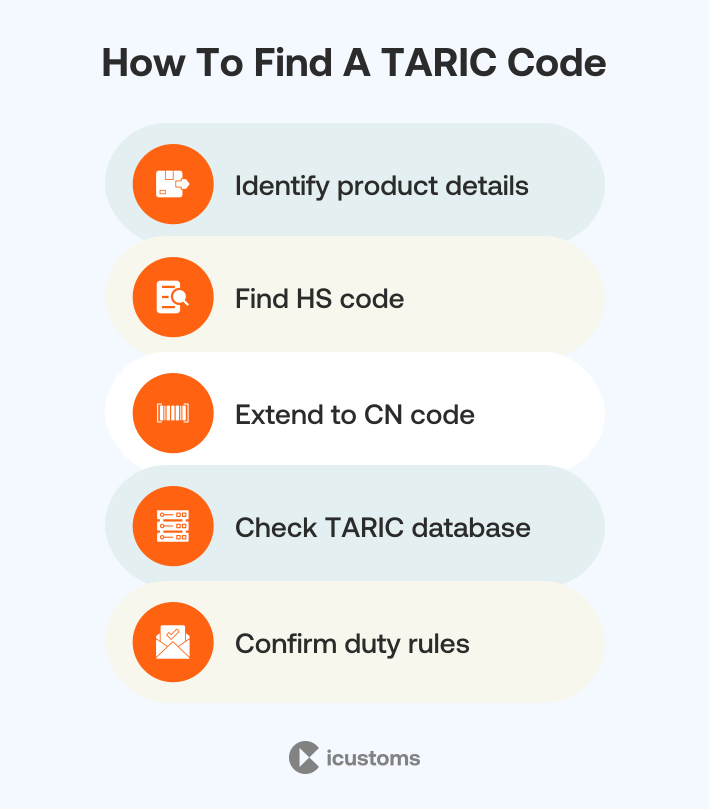
Finding the correct TARIC code requires a structured approach based on product characteristics and classification hierarchy. For a deeper understanding of how products are categorized and the rules behind each classification level, you can explore customs tariff classification and the tariff classification process.
This resource explains how to navigate from HS codes to CN codes and finally to the 10-digit TARIC code, helping reduce misclassification risks. Leveraging such detailed guides ensures consistency, compliance, and accurate duty determination across all customs declarations.
A typical workflow includes:
- Identify product composition and intended use
• Determine the 6 digit HS classification
• Extend to 8 digit CN level
• Validate the 10 digit TARIC code
• Review duty rates and applicable measures
• Ensure consistency across declaration data
This structured process reduces misclassification risk before submission.
How Does TARIC Codes Work and What are ICS2 Classification Requirements?
EU customs operates a phased data model where classification depth increases across the shipment lifecycle.
Entry Summary Declaration Stage
At the pre-arrival stage, 6-digit HS codes are generally sufficient for security risk assessment under ICS2. However, accurate classification remains critical for compliance and risk management.
For a detailed overview of submission requirements and procedural guidance, refer to our Entry Summary Declaration ENS guide and learn more about ENS filing requirements. Following these best practices ensures your pre-arrival declarations are accurate and aligned with EU security regulations.
Import Clearance Stage
For final customs clearance, 8 digit CN or 10 digit TARIC codes are required to calculate duties and enforce regulatory controls.
This creates a dual requirement where classification must evolve from general to highly specific. Any inconsistency between stages can trigger validation errors and clearance delays. This becomes a common issue in IOSS declaration workflows, where mismatches between ENS filings and final TARIC classification lead to data validation failures across EU customs systems.
Why TARIC Codes Are Critical for EU Customs Declarations
TARIC codes act as enforcement triggers within EU customs systems. They determine how shipments are assessed, taxed, and controlled across multiple platforms.
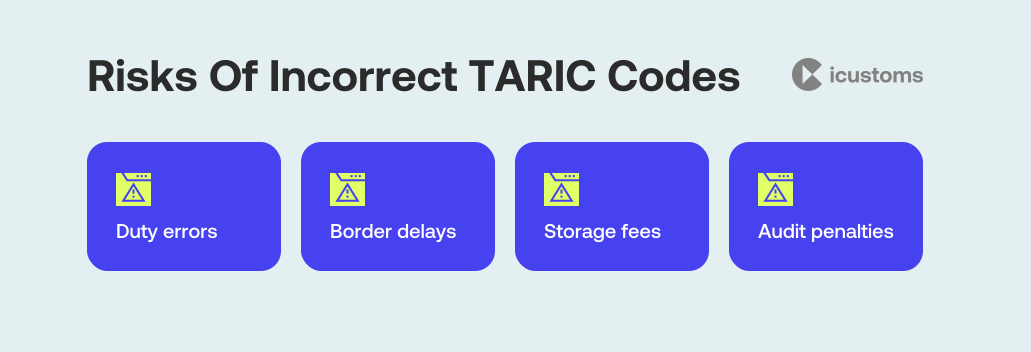
Incorrect classification can result in:
- Declaration rejection and resubmission
• Border delays and storage costs
• Increased inspection rates
• Post clearance audits
• Financial penalties
This risk is amplified under the €3 customs duty rule EU, where incorrect TARIC classification in IOSS consignments can multiply duty liability across high volume low value shipments.
In a digital customs environment, classification errors are detected automatically and propagated across systems.
Interaction with EU Customs Systems
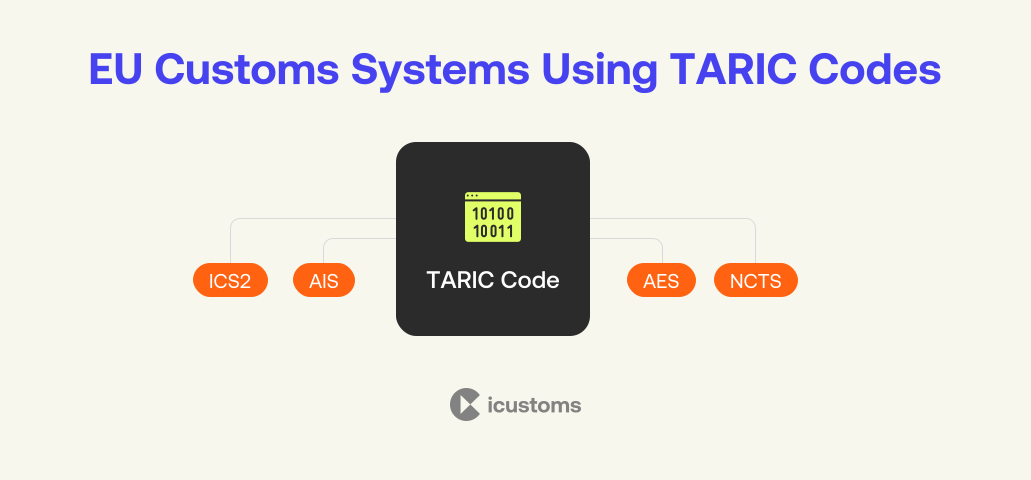
TARIC classification interacts directly with EU customs infrastructure:
- ICS2 validates advance cargo data
• AIS processes import declarations
• AES verifies export classification
• NCTS links transit data to risk profiles
Because these systems exchange structured data, classification must remain consistent across all filings to avoid discrepancies.
Common TARIC Classification Mistakes in Freight Operations
High volume logistics environments often experience recurring classification errors:
- Using CN codes instead of full TARIC codes
• Reusing outdated classifications
• Misclassifying bundled goods
• Applying non declarable codes
• Relying on unverified supplier data
These mistakes can significantly increase duty liability and administrative workload. For more insights on how to prevent such issues, see our guide on commodity code classification mistakes and how to avoid common classification errors. Implementing these best practices ensures more accurate TARIC declarations and smoother freight operations.
TARIC Customs Code: What It Means in EU Declarations
A TARIC customs code represents the final, declarable classification used in EU customs filings. It functions as a control mechanism that determines duty calculation, regulatory validation, and risk assessment.
Rather than being a static reference, the TARIC code acts as a dynamic input that influences how customs systems process and evaluate each shipment.
Digital Customs Infrastructure and TARIC Code Automation
Modern customs operations require systemised classification workflows rather than manual processes. Digital platforms integrate tariff databases directly into declaration systems, enabling real time validation.
AI driven classification supports:
- Automated TARIC code mapping
• Continuous regulatory updates
• Cross system data alignment
• Structured audit trails
This is particularly valuable for AI product classification for IOSS duty, where automated systems ensure consistent TARIC mapping across thousands of low value consignments.
How iCustoms Enables TARIC Governance at Scale
iCustoms embeds tariff intelligence directly into customs declaration workflows, allowing operators to validate TARIC codes within a unified system. This reduces manual workload, improves classification accuracy, and ensures consistent compliance across EU customs systems.
Conclusion: TARIC Accuracy Is Now a Core Compliance Requirement
TARIC classification underpins EU customs compliance because digital enforcement systems rely on structured data. Accurate classification ensures correct duty calculation, faster clearance, and reduced audit risk.
Key takeaways:
- TARIC codes enable full EU regulatory enforcement
• HS codes alone are insufficient for EU imports
• Classification must remain consistent across systems
• Automation is essential for scalable compliance
As EU customs continues to evolve, initiatives such as the EU Customs Data Hub will further centralise classification, validation, and IOSS data integration, increasing the importance of consistent TARIC governance.
As EU customs continues to digitise, TARIC accuracy is no longer optional. It is a foundational requirement for efficient and compliant trade operations.
Frequently Asked Questions About TARIC Codes
What is a TARIC code used for in EU customs?
TARIC codes are used to calculate duties, apply trade measures, enforce quotas, and validate compliance during customs clearance.
How do freight forwarders find TARIC codes?
They analyse product characteristics, determine HS classification, extend to CN level, and validate TARIC codes using official databases or digital platforms.
Are TARIC codes required for every EU import declaration?
Yes. Each product line must have a valid TARIC code to ensure accurate duty calculation and regulatory compliance.
What happens if a TARIC code is incorrect?
Incorrect classification can lead to delays, penalties, audits, and increased inspection rates.
Is a TARIC code the same across all EU countries?
Yes. TARIC codes are standardised across the EU, although national systems may differ in interface.

Eliminate TARIC Classification Errors
Ensure accurate codes with automated validation and real-time checks.
You may also like:
How TARIC Codes Influence Import Duties
Struggling to Extract, Catagorise & Validate Your Documents?

Capture & Upload Data in Seconds with AI & Machine Learning
Subscribe to our Newsletter
About iCustoms
iCustoms is an all-in-one solution helping businesses automate customs processes more efficiently. With AI-powered and machine-learning capabilities, iCustoms is designed to streamline your all customs procedures in a few minutes, cut additional costs and save time.
Struggling to Extract, Catagorise & Validate Your Documents?
Capture & Upload Data in Seconds with AI & Machine Learning