

HS Codes Classification: Ensuring Smooth Trade for All Industries
-
 Freya Jane
- Director of Customer's Success
Have you experienced customs delays or fines because of inaccurate product classification? Correct HS code classification is vital for international businesses to prevent customs clearance issues and improve efficiency.
This blog post will explore the importance of HS code classification across various industries.
What is an HS code?
Harmonised system (HS) codes are 6-digit unique numbers used to classify the goods you import or export. HS codes are recognised internationally and were discovered by the World Customs Organisation (WCO). Accurately determining HS codes is crucial to ensure hassle-free customs clearance and compliance with global regulations.
HS code classification for various industries
The significance of HS code classification for different industries involved in international trading cannot be denied. Here, we will discuss how HS code classification is beneficial for several industries.
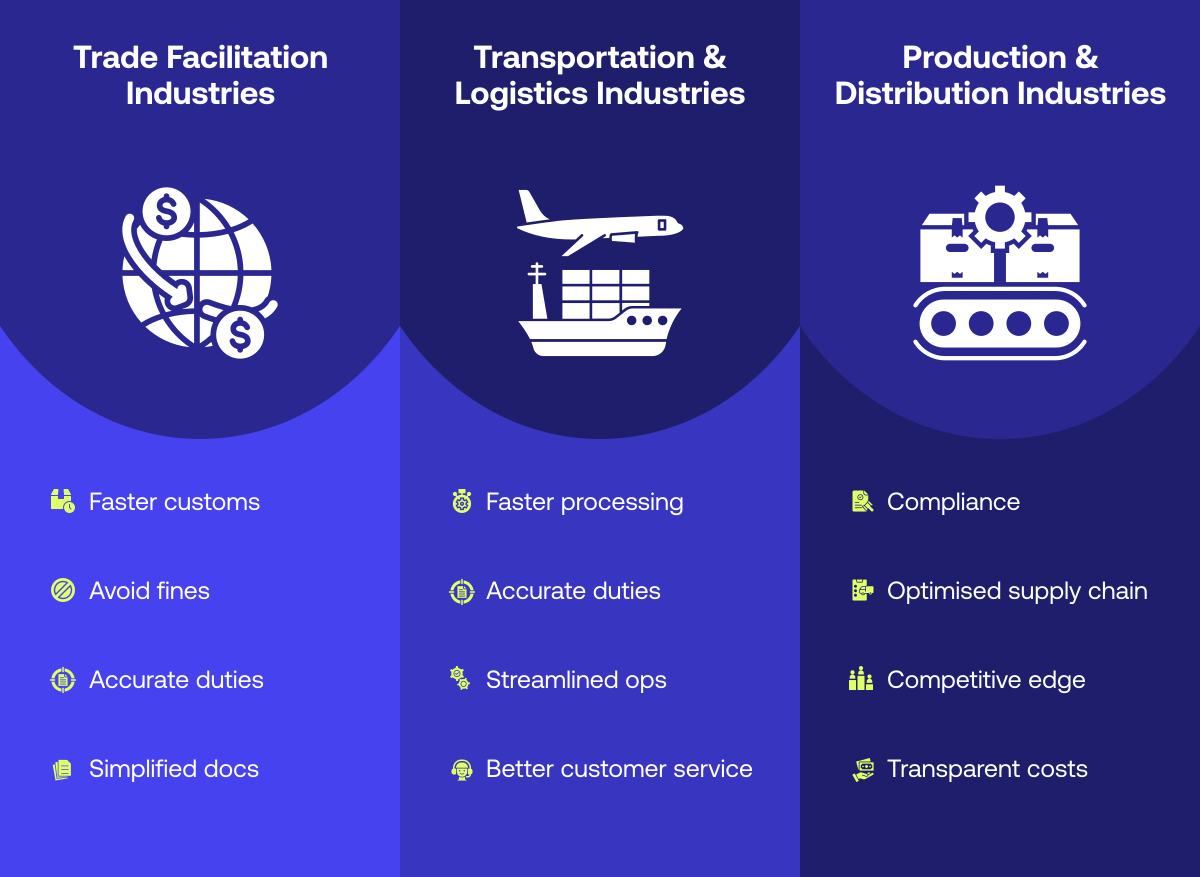
Group 1: International trade facilitation
It involves the following industries:
- Importers & exporters
- Traders
- Customs brokers & agents
Accurate HS code classification is crucial for these sectors to ensure smooth international trading.
HS codes can facilitate these industries in the following ways:
Smooth customs clearance: The right HS codes are key to ensuring that customs authorities can correctly identify and classify products. This minimises the chances of delays, inspections, and penalties and speeds up the customs process.
Preventing customs fines and delays: In case of goods misclassification, they might encounter hold-ups at customs, which can end up raising your expenses.
Optimising import and export costs: Accurately classifying goods using HS codes helps importers and exporters pay the right amount of customs duties and taxes.
Simple documentation: Simplifying trade documentation becomes easier when you have precise HS codes. This helps lessen the workload for preparing customs paperwork.
Avoiding trade barriers: Incorrect classification of HS codes may result in trade barriers like tariffs, quotas, or restrictions. Ensuring accurate HS code use aids in bypassing these barriers for seamless global trade.
Accurate documentation: HS codes offer a standardised way to describe products, simplifying customs procedures and reducing errors and delays.
Risk mitigation: Accurately classifying HS codes reduces the chance of customs penalties. Customs brokers and traders can prevent problems by declaring goods accurately and avoiding misclassification and undervaluation.

Need help with HS codes?
Use iCustoms iClassification to find codes easily and avoid penalties!
Group 2: Transportation and logistics
The transportation and logistics sector involves the following industries:
Transport & hauliers
Couriers
Logistics
Freight forwarders
Industry and hauliers involved in international trading must be knowledgeable about HS code classification.
Let’s explore how HS code classification can bring benefits to these industries:
Accurate documentation: HS codes offer a standardised way to describe products, simplifying customs declaration for freight forwarders. This minimises errors and clearance delays.
Precise duty calculation: HS codes for the goods help determine the applicable duties and taxes for the goods, saving freight forwarders from undervaluation or overvaluation.
Reduced customs delays: Having the right HS codes can speed up the customs process, which means your orders will arrive quicker without delays. Ultimately, this leads to happier customers and more efficient delivery services.
Increased operational efficiency: Accurate HS code classification can make courier operations smoother by cutting down on paperwork. This can save costs and boost overall efficiency.
Accurate billing and invoicing: HS codes classify goods in a standardised way, which makes it easier for hauliers to create accurate billing and invoicing information.
Improved customer service: Right HS code classification leads to faster customs clearance, contributing to improved customer service. This helps the transport industry and hauliers build stronger relationships with their customers.
Improved supply chain efficiency: Accurate HS codes make customs clearance smoother, cutting down on delays and boosting the efficiency of the entire supply chain.
Compliance with regulations: Accurate HS codes are crucial for complying with different international trade rules, enabling logistics providers to maintain regulatory compliance and prevent penalties.
Group 3: Product production and distribution
It includes the following industries:
Manufacturing
Retail & e-commerce
Pharmaceutical
Agriculture & food
Supply chain
HS code classification plays a vital role in these industries; it can be beneficial in the following ways:
Trade compliance: Harmonised system codes uniformly classify agriculture and food products when it comes to international shipments. It ensures compliance with laws, reducing delays and penalties due to misclassification.
Optimised supply chain: HS codes offer a uniform method for categorising products, simplifying supply chain management for manufacturers. Precise classification aids in inventory tracking, route planning, and logistics coordination, resulting in enhanced efficiency and cost savings.
Compliance with regulations: HS codes ensure international trade compliance. Manufacturers must know product regulations to ensure compliance and avoid trade barriers.
Competitive advantage: Retailers with expertise in HS codes and precise product classification gain a competitive edge, resulting in quicker customs clearance, cost savings, and increased sales.
Transparent shipping cost: HS code classification helps determine accurate shipping costs for the goods, allowing retailers and e-commerce industries to pay the accurate amount of taxes.
Find out the best HS code lookup tools with our detailed guide. Click here!
The bottom line
Businesses in all sectors engaged in international trade need to classify their goods accurately using the HS code classification tool. Businesses can minimise trade obstacles, expedite customs clearance, and enhance their international operations by understanding the significance of accurate HS code classification.
Eager to simplify your international trade process? iCustoms provides a comprehensive iClassification tool with expert guidance, real-time updates, and a user-friendly interface to assist you in determining the correct HS codes for your products.
Frequently Asked Questions
What are HS codes and which international body is responsible for them?
Harmonised System (HS) codes are 6-digit numbers used internationally to classify goods for import and export. They are maintained by the World Customs Organisation (WCO) and are recognised by customs authorities worldwide. Every product traded internationally is assigned an HS code, which determines the applicable duties, taxes, trade restrictions, and compliance requirements in the destination country. Accurate classification is essential for hassle-free customs clearance globally.
Why is accurate HS code classification important for smooth customs clearance?
Accurate HS code classification enables customs authorities to correctly identify and categorise goods, which minimises the risk of inspections, delays, and penalties at the border. Incorrect HS codes can trigger holds, raise costs through additional duties, or create trade barriers such as tariffs or quotas that would not otherwise apply. Using the right code from the outset protects importers, exporters, and customs agents from unnecessary disruption.
How do HS codes determine the duties and taxes an importer or exporter pays?
Each HS code is linked to a specific duty rate in the tariff schedule of the importing country. Using the correct HS code ensures that the right amount of customs duties and taxes is calculated — neither overpaying nor underpaying. Misclassification can result in underpayment that triggers penalties upon audit, or overpayment that unnecessarily increases landed costs. Accurate classification directly affects the financial efficiency of every international shipment.
What are the consequences of misclassifying goods with an incorrect HS code?
Misclassifying goods with an incorrect HS code can result in customs delays, fines, and shipment seizures at the border. Goods may be held for additional inspection or risk assessment, increasing costs and disrupting delivery timelines. Persistent misclassification can also damage a business's compliance record with customs authorities. Traders, brokers, and logistics providers all share responsibility for ensuring that HS codes on customs documentation are accurate and verifiable.
How does accurate HS code classification benefit freight forwarders and logistics providers?
Accurate HS code classification allows freight forwarders and logistics providers to produce correct customs documentation, calculate duties precisely, and avoid clearance delays. It enables more efficient billing and invoicing, reduces the administrative workload for paperwork preparation, and improves overall supply chain efficiency by keeping goods moving without unnecessary holds. Faster clearance also improves customer service, helping logistics businesses build stronger, more reliable relationships with their clients.
How do HS codes support supply chain efficiency for manufacturers and distributors?
For manufacturers and distributors, accurate HS code classification provides a standardised method for categorising products across the supply chain. This simplifies inventory tracking, supports route planning, and improves logistics coordination. It also ensures compliance with international trade regulations, reducing the risk of delays and penalties at customs. Consistent classification across all shipments enables more predictable landed costs and smoother coordination between production, warehousing, and distribution operations.
How can retailers and e-commerce businesses use HS code accuracy to gain a competitive advantage?
Retailers and e-commerce businesses that correctly classify products using accurate HS codes achieve faster customs clearance, which translates into quicker delivery times and lower operational costs. Accurate classification also ensures transparent shipping costs by applying the correct duty rates, preventing unexpected charges at import. Businesses with strong HS code practices reduce the risk of order delays, build customer trust through reliable delivery, and avoid the costly disruptions that misclassification causes.

Ready to unlock the power of AI-driven iClassification tool?
Get expert guidance from our customs specialist!
You may also like
Streamline Product Classification

Uncover iClassification for precise Global Trade, Delivering Time-Saving Accuracy.
Subscribe to our Newsletter
About iCustoms
iCustoms is an all-in-one solution helping businesses automate customs processes more efficiently. With AI-powered and machine-learning capabilities, iCustoms is designed to streamline your all customs procedures in a few minutes, cut additional costs and save time.
Streamline Product Classification
Uncover iClassification for precise Global Trade, Delivering Time-Saving Accuracy.