


Simplifying Safety & Security Declarations for Importers
-
 Freya Jane
- Director of Customer's Success
Have you ever wondered how customs officials make sure that the goods entering their territories are safe? It all begins with a critical document known as the Safety and Security Declaration (SSD).
So, what exactly is an SSD? Why is this so important? What happens if it is not done properly?
This blog post will discuss SSDs, including their purpose, requirements, and best practices for compliance.
What is the Safety and Security Declaration (SSD)?
A Safety and Security Declaration (SSD) is a document used by customs authorities to assess the potential risks caused by importing goods into their territory. It is not intended to collect customs duties or taxes.
When importing into the UK and EU, submitting safety and security data via Entry Summary Declaration (ENS) is mandatory to ensure compliance with the safety regulations.
As per the Union Customs Code, it is the responsibility of the “carriers” to submit the Safety & Security Declaration prior to the arrival of the goods. Incorrect or incomplete SSD could result in hefty fines or even blockage of shipments at the border.
Learn more about the post-Brexit Safety & Security Declarations with our detailed guide.
Who should submit the SSD?
The legal responsibility for submitting a safety and security declaration lies with the carriers, who are the operators of the active means of transport by which goods are being carried.
Goods moving by rail: The carrier will be the freight operator.
Goods moving by sea or air: The carrier will be the shipping company or the airline.
Goods moving by RoRo: The carrier will be a haulage company or ferry operator.
Goods moving by combined transport: The carrier will be a trucking company for the accompanied vehicle and the ferry for the unaccompanied trailer.
What information is required to submit a Safety & Security Declaration (SSD)?
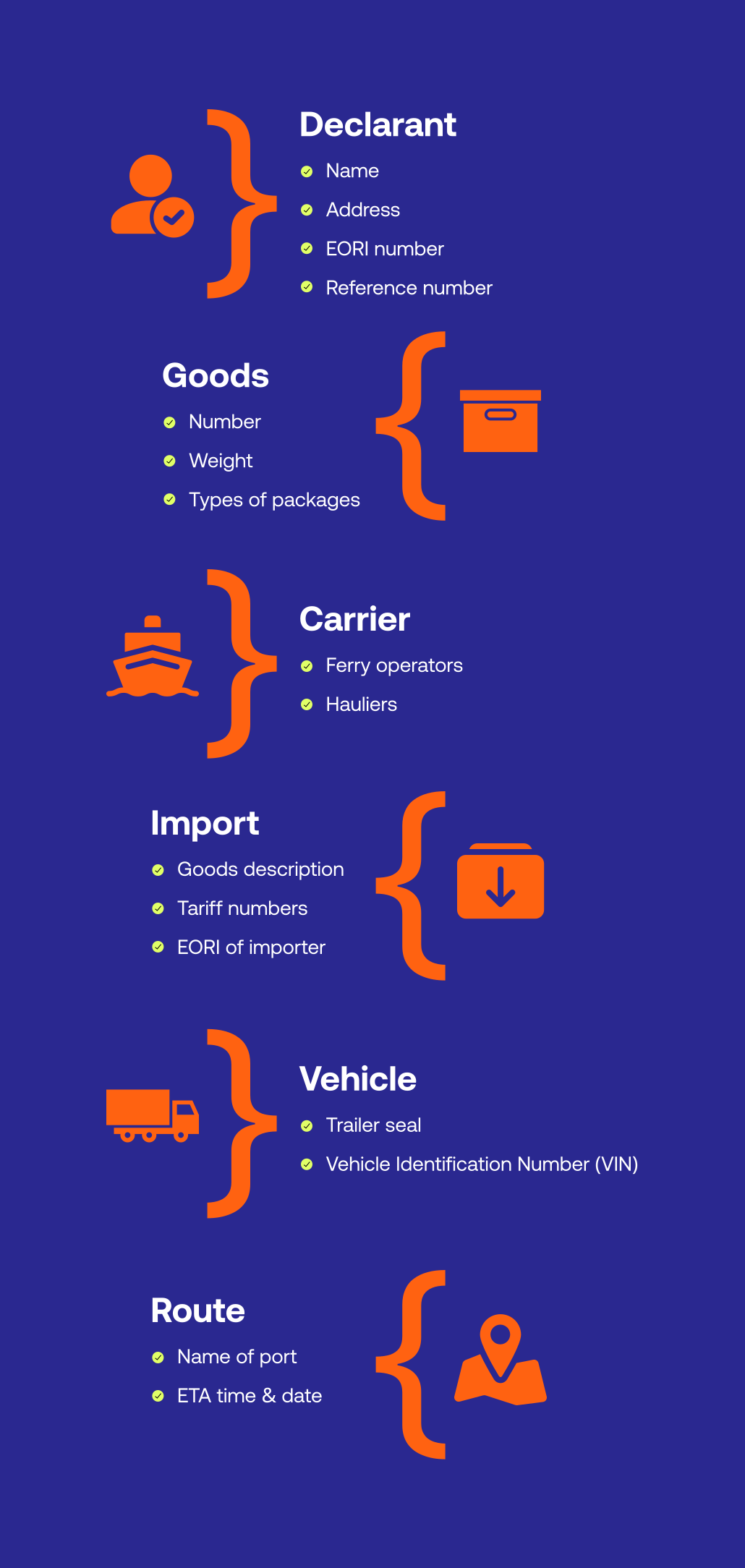
How to submit Safety and Security Declarations (SSD)?
- Register: Carriers must register for the S&S service for GB and ICS2 for EU using a Government Gateway account.
- Electronic submission: The declaration is submitted electronically to customs authorities via compatible software. You can get assistance from the iCustoms AI-driven iENS tool to submit safety and security declarations accurately and timely.
- Submission timeframe: The SSD must be submitted before goods arrive in the destination country.
Struggling with manual SSD submission?
Let iCustoms automate data extraction and SSD filing for you.
Common pitfalls in Safety & Security Declaration submission
Inaccurate or missing information: When filling out an SSD, you should pay special attention to entering the information accurately and completely. Make sure that you provide the correct information about goods, consignee, consignor, and mode of transport.
Late submission: The Safety and Security Declaration (SSD) must be submitted before the arrival of goods in the destination country; thus, the timeframe is crucial. Late submission may lead to fines and shipment delays.
Submitting a duplicate form: Choose the most recent version of the Safety and Security Declaration (SSD) form to avoid penalties and delays; thus, keeping an eye on the updates is important.
Best practices for Safety and Security Declaration (SSD) compliance
Stay updated: Keep yourself updated on the border and customs requirements so you can fill out the Safety and Security form according to the latest information.
Use advanced technology: Filling out and submitting the SSD using advanced technology guarantees accurate filling and timely submission, saving time and resources.
Seek professional assistance: If you’re unsure about the SSD requirements, get help from professionals to do the task more efficiently. The industry-leading SSD declaration partner, iCustoms, enters here to eliminate manual SSD filing and submission.
The bottom line
Businesses involved in international trading must be aware of the requirements for the Safety and Security Declaration (SSD) to avoid hefty fines and costly delays. Completing SDD accurately and timely can protect the security of the supply chain, resulting in a streamlined overall trading process.
Follow the guidelines discussed in this blog and seek help from iCustoms’ AI-driven iENS tool to ensure a smooth importing journey.
Frequently Asked Questions
What is the purpose of a Safety and Security Declaration and how does it differ from a customs declaration?
A Safety and Security Declaration is a document used by customs authorities to assess potential risks from goods entering their territory. Unlike a customs declaration, it is not designed to collect duties or taxes — its sole purpose is risk assessment and supply chain security. When importing into the UK and EU, safety and security data must be submitted via an Entry Summary Declaration prior to the arrival of goods.
Who is legally responsible for submitting a Safety and Security Declaration?
The legal responsibility for submitting a Safety and Security Declaration lies with the carrier — the operator of the active means of transport carrying the goods. For rail shipments, this is the freight operator. For sea or air freight, it is the shipping company or airline. For RoRo movements, it is the haulage company or ferry operator. Combined transport involves shared responsibility between the trucking company and the ferry operator.
What information must carriers include in a Safety and Security Declaration?
A Safety and Security Declaration must include details about the goods being transported, the consignee and consignor, and the mode of transport used. Customs authorities use this data to identify and assess risk before goods arrive. The declaration must be accurate and complete, as missing or incorrect information can result in fines or shipment blockages at the border. Carriers should verify all data elements carefully before submission.
When must a Safety and Security Declaration be submitted relative to the arrival of goods?
A Safety and Security Declaration must be submitted before goods arrive in the destination country, not at the time of arrival. The exact pre-arrival timeframe varies depending on the mode of transport and destination — both the UK and EU require advance submission. Late submission is treated as non-compliance and can trigger delays at the border, financial penalties, and disruption to the supply chain for all parties involved.
What are the most common errors businesses make when submitting Safety and Security Declarations?
The most common errors in Safety and Security Declaration submissions are inaccurate or missing information about goods, parties, or transport mode, submitting declarations after goods have already arrived, and using an outdated version of the form. Each of these mistakes can result in fines, shipment delays, or blocked goods at the border. Carriers should regularly check for form updates and use software that validates data before submission.
How do carriers register and submit Safety and Security Declarations electronically?
Carriers must register for the relevant customs system — the S&S GB service for Great Britain or ICS2 for the EU — using a Government Gateway account or equivalent. Declarations are submitted electronically via compatible customs software before goods arrive. Using dedicated declaration software reduces the risk of data entry errors, ensures the correct form version is used, and provides a clear audit trail for compliance purposes.
What best practices help businesses maintain consistent Safety and Security Declaration compliance?
Consistent Safety and Security Declaration compliance requires staying up to date with border and customs requirements, as rules and form versions can change. Using technology to automate data extraction and declaration submission reduces manual errors and ensures timely filing. Businesses that lack in-house expertise should work with a specialist customs partner who can manage SSD obligations accurately, particularly when shipments involve multiple transport modes or cross-border routes.
You may also like:
Simplify Your ENS Submissions with iCustoms

Automate data entry, reduce errors and ensure compliance
Subscribe to our Newsletter
About iCustoms
iCustoms is an all-in-one solution helping businesses automate customs processes more efficiently. With AI-powered and machine-learning capabilities, iCustoms is designed to streamline your all customs procedures in a few minutes, cut additional costs and save time.
Simplify Your ENS Submissions with iCustoms
Automate data entry, reduce errors and ensure compliance