
Understanding ENS Waivers Under the UCC Framework
- Freya Jane
- Director of Customer's Success
The Union Customs Code (UCC) has changed the customs processes throughout the European Union to reduce risks and improve security. The most significant modification is the introduction of Entry Summary Declaration (ENS).
However, there are several situations in which filing an ENS is not required. Businesses must understand these waivers in order to guarantee regulatory compliance and prevent needless administrative problems. This guide explores these exemptions and provides clarification on how they apply.
Understanding ENS and its importance
Entry Summary Declaration (ENS) is the European Union’s safety and security measures, which are set in place to improve border protection. Most goods entering or passing through the EU must make this declaration, which gives customs officials vital information to evaluate risks and stop harmful or unlawful shipments.
However, the Union Customs Code (UCC) acknowledges that some shipments and products should not be covered by this declaration.
General overview of ENS waivers
Generally, there are two categories of ENS waivers:
1. Shipment without stopping
Exemptions apply if goods move through the EU territorial waters or airspace without stopping, which ensures a smoother transit.
2. Special cases
Exemptions apply for specific types of goods and traffic; for instance, diplomatic shipments, humanitarian aid, or perishables requiring urgent transport.
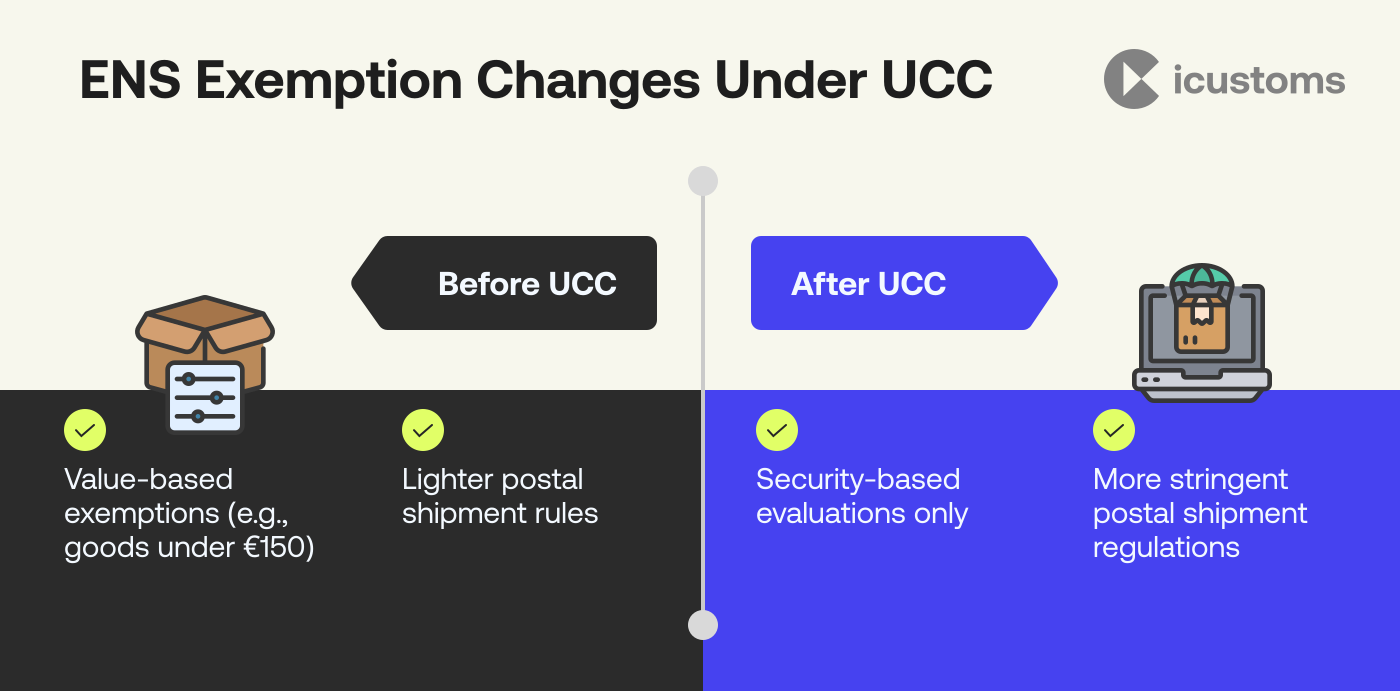
Notably, the UCC eliminated value-based exemptions that existed under preceding regulations. In the previous regulations, goods under €150 or those qualified for duty relief were excluded. But now exemptions are evaluated exclusively on the basis of security threats.
Key ENS exemptions
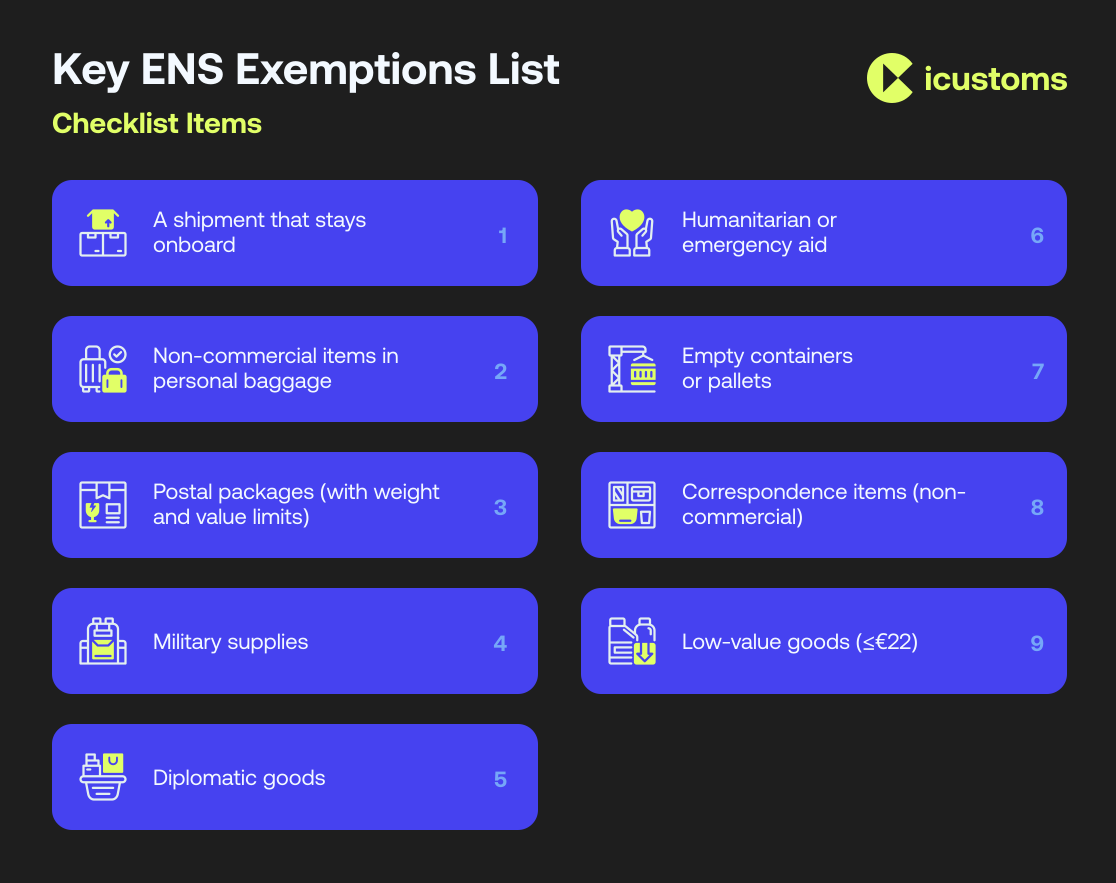
The primary cases in which businesses may not be required to file an ENS are described below.
A shipment that stays onboard
The ENS requirement does not apply to goods that are transported by air or sea and stay on the same ship or aircraft the entire time without being unloaded.
For example, the ENS does not apply to goods that are transported between non-EU countries via EU airspace or territorial waters without entering the EU’s customs territory. However, this exemption would not apply if the cargo ship stops at an EU port and unloads the cargo, even if for a short period.
Non-commercial items in the personal baggage
If the goods are transported in personal luggage and are not meant for business use, they may not require ENS. To be eligible for exemption, these goods must adhere to certain restrictions and limitations, usually established by customs officials.
Package shipped via post
Certain weight and value criteria may exclude goods from the ENS if they meet the requirements to be considered postal consignments. However, there are many modifications in this area.
For example, postal shipments under 250g, which were formerly completely exempt, will begin to be gradually incorporated into the system.
Military supplies
ENS regulations do not apply to military cargo carried by military aeroplanes or ships during official operations. Because of their sensitive nature and significance to national security, certain artefacts are given particular care.
For example, a military aircraft carries weapons and other equipment for particular operations. The aircraft stops at the EU airbase for refuelling but doesn’t unload the cargo. The shipment is exempt from ENS filing since it is a part of an official military operation.
Goods that diplomatic immunity covers
Certain goods that benefit from diplomatic or consular immunity are also exempt from the ENS requirements. Certain exemptions are given to these items in accordance with diplomatic procedures and international protocols.
For example, an embassy moves its headquarters to a different EU city. They ship their furniture and other office equipment to the new location. These goods are not subject to ENS requirements because they are protected by diplomatic immunity.
Humanitarian or emergency assistance
An ENS is not necessary for goods carried as part of officially sanctioned humanitarian or emergency activities. These items are usually supplied during emergencies and must receive approval from customs officials before they can be waived.
For example, in case of an earthquake, a country sends food, water, and medical supplies to the affected areas via the EU airport. The shipment is exempt from ENS filing since it has been authorised by customs officials and officially sanctioned as humanitarian aid.
Empty pallets or containers
Empty containers, pallets, or packaging materials, which are not being transported under a formal contract, are generally excluded from ENS requirements unless otherwise specified by customs authorities.
Items of correspondence
As long as they are non-commercial, items like postcards, letters, and educational materials are exempt from the ENS. Regardless of the carrier, an ENS is necessary for any items for commercial purposes (such as promotional materials).
Low-value goods (≤€22)
The ENS duty does not apply to some low-value items (under €22) until all the modifications of ICS2 are completed. Businesses should get ready for a future alignment with standard ENS regulations, even though this is intended to lessen the burden on small-scale e-commerce exports.
ENS Exemptions Changes Under UCC
Wrapping up
Businesses operating throughout the EU must understand the exemptions from the Entry Summary Declaration (ENS) requirement under the Union Customs Code (UCC). Although ENS is necessary for the majority of shipments in order to improve security and automate customs operations, there are some exceptions for certain items and circumstances. Businesses can avoid needless administrative burdens and maintain compliance by being aware of these waivers.
Manually managing multiple filing could be challenging, but automated solutions like iCustoms can simplify the process using AI technology.
Frequently Asked Questions
What is the Union Customs Code and what changes did it introduce to ENS requirements for EU trade?
The Union Customs Code (UCC) is the EU's comprehensive legal framework governing customs processes across all member states. It reformed earlier customs legislation and introduced significant changes to Entry Summary Declaration (ENS) requirements, tightening security-based assessments for goods entering or transiting EU territory. The UCC also eliminated certain value-based ENS exemptions that previously existed, replacing them with a security-risk-focused approach to determine when declarations are required.
What are the two main categories of ENS waiver that apply under the UCC framework?
Under the UCC, ENS waivers fall into two broad categories. The first covers goods in transit that pass through EU territorial waters or airspace without stopping or being unloaded, ensuring smooth movement without triggering declaration requirements. The second covers special cases including specific goods or traffic types such as diplomatic shipments, humanitarian aid, or urgent perishable consignments, where security risk considerations support an alternative compliance approach.
How did the UCC change the value-based ENS exemptions that existed under previous EU customs rules?
Under the previous EU customs regime, goods valued under €150 or qualifying for duty relief were automatically exempt from ENS filing requirements. The Union Customs Code eliminated these value-based exemptions entirely. Under the UCC, exemptions are assessed exclusively on security risk grounds rather than monetary thresholds, meaning the value of a shipment no longer determines whether an ENS is required. Businesses that relied on value-based exemptions must review their declaration compliance approach accordingly.
When does the goods staying onboard exemption apply, and what happens if cargo is unloaded at an EU port?
The goods staying onboard exemption applies when cargo is transported by air or sea through EU airspace or territorial waters without being unloaded from the vessel or aircraft. For example, cargo transiting between two non-EU countries via EU waters without stopping at an EU port is exempt from ENS filing. However, if a vessel calls at an EU port and unloads cargo, even briefly, the exemption no longer applies and an ENS must be submitted before arrival.
Which shipment types qualify for ENS exemptions based on special status or purpose under EU rules?
Several shipment categories qualify for ENS exemptions based on special status or purpose. Military cargo carried by military aircraft or vessels during official operations is exempt due to national security considerations. Goods covered by diplomatic or consular immunity are excluded under international protocols. Additionally, goods transported as part of officially sanctioned humanitarian or emergency relief operations are exempt, provided they have received prior authorisation from the relevant customs authorities before shipment.
Do postal consignments and personal baggage require an ENS filing under EU customs rules?
Postal consignments meeting certain weight and value criteria may be exempt from ENS requirements, though this is an evolving area. Previously, postal shipments under 250g were entirely exempt, but these are being progressively incorporated into the ICS2 system. Personal baggage is generally exempt if the goods are non-commercial and comply with customs limits. However, items intended for commercial purposes, including promotional materials, require an ENS regardless of the carrier or shipment method used.
How should businesses prepare for the phase-out of the low-value goods ENS exemption under ICS2?
Goods valued at €22 or below currently benefit from a temporary ENS exemption pending full ICS2 implementation across all phases. As ICS2 rollout progresses, this exemption will be removed and low-value e-commerce shipments will be subject to standard ENS filing requirements. Businesses — particularly small-scale e-commerce exporters and postal operators — should review their declaration workflows now and invest in automation tools that can handle increased ENS volumes efficiently when the transitional period ends.
You may also like:
Simplify Customs with our Powerful Customs Management Software

Automate declarations, track shipments, & ensure compliance.
About iCustoms
iCustoms is an all-in-one solution helping businesses automate customs processes more efficiently. With AI-powered and machine-learning capabilities, iCustoms is designed to streamline your all customs procedures in a few minutes, cut additional costs and save time.
Simplify Customs with our Powerful Customs Management Software
Automate declarations, track shipments, & ensure compliance.