
9 Reasons Logistics and Trade Leaders Choose iCustoms for Customs Automation
- John Hall
- Customs Specialist at iCustoms.ai
International trade is becoming increasingly regulated as customs authorities deploy AI powered customs automation systems requiring accurate, structured trade data. Businesses must process declarations quickly while ensuring compliance with evolving regulatory frameworks and data validation requirements.
The Shift Toward Data Driven Customs Automation System
Customs authorities across global trade corridors now rely heavily on digital risk assessment systems rather than manual paperwork. These systems require structured trade data submitted electronically before shipments reach border entry points.
For logistics providers and international traders, AI powered customs automation means declaration accuracy, product classification consistency, and reliable documentation have become essential operational priorities.
Why Businesses Are Turning to Customs Automation
Manual customs workflows struggle to keep pace with increasing shipment volumes and complex regulatory requirements. Administrative delays and inconsistent data validation can create operational inefficiencies and compliance risks.
Technology platforms designed for customs automation combine artificial intelligence, document processing technology, and direct integration with customs authorities to streamline declaration preparation and improve compliance reliability.
1. AI Driven Product Classification Improves Compliance Accuracy
Accurate product classification forms the foundation of customs compliance. Businesses must assign the correct commodity codes to goods in order to determine duties, taxes, and regulatory requirements applied to international shipments.
The Importance of Correct Commodity Codes
Incorrect product classification can create serious compliance challenges. Errors may result in incorrect duty payments, shipment delays, or regulatory scrutiny from customs authorities.
Maintaining classification accuracy is particularly difficult when organisations manage large product catalogues across multiple international markets.
How Artificial Intelligence Supports Classification
iCustoms applies artificial intelligence to assist classification workflows by analysing product descriptions, material composition, and historical classification patterns.
This approach helps organisations identify appropriate tariff codes more efficiently while improving classification consistency across large product inventories.
2. Intelligent Document Processing Converts Trade Documents into Structured Data
Customs declarations rely heavily on information extracted from commercial documents such as invoices, packing lists, and transport records. Intelligent Document Processing reduces manual workload by automating data extraction and improving accuracy across declaration workflows.
The Challenges of Manual Document Handling
When information must be manually transferred from trade documents into customs systems, inconsistencies can occur. Even small errors can lead to validation issues or delays.
For high-volume operations, the absence of Intelligent Document Processing creates significant administrative bottlenecks.
How Intelligent Document Processing Works
The iCustoms platform uses Intelligent Document Processing to analyse trade documents and automatically extract key data fields. By converting unstructured content into structured declaration-ready data, Intelligent Document Processing improves efficiency, reduces errors, and ensures consistency across customs filings.
3. Automated Customs Declaration Workflows Improve Operational Efficiency
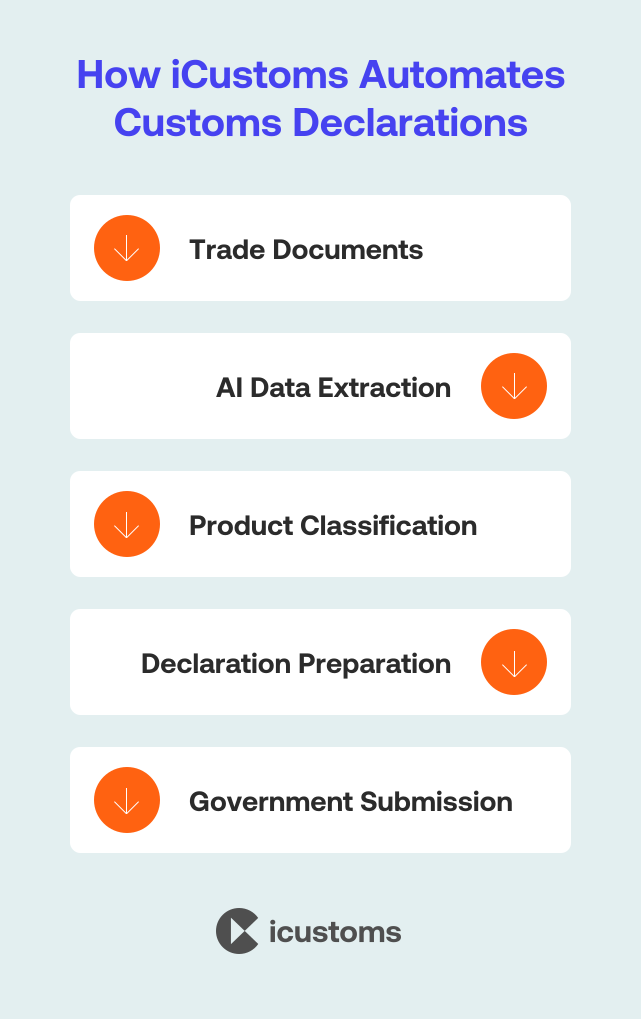
Preparing customs declarations requires coordination of product information, shipment values, origin data, and supporting documentation. Managing these elements manually can slow operations and increase administrative complexity.
The Operational Challenges of Manual Workflows
Manual declaration preparation often involves repetitive data entry and extensive cross checking between documents. These tasks consume valuable operational time and increase the likelihood of human error. Businesses managing large declaration volumes may find it difficult to scale their customs operations using traditional manual workflows.
How Workflow Automation Streamlines the Process
iCustoms automates key stages of the declaration process by validating trade data, organising required information, and preparing electronic declaration submissions.
By reducing manual tasks, automation allows logistics providers and traders to process customs declarations more efficiently while maintaining compliance accuracy.
4. Built for Modern Customs Systems Including ICS2 and NCTS
Customs authorities are increasingly implementing digital infrastructure to strengthen supply chain visibility and risk assessment. Businesses must ensure their declaration systems are aligned with modern frameworks such as ICS2 and NCTS to maintain compliance and operational continuity.
Key Systems Shaping European Customs Compliance
Several digital systems now play a critical role in customs compliance across Europe:
• Import Control System 2 (ICS2), designed for pre-arrival safety and security risk analysis
• New Computerised Transit System (NCTS), used to manage and monitor goods moving under transit procedures across customs territories
Both ICS2 and NCTS require structured electronic submissions, accurate data, and strict validation controls.
Supporting Compliance with Digital Customs Systems
The iCustoms platform supports compliance with ICS2 and NCTS by enabling accurate, structured electronic filings across both security and transit workflows.
By validating shipment data before submission, iCustoms helps businesses reduce errors, ensure consistency, and process safety and transit declarations more efficiently.
5. Seamless Integration with Government Customs Authorities
Effective customs automation requires reliable connectivity with national customs authorities. Platforms must be capable of transmitting declaration data directly to government systems in approved electronic formats.
Why Direct Customs Connectivity Matters
Without direct connectivity, businesses may rely on manual submission processes that increase operational complexity and processing time.
Integration with government systems ensures that declaration data is transmitted securely and processed efficiently by customs authorities.
Government Systems Supported by iCustoms
The platform integrates with several national customs infrastructures including HM Revenue and Customs in the United Kingdom and Irish Revenue digital customs systems.
These integrations enable businesses to submit declarations electronically while ensuring that submissions comply with official customs procedures.
6. Secure and Certified Trade Compliance Solutions
Modern trade compliance solutions must protect sensitive customs data while ensuring regulatory accuracy across global supply chains. Customs declarations include critical information such as shipment values, supplier details, and product specifications, making data security a core requirement.
The Importance of Data Security in Trade Compliance Solutions
Effective trade compliance solutions ensure confidentiality, data integrity, and compliance with international regulations.
Businesses must rely on platforms built on secure frameworks to safeguard customs data throughout the declaration lifecycle.
Security Certifications Supporting Trade Compliance Solutions
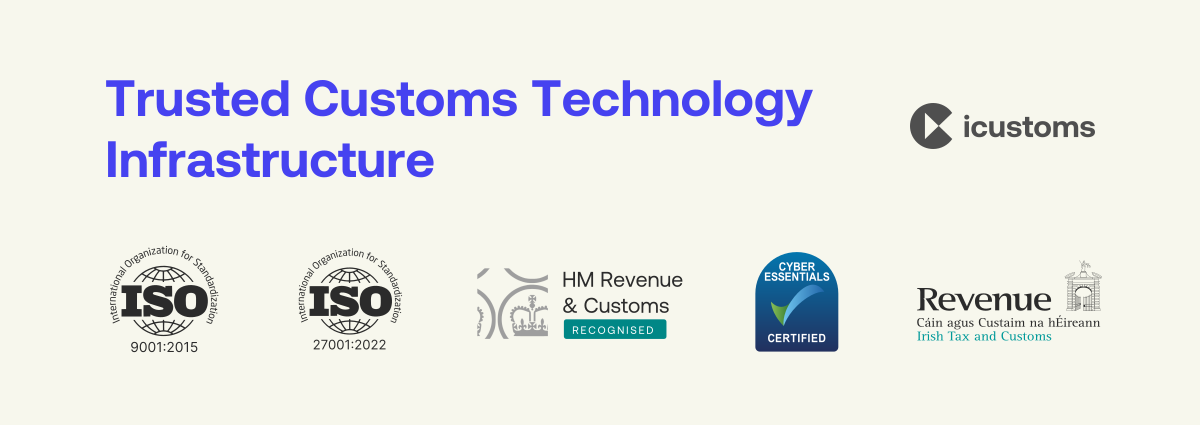
The iCustoms platform delivers trade compliance solutions supported by internationally recognised standards, including ISO 27001 for information security and ISO 9001 for quality management.
Cyber Essentials certification further validates strong cyber security practices, ensuring sensitive trade data remains protected across all customs processes.
7. Alignment with Global Trade and Logistics Institutions
Customs technology platforms operate within a broader ecosystem that includes freight forwarders, logistics providers, and international trade organisations. Alignment with recognised institutions helps ensure that technology solutions reflect industry best practices.
The Role of Trade Institutions
Professional organisations help establish standards and operational guidance across global logistics networks. These institutions play an important role in supporting trade compliance education and industry development.
Technology platforms used by logistics operators must therefore align with the practical realities of global trade operations.
Industry Organisations Associated with iCustoms
iCustoms operates within recognised trade frameworks associated with institutions such as BIFA and the Chartered Institute of Export and International Trade.
This alignment reflects the platform’s role in supporting organisations involved in international logistics and cross border trade compliance.
8. Award Winning Customs Software Recognised by the Logistics Industry
Industry recognition offers independent validation of technological innovation and operational value. Awards from respected industry events highlight solutions that deliver measurable benefits for logistics and trade organisations.
Recognition at the Multimodal 2024 Awards
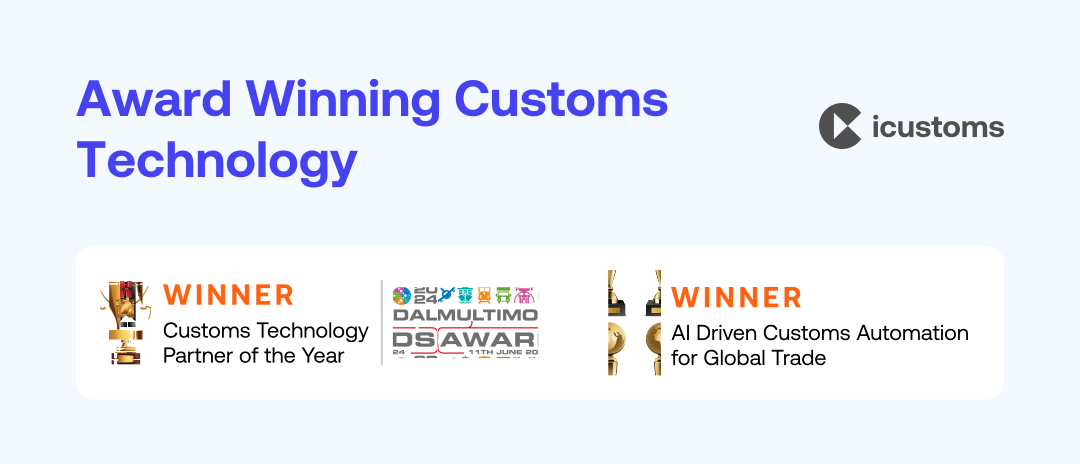
In 2024, iCustoms was named Customs Technology Partner of the Year at the Multimodal Awards, one of the most respected events within the logistics and supply chain sector.
The award recognised the platform’s contribution to improving customs compliance through automation and advanced trade data processing capabilities.
What the Award Demonstrates
This recognition highlights the growing importance of AI driven customs technology in modern trade operations and demonstrates the platform’s ability to support businesses navigating complex regulatory environments.
9. Built for the Future of Digital Trade Compliance
Customs systems continue to evolve as governments move toward fully digital trade environments. Regulatory initiatives increasingly require structured trade data and automated compliance validation across supply chains.
Emerging Trends in Customs Technology
Several developments are shaping the future of customs compliance including digital customs submissions, automated risk assessment systems, and the development of the EU Customs Data Hub. These initiatives are transforming the way customs authorities manage cross border trade.
Preparing Businesses for Future Customs Requirements
iCustoms combines artificial intelligence, automation, and secure integrations into a scalable platform designed to support these emerging digital customs frameworks.
By enabling organisations to manage customs data more effectively, the platform helps businesses remain compliant as international trade regulations continue to evolve.
Conclusion
The growing complexity of international trade requires businesses to modernise their customs compliance processes. Manual declaration workflows struggle to keep pace with increasing shipment volumes and evolving regulatory requirements.
iCustoms supports this transition by combining AI driven product classification, intelligent document processing, automated declaration workflows, and direct integrations with government customs systems.
The platform’s reliability is reinforced by internationally recognised certifications including ISO 27001 and ISO 9001, as well as industry recognition such as the Multimodal 2024 Customs Technology Partner of the Year award.
For logistics operators, freight forwarders, and international traders seeking to modernise their customs operations, iCustoms provides a scalable platform designed to support the future of digital trade compliance.
FAQs
What is customs automation and why is it important?
Customs automation refers to the use of AI, data processing, and system integrations to streamline customs declarations. It is important because it improves accuracy, reduces manual workload, and ensures compliance with modern digital customs systems.
How does customs automation reduce errors in declarations?
Customs automation reduces errors by eliminating manual data entry, validating structured trade data, and ensuring consistency in classification, documentation, and submission formats across customs filings.
How does AI help with product classification in customs?
AI supports product classification by analysing product descriptions, materials, and historical data to recommend accurate HS, CN, and TARIC codes, improving consistency and reducing misclassification risks.
What is Intelligent Document Processing in customs workflows?
Intelligent Document Processing uses AI to extract key data from invoices, packing lists, and other trade documents, converting unstructured information into structured data ready for customs declarations.
Can customs automation integrate with government customs systems?
Yes, modern customs automation platforms integrate directly with government systems, enabling secure electronic submission of declarations and ensuring compliance with official customs procedures.
What are ICS2 and NCTS in customs compliance?
ICS2 is a pre-arrival security system used for risk assessment, while NCTS manages goods moving under transit procedures. Both require accurate, structured electronic submissions for compliance.
How does customs automation improve operational efficiency?
Automation streamlines declaration workflows by reducing repetitive tasks, organising data, and validating submissions, allowing businesses to process higher volumes with fewer delays.
Is customs automation suitable for high-volume logistics operations?
Yes, customs automation is particularly beneficial for high-volume operations, as it enables scalable processing, reduces administrative bottlenecks, and maintains consistency across large numbers of declarations.

Simplify Customs Automation
Automate declarations, improve accuracy, and stay compliant with iCustoms
You may also like:


Struggling to Extract, Catagorise & Validate Your Documents?

Capture & Upload Data in Seconds with AI & Machine Learning
Subscribe to our Newsletter
About iCustoms
iCustoms is an all-in-one solution helping businesses automate customs processes more efficiently. With AI-powered and machine-learning capabilities, iCustoms is designed to streamline your all customs procedures in a few minutes, cut additional costs and save time.
Struggling to Extract, Catagorise & Validate Your Documents?
Capture & Upload Data in Seconds with AI & Machine Learning