
Hungary Customs Declaration Guide for Freight and Customs Professionals
- John Hall
- Customs Specialist at iCustoms.ai
International freight moving through Hungary sits at the intersection of EU regulatory enforcement and high volume transit corridors. A single data mismatch can trigger inspections, storage fees, and cascading delays across multimodal networks. For operators managing consolidated consignments, customs errors translate directly into financial exposure and service failures.
This guide explains how the Hungary customs declaration process works in operational environments. You will learn how declarations flow through EU digital systems, which actors handle each step, what documentation customs authorities scrutinise, and how compliance automation reduces clearance risk and administrative workload.
Search intent is mixed informational and commercial. The focus remains practical execution for freight forwarders, customs brokers, hauliers, and compliance teams.
Hungary Customs Environment and Trade Compliance Framework
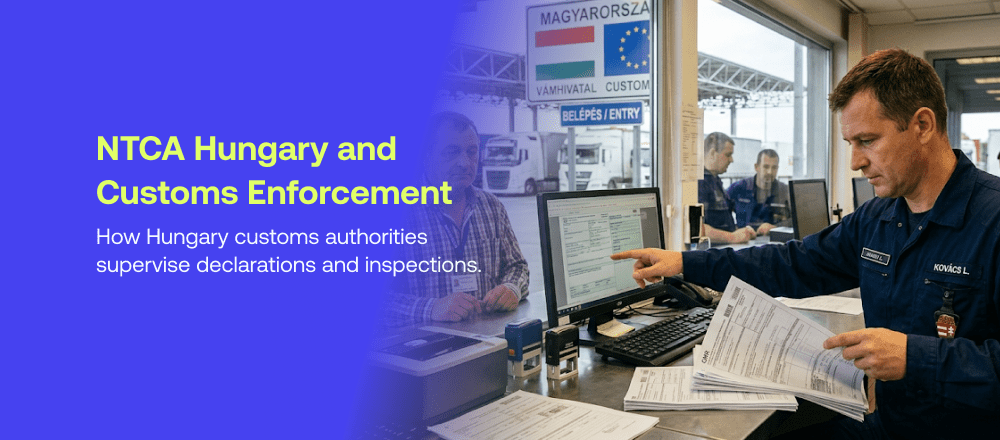
Hungary plays a central role within the European Union Customs Union, acting as a land bridge between Western Europe and Balkan transit corridors. Consequently, high volumes of road freight pass through its borders daily, making customs clearance speed a direct determinant of regional supply chain reliability.
The national authority responsible for enforcement is Nemzeti Adó- és Vámhivatal, also known internationally as NTCA Hungary. Operators frequently refer to local offices as Vámhivatal, which supervise inspections, risk profiling, and release decisions.
MKEH and MKEH nyilvántartás in Trade Controls
Hungary regulates dual use goods, technical certifications, and controlled products through the MKEH register system. Traders dealing in regulated commodities must ensure company data appears correctly in MKEH nyilvántartás before initiating customs procedures.
If registration data conflicts with declaration records, authorities can suspend clearance. As a result, freight forwarders must validate shipper credentials early during booking acceptance to prevent cross system inconsistencies.
Customs Declaration Workflow and Customs Procedures in Hungary
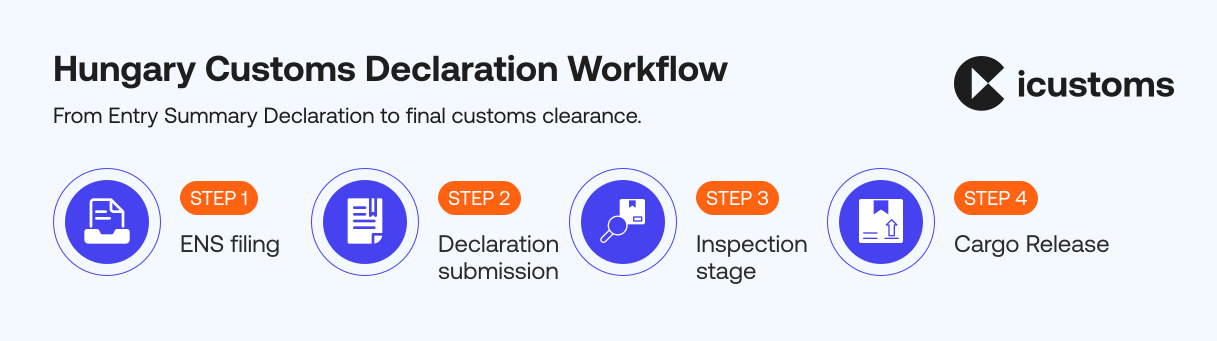
Customs procedures in Hungary follow EU harmonised processes, yet operational execution varies depending on shipment type, transport mode, and declarant structure. Freight operators must coordinate data flows between shippers, brokers, carriers, and digital customs platforms.
Pre Arrival Filings and Entry Summary Declaration
Carriers or their representatives submit an Entry Summary Declaration before goods reach the EU border. This safety filing enables risk assessment under ICS2 requirements and allows customs authorities to identify high risk consignments in advance.
Incomplete ENS datasets commonly arise in groupage movements. Therefore, forwarders must consolidate house bill data early, validate consignee identifiers, and confirm commodity descriptions before vehicle departure.
Hungary Import Customs Clearance Process
Import customs clearance begins when the declarant lodges an electronic customs declaration referencing the EORI number of the importer. Brokers classify goods using Combined Nomenclature commodity codes, calculate duties under the Common Customs Tariff, and transmit datasets through national customs systems.
Customs officers may request supporting documents, inspect cargo, or query valuation methods. Consequently, inaccurate tariff classification or undervaluation can extend clearance from hours to several days.
Hungary Export Declarations and Release for Exit
Exporters or appointed brokers submit export declarations before goods depart Hungary. Authorities verify export restrictions, dual use licensing, and VAT zero rating eligibility prior to releasing consignments.
After approval, customs systems issue Movement Reference Numbers which accompany shipments to exit points. If data discrepancies emerge at border scanning, exit confirmation fails and exporters face compliance queries.
Hungary Transit Operations under NCTS
Transit procedures allow goods to move across multiple EU territories with duties suspended. Logistics operators must secure financial guarantees, generate transit accompanying documents, and discharge movements at destination customs offices.
Failure to close transit declarations triggers guarantee claims and financial penalties. Therefore, transport teams must monitor movement status continuously and coordinate promptly with destination brokers.
EU Digital Systems Used in Hungary Customs Clearance
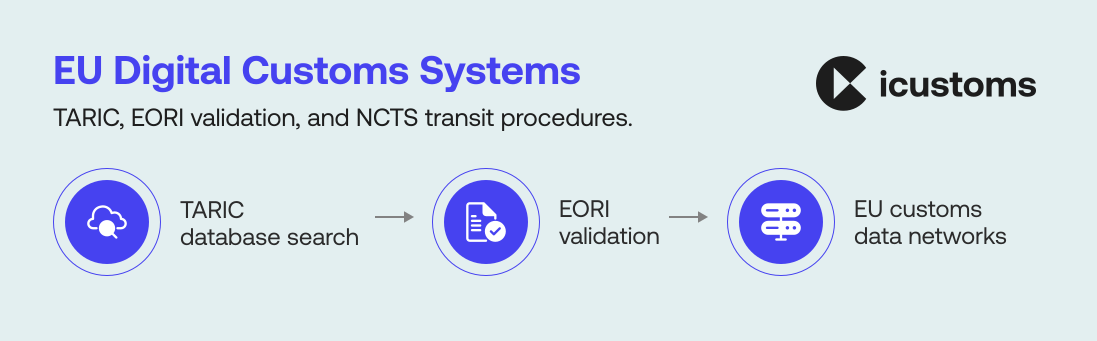
Hungary integrates tightly with EU wide customs technology platforms that synchronise risk assessment, tariff enforcement, and trader identification. Freight professionals interact with these systems daily, often through broker software or integrated declaration platforms.
TARIC Database and TARIC Code Finder Tools
The TARIC Database provides the legal tariff measures applicable across the EU. Brokers rely on TARIC code search tools to identify commodity codes, duty rates, quota restrictions, and trade defence measures.
Misclassification risks increase when product descriptions lack technical detail. For example, composite goods may fall under multiple headings, leading to incorrect duty payments or customs challenges during post clearance audits.
Combined Nomenclature and Common Customs Tariff
The Combined Nomenclature extends the global HS structure to meet EU statistical and regulatory requirements. Declarants must apply precise commodity codes because duty rates derive directly from the Common Customs Tariff schedule.
Incorrect classification creates financial exposure in two directions. Underpayment invites penalties and reassessments, while overpayment erodes importer margins and complicates reimbursement procedures.
Hungary EORI szám (EORI Number) Validation and Lookup
The EORI szám (Economic Operators Registration and Identification number) is a mandatory identifier for any business importing or exporting goods into Hungary and across the European Union. It is required for submitting customs declarations, including ENS filings under ICS2, and is used by customs authorities to track and validate economic operators.
What is an EORI szám in Hungary?
An EORI szám is a unique customs identification number issued by Hungarian authorities and recognised across all EU member states. It ensures that businesses are properly registered and authorised to interact with EU customs systems.
EORI szám kereső and lekérdezése tools
To confirm whether an EORI number is valid, traders use:
- EORI szám kereső for quick lookup
- EORI szám lekérdezése for detailed validation
These tools allow operators to:
- Verify registration status
- Check company details linked to the EORI
- Ensure consistency with declaration data
Regular validation is essential when onboarding new clients or processing shipments across multiple jurisdictions.
Why EORI validation is critical for ICS2 and ENS filings
Under ICS2, customs systems automatically validate EORI data against official EU records. If there is any mismatch between the declared EORI and the registered details, the submission is rejected.
Common issues include:
- Incorrect country prefix such as missing “HU”
- Mismatch in company name or legal entity
- Using outdated or inactive EORI numbers
These errors can lead to:
- Immediate ENS rejection
- Shipment delays at EU borders
- Increased risk of customs inspection
When should you validate an EORI szám?
EORI validation should not happen during time critical filing windows. Instead, it should be embedded earlier in the workflow.
Best practice includes:
- Validating EORI numbers during client onboarding
- Rechecking data before first shipment submission
- Maintaining a verified database of client identifiers
This approach reduces operational pressure and prevents last minute filing failures.
Documentation Requirements and Customs Regulations Enforcement
Hungarian customs authorities enforce strict documentation rules because inconsistencies signal misdeclaration or fraud risk. Even minor discrepancies between commercial paperwork and digital filings can escalate to inspections.
Core Commercial Documentation for Customs Declaration
Operators must prepare consistent document sets including:
- Commercial invoice with accurate valuation and Incoterms
• Packing list reflecting packaging hierarchy
• Transport documents such as CMR or bill of lading
• Certificates of origin where preferential tariffs apply
• Licences for restricted or controlled goods
If invoice descriptions differ from declared commodity codes, customs officers may question classification logic and suspend release.
Commodity Codes and Classification Risk Exposure
Commodity codes determine duty liability, import controls, and statistical reporting. However, many shippers provide vague product descriptions such as machinery parts or textile accessories.
Such ambiguity forces brokers to interpret classification with incomplete data. As a result, inconsistent HS allocation across shipments increases audit risk and potential retroactive duty reassessments.
IOSS and Import One Stop Shop for Low Value Shipments
The Import One Stop Shop simplifies VAT handling for low value e commerce consignments entering the EU. Businesses register for IOSS to declare VAT centrally rather than paying at each border.
If sellers misuse IOSS numbers or misdeclare parcel values, customs authorities may suspend simplified procedures. Consequently, postal operators and express carriers must validate seller credentials before uplift.
CBAM and Environmental Compliance Declarations
The Carbon Border Adjustment Mechanism introduces reporting obligations for carbon intensive goods entering the EU. Importers must submit emissions data alongside customs declarations for covered commodities.
Failure to provide accurate CBAM reports can delay clearance and create financial liabilities. Therefore, compliance teams must align customs datasets with environmental reporting frameworks.
Operational Role of Vámhivatal and Border Customs Offices
Local Vámhivatal offices supervise inspections, documentary verification, and enforcement actions at ports, airports, and land borders. Officers evaluate risk profiles generated by EU systems and select consignments for scanning or physical examination.
High risk flags often arise from valuation anomalies, licensing gaps, or inconsistent trader histories. Consequently, experienced brokers pre validate declarations internally to reduce intervention probability.
Digital Trade Compliance Infrastructure and Automation
Manual customs processing cannot scale with modern shipment volumes and regulatory digitisation. Freight operators now depend on integrated digital platforms that synchronise classification, documentation, and submission workflows.
Automated Customs Declaration Platforms
Digital declaration systems consolidate shipment data, validate mandatory fields, and transmit filings directly to customs authorities. This reduces repetitive data entry across disparate portals and minimises human transcription errors.
Additionally, centralised dashboards allow compliance teams to track multi shipment processing status, preventing overlooked clearance holds.
AI Driven Classification and TARIC Code Search Automation
AI engines analyse product descriptions and technical attributes to recommend accurate commodity codes. These tools reference TARIC Database measures and Combined Nomenclature rules to improve classification reliability.
As a result, brokers reduce overpayment risk, strengthen audit defensibility, and accelerate declaration preparation for high volume consignments.
Intelligent Document Processing for Compliance Accuracy
Intelligent document processing systems extract structured data from invoices, packing lists, and certificates automatically. This eliminates manual keying and highlights mismatches between commercial documents and customs datasets.
For example, if invoice quantities differ from packing declarations, systems alert operators before submission. Consequently, brokers resolve discrepancies before customs authorities intervene.
Financial Risk Exposure in Customs Clearance Operations
Customs delays generate immediate and indirect costs across logistics chains. When clearance stalls, operators incur:
- Border storage and warehousing fees
• Demurrage and detention charges from carriers
• Missed delivery windows and contractual penalties
• Administrative rework and broker overtime costs
• Duty overpayments caused by rushed classification
Therefore, procedural accuracy directly protects profit margins and service reliability.
Conclusion: Digital Compliance as Operational Infrastructure
Hungary customs clearance now operates within a tightly digitised EU enforcement environment where procedural accuracy determines shipment velocity and cost control. Even minor data errors can escalate into inspections, storage charges, and audit exposure across interconnected supply chains.
Freight operators therefore require integrated compliance infrastructure rather than fragmented manual processes. Automated classification, intelligent document validation, and synchronised EU system submissions reduce risk while improving audit defensibility.
iCustoms functions as embedded digital compliance infrastructure that enables operators to complete declarations in under 90 seconds while maintaining consistent regulatory accuracy. Consequently, logistics teams reduce manual workload, minimise financial exposure, and align seamlessly with accelerating EU customs digitisation requirements.
Frequently Asked Questions
How do freight forwarders file a customs declaration in Hungary?
Freight forwarders appoint a licensed customs broker who submits electronic declarations through national customs systems. The broker enters shipment data, applies commodity codes, references the importer EORI number, and attaches supporting documents before customs review.
What documents do Hungarian customs authorities check most often?
Officers usually verify commercial invoices, packing lists, transport documents, and certificates of origin. They compare product descriptions, values, and quantities against declared commodity codes to detect inconsistencies or misclassification risks.
How does AI help with product classification in customs?
Hungary uses ICS2 for safety filings, NCTS for transit movements, TARIC Database for tariff measures, and EORI validation systems for trader identification. Incorrect submissions in any system can delay clearance or trigger inspections.
How long does customs clearance take in Hungary?
Standard clearances often complete within hours if declarations contain accurate data. However, inspections, missing licences, or classification disputes can extend processing to several days depending on cargo risk profiles.
What are common customs declaration mistakes?
Typical errors include incorrect commodity codes, inconsistent invoice valuations, missing licences, invalid EORI numbers, and incomplete Entry Summary Declarations. These mistakes frequently result in shipment holds and financial penalties.

Simplify Customs Automation
Automate declarations, improve accuracy, and stay compliant with iCustoms
You may also like:
Struggling to Extract, Catagorise & Validate Your Documents?

Capture & Upload Data in Seconds with AI & Machine Learning
Subscribe to our Newsletter
About iCustoms
iCustoms is an all-in-one solution helping businesses automate customs processes more efficiently. With AI-powered and machine-learning capabilities, iCustoms is designed to streamline your all customs procedures in a few minutes, cut additional costs and save time.
Struggling to Extract, Catagorise & Validate Your Documents?
Capture & Upload Data in Seconds with AI & Machine Learning