
Export Health Certificates: Moving Live Animals from the UK and NI
- John Hall
- Customs Specialist at iCustoms.ai
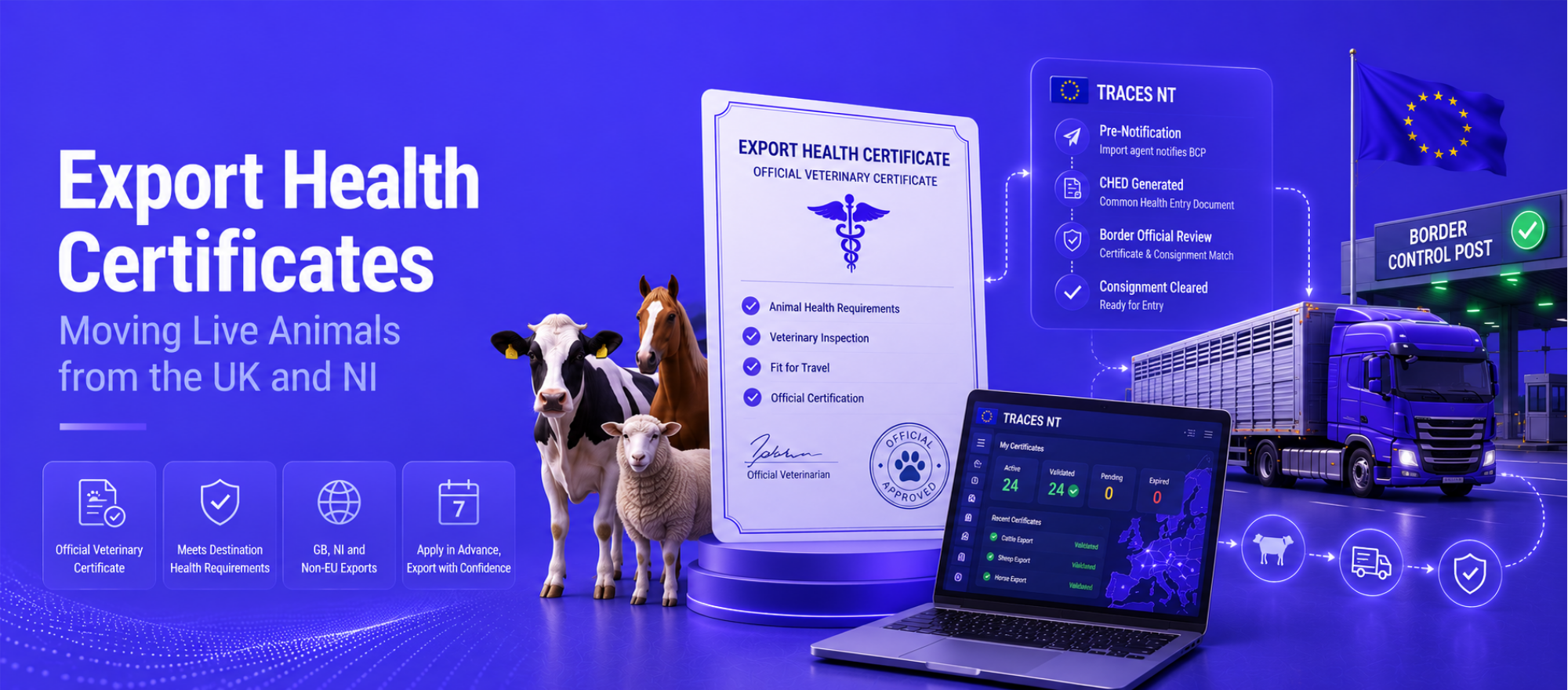
An Export Health Certificate is the official document that lets live animals cross a border legally. It confirms, in the words of the destination country’s own rules, that the animals meet the health conditions required before they arrive. Without it, a consignment of livestock, horses or companion animals cannot move from Great Britain to the EU, and it certainly will not clear a border control post.
This guide explains what an Export Health Certificate is, exactly when live animal exports from the UK and Northern Ireland need one, who issues it, and how the process runs through TRACES NT. Because the rules differ depending on where you start and where you are going, we set out each route clearly.
What is an Export Health Certificate?
An Export Health Certificate, usually shortened to EHC, is an official veterinary document confirming that an export meets the health requirements of the destination country. An official veterinarian signs it after inspecting the animals, and it must travel with the consignment to its destination. Crucially, the goods must not be split up in transit, because the certificate covers the consignment as certified.
Think of the EHC as the animal-health passport for a commercial movement. It sits at the centre of the Animal Health Law framework, and border officials treat it as the primary proof that the animals are fit to enter.
When is an Export Health Certificate required?
You need an EHC to export or move live animals from Great Britain to the EU, to Northern Ireland, or to a non-EU country. Northern Ireland is the important exception. Because it still follows EU animal health rules, a movement from Northern Ireland into the EU does not use an EHC; it uses an Intra-Trade Animal Health Certificate instead. Northern Ireland does, however, need an EHC to export to non-EU countries.
| Movement | Document | Platform |
|---|---|---|
| Great Britain to the EU | Export Health Certificate (EHC) | TRACES NT (importer or agent submits the required pre-notification) |
| Great Britain to Northern Ireland | Export Health Certificate (EHC) | TRACES NT (importer or agent submits the required pre-notification) |
| Great Britain to a Non-EU Country | Export Health Certificate (EHC) | Destination country’s import and certification requirements apply |
| Northern Ireland to the EU | Intra Trade Animal Health Certificate (ITAHC) — no EHC required | TRACES NT (INTRA module) |
| Northern Ireland to a Non-EU Country | Export Health Certificate (EHC) | Destination country’s import and certification requirements apply |
As a result, the first question on any export is not what the animal is, but where it starts and where it is going. That single decision sets which certificate you need.
Export Health Certificate vs ITAHC: The Distinction That Trips People Up
The two certificates are often confused, yet they cover different journeys. For a full walkthrough of the intra-Union route, see our guide to the Intra-Trade Animal Health Certificate. In short, the EHC governs exports to third countries and the ITAHC governs trade within the Union.
| Export Health Certificate (EHC) | Intra-Trade Animal Health Certificate (ITAHC) |
|---|---|
| Used for exports from Great Britain to the EU, Northern Ireland, and non-EU countries, as well as exports from Northern Ireland to non-EU countries. | Used for movements of live animals from Northern Ireland into EU Member States. |
| Confirms the export complies with the animal health requirements of the destination country. | Confirms the consignment meets the animal health conditions for intra-Union trade. |
| Applied for through APHA and certified by an Official Veterinarian (OV). | Created, certified, and validated in TRACES NT by an Official Veterinarian (OV). |
Which animals need an Export Health Certificate?
Almost every commercial movement of live animals needs one, including livestock such as cattle, sheep, goats and pigs, poultry, horses, and the companion animals covered in our guide to the commercial export of pets. Germplasm such as semen, ova and embryos needs its own certificate too.
One rule catches exporters out repeatedly: you need a separate EHC for each type of animal or product. A mixed consignment therefore needs several certificates, not one, and each must match the animals it covers exactly.
Who issues an Export Health Certificate?
Two parties issue the certificate between them. The Animal and Plant Health Agency (APHA) processes the application in Great Britain, and the Department of Agriculture, Environment and Rural Affairs (DAERA) does so in Northern Ireland. An official veterinarian, authorised by APHA to carry out statutory duties, then inspects the consignment and certifies the EHC. You cannot certify your own export; only a nominated official vet or inspector can sign.
How to get an Export Health Certificate, step by step
The application runs through the EHC Online service, and the sequence matters.
- Register for EHC Online and find the right certificate for your animal using the EHC finder.
- Nominate an official vet or inspector, and confirm they can inspect your consignment and sign in the days before export.
- Submit your application to APHA (or DAERA in Northern Ireland), attaching any waiver you have agreed with the destination country.
- APHA issues the certificate to your official vet, who then inspects the animals, completes and signs it.
- The signed EHC travels with the consignment, and your import agent pre-notifies the border control post through TRACES NT.
Timing is built into the system. Your official vet receives the certificate seven working days before the export date, or within one working day of APHA receiving the application if you plan to export within the next seven working days. Consequently, leaving the application late is one of the quickest ways to miss a sailing.
Still Chasing Export Certificates Across Emails?
Keep every EHC, code and customs declaration aligned on one platform with iCustoms.
How TRACES NT supports the EHC
TRACES NT is the EU’s digital certification platform and the current version of the EU Trade Control and Expert System. While the EHC itself is certified through the UK’s EHC Online service, the arrival side runs through TRACES NT: your EU or Northern Ireland import agent pre-notifies the border control post, and the platform generates the Common Health Entry Document (CHED) that officials check against the certificate on arrival.
Because the same consignment data appears on the EHC, the CHED and the customs declaration, any mismatch between them is where problems start. Officials expect the numbers, descriptions and establishment details to agree across every document.
Why an EHC application stalls
Most delays are not veterinary; they are data problems. An application can stall when the animal or product type does not match the chosen certificate, when supporting documents are missing or inconsistent, or when details on the EHC do not line up with the customs entry. Each of these is avoidable, and each is easier to catch before submission than at the border.
Why choose iCustoms for export health certificate compliance?
The EHC is a veterinary document, but everything around it is a data and customs task. The same consignment needs a correct customs declaration, accurate establishment codes and consistent information across every form. When those details disagree, consignments stop.
iCustoms keeps that data story consistent. Its Intelligent Document Processing extracts and verifies information from your trade documents, iTraces validates establishment and TRACES-related codes against the official EU database, and iClassification confirms HS codes across 32 countries and more. As a result, teams cut manual effort by up to 80% and work far faster, with 99% accuracy. Logistics leaders such as Kerry Logistics, Ziegler and Woodside Logistics Group already run their customs operations this way.
The certification stays with your official vet, exactly as the rules require. What iCustoms adds is confidence that the customs and data layer around the certificate, especially for movements involving Northern Ireland, is accurate before anything reaches a border control post.
One Consignment, One Consistent Data Story
See how iCustoms AI keeps your export documents aligned from application to border clearance.
Frequently Asked Questions
What is an Export Health Certificate?
It is an official veterinary document confirming that a live animal or animal product export meets the health requirements of the destination country. An official veterinarian signs it, and it must travel with the consignment, which cannot be split in transit.
When is an Export Health Certificate required?
You need one to export or move live animals from Great Britain to the EU, to Northern Ireland, or to a non-EU country. Northern Ireland needs an EHC to export to non-EU countries, but uses an Intra-Trade Animal Health Certificate for movements into the EU.
Who issues an Export Health Certificate?
APHA processes the application in Great Britain and DAERA in Northern Ireland. An official veterinarian authorised by APHA then inspects the consignment and certifies the certificate. You cannot certify your own export.
How do I get an Export Health Certificate?
Register for EHC Online, find the correct certificate, nominate an official vet, and submit your application to APHA. APHA issues the certificate to your vet, who inspects the animals, signs it, and gives it to you to travel with the consignment.
Can I export live animals without an EHC?
No. A commercial movement of live animals to the EU, Northern Ireland or a non-EU country cannot legally proceed without the relevant certificate, and border officials can refuse, seize or destroy a consignment that arrives without it.
What is the difference between an Export Health Certificate and an ITAHC?
An EHC covers exports to third countries, including Great Britain to the EU. An ITAHC covers intra-Union trade, such as a movement from Northern Ireland into the EU. The route decides which one you need.
You may also like:
Struggling to Extract, Catagorise & Validate Your Documents?

Capture & Upload Data in Seconds with AI & Machine Learning
Subscribe to our Newsletter
About iCustoms
iCustoms is an all-in-one solution helping businesses automate customs processes more efficiently. With AI-powered and machine-learning capabilities, iCustoms is designed to streamline your all customs procedures in a few minutes, cut additional costs and save time.
Struggling to Extract, Catagorise & Validate Your Documents?
Capture & Upload Data in Seconds with AI & Machine Learning