Zolltarifnummer Germany: TARIC, HS Code & ATLAS Compliance
- John Hall
- Customs Specialist at iCustoms.ai
Germany processes one of the largest trade volumes in the European Union. With more than 27 percent of extra-EU exports and nearly 19 percent of extra-EU imports routed through German infrastructure, customs classification discipline is not theoretical. It is embedded in digital enforcement through ATLAS and EU tariff systems.
For freight forwarders, importers, courier operators and cross-border logistics companies trading between the UK, EU and US, understanding tariff classification at extended EU level is essential for duty accuracy, audit resilience and predictable customs clearance.
What is Zolltarifnummer
The term zolltarifnummer refers to the German customs tariff number applied to imports and, at Combined Nomenclature level, to exports. It is not merely a statistical code. It determines customs duties, trade defence exposure, licensing requirements and reporting obligations under EU law.
Why the zolltarifnummer determines customs duty and trade compliance
The zolltarifnummer is built upon Council Regulation 2658/87, which established the Combined Nomenclature and the Common Customs Tariff. It extends the global Harmonised System into EU and national layers.
For imports into Germany, the full eleven-digit structure must be declared in ATLAS. Errors at the ninth or tenth digit may trigger anti-dumping duties, quota restrictions or automated rejection cycles. For high-volume operators, this makes classification a structural compliance function rather than an administrative task.
Zolltarifnummern
The plural form zolltarifnummern reflects the operational reality of enterprises managing hundreds or thousands of commodity classifications across product portfolios. Large importers rarely manage a single tariff code. They manage classification ecosystems.
Governance of multiple zolltarifnummern in enterprise logistics
In practice, companies handling multi-SKU shipments must maintain centralised control over their zolltarifnummern to prevent classification drift between warehouses, brokers and subsidiaries.
Fragmented classification governance often results in inconsistent duty calculations, post-clearance audits and corrective reassessments. Structured classification management aligned with annual Combined Nomenclature updates is essential to avoid systemic exposure.
Zolltarifnummer finden
Search demand for zolltarifnummer finden reflects operational pressure to determine the correct code quickly, particularly when launching new products or entering the German market.
How to approach zolltarifnummer finden using legal methodology
Finding the correct tariff number requires applying the General Rules for Interpretation of the Combined Nomenclature. Classification must consider material composition, essential character and intended use.
The process typically involves identifying the correct HS chapter, narrowing to the appropriate heading, extending to the EU Combined Nomenclature and validating against TARIC measures.
Relying on invoice wording alone is insufficient. Classification is a legal determination under EU customs law.
Zolltarifnummer suchen
While many operators attempt zolltarifnummer suchen through online databases, search alone does not guarantee compliance accuracy.
Risks of relying solely on zolltarifnummer suchen tools
Searching tariff numbers without structured validation may result in misalignment with current EU amendments or overlooked TARIC measures. The Combined Nomenclature is updated annually, and additional measures such as anti-dumping duties are encoded at ten-digit level.
For high-volume B2B operators, ad hoc searching creates inconsistency across declarations and increases exposure to ATLAS validation errors and post-clearance review.
HS Code and Zolltarifnummer in Germany Customs
The phrase hs code zolltarifnummer reflects a common misunderstanding in international trade between globally standardised classification and EU-specific tariff requirements. While businesses often rely on HS codes for initial classification, Germany customs systems require extended tariff structures aligned with EU regulations. Understanding how HS codes translate into Zolltarifnummer is essential for ensuring accurate duty calculation, regulatory compliance, and successful customs clearance within ATLAS-driven environments.
Difference Between HS Code and Zolltarifnummer in Germany Imports
The six-digit HS code is internationally standardised under the World Customs Organization and provides a universal framework for classifying goods across global trade. However, for imports into Germany, this classification must be extended into the EU Combined Nomenclature and TARIC system, resulting in a ten or eleven-digit Zolltarifnummer used in ATLAS declarations.
This extended classification determines not only customs duties but also the application of quotas, trade defence measures, and licensing requirements. Relying solely on HS codes can therefore lead to incomplete duty assessments, missed regulatory obligations, and increased risk of declaration rejection in Germany’s digitally validated customs environment.
Zolltarifnummer Buch
Historically, companies referred to printed tariff manuals often described as a zolltarifnummer buch for classification reference. These physical guides were used to identify commodity codes based on structured tariff listings, allowing operators to manually interpret classification rules before the widespread adoption of digital customs systems and automated data validation processes.
Why a zolltarifnummer buch is insufficient in digital customs environments
Modern customs enforcement in Germany operates through electronically updated TARIC transmissions integrated into ATLAS. Printed or static tariff books cannot reflect daily measure updates or safeguard adjustments.
For enterprises operating in dynamic trade sectors such as electronics, chemicals or e-commerce goods, classification must be synchronised with live tariff databases rather than static references.
TARIC Zolltarifnummer
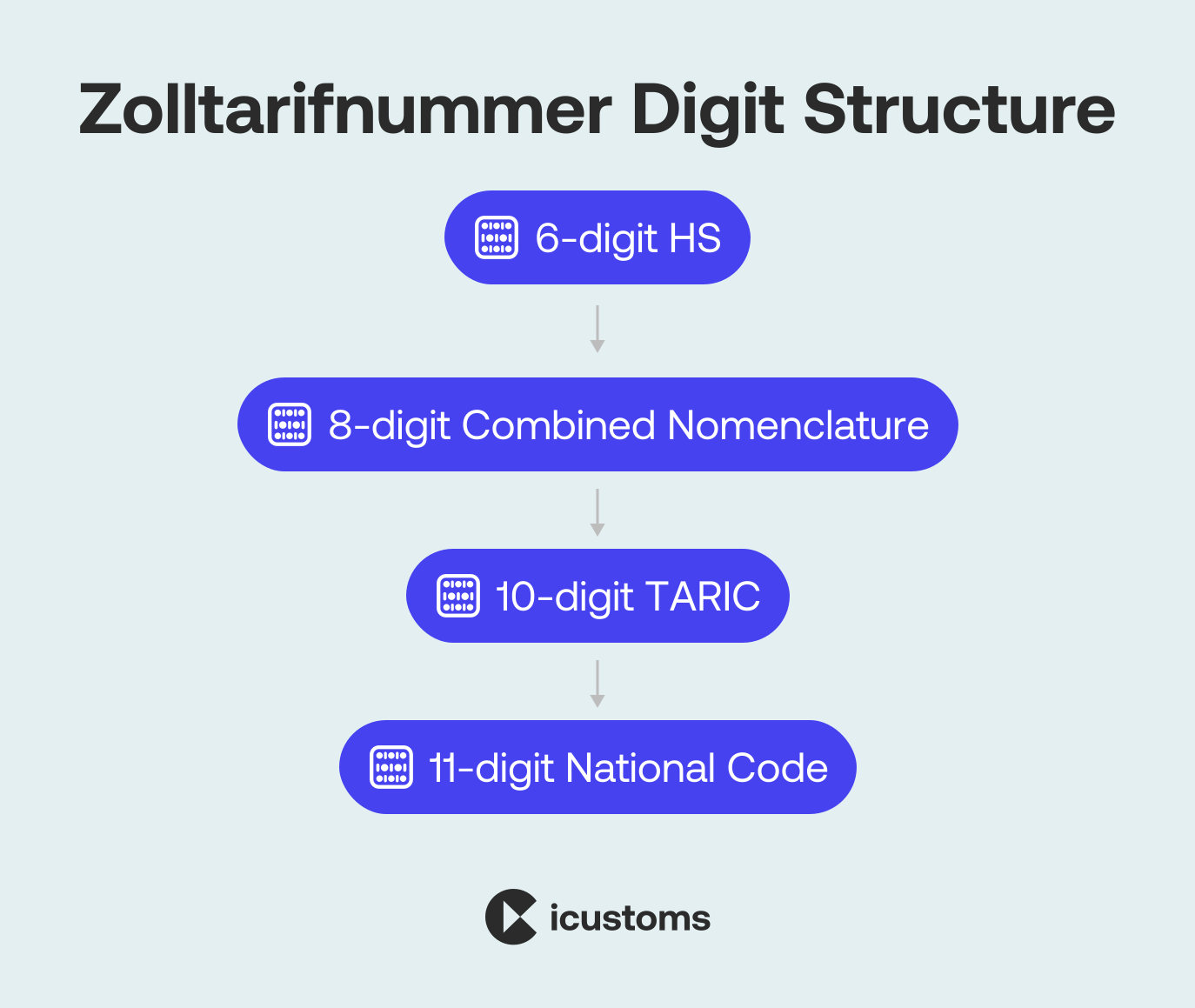
The phrase TARIC zolltarifnummer reflects the integration of the European Union’s Integrated Tariff system with national customs declaration frameworks such as ATLAS in Germany. It represents the point where EU-wide tariff measures are applied to individual imports. Understanding this linkage is essential, as TARIC determines how classification translates into enforceable duties, restrictions, and compliance requirements across EU Member States.
How TARIC Zolltarifnummer Determines EU trade Defence Exposure
TARIC integrates tariff preferences, quotas, suspensions, anti-dumping duties and safeguard measures. These measures are transmitted electronically to Member States and embedded in national clearance systems.
When declaring imports in Germany, the TARIC zolltarifnummer determines whether additional documentation, licences or duty surcharges apply.
TARIC does not contain VAT rates or excise duties, but it governs customs duty calculation and regulatory controls under the EU Customs Code framework.
Statistical and Regulatory Context
Germany’s customs administration operates within one of the most digitally advanced clearance infrastructures in the EU. Daily TARIC updates feed national systems to ensure uniform application of EU tariff measures.
With Germany accounting for nearly one fifth of all extra-EU imports, customs authorities rely on structured data validation rather than discretionary review. Commodity classification inconsistencies are increasingly identified through automated reconciliation across customs, VAT and security datasets.
Zolltarifnummer and ATLAS Integration
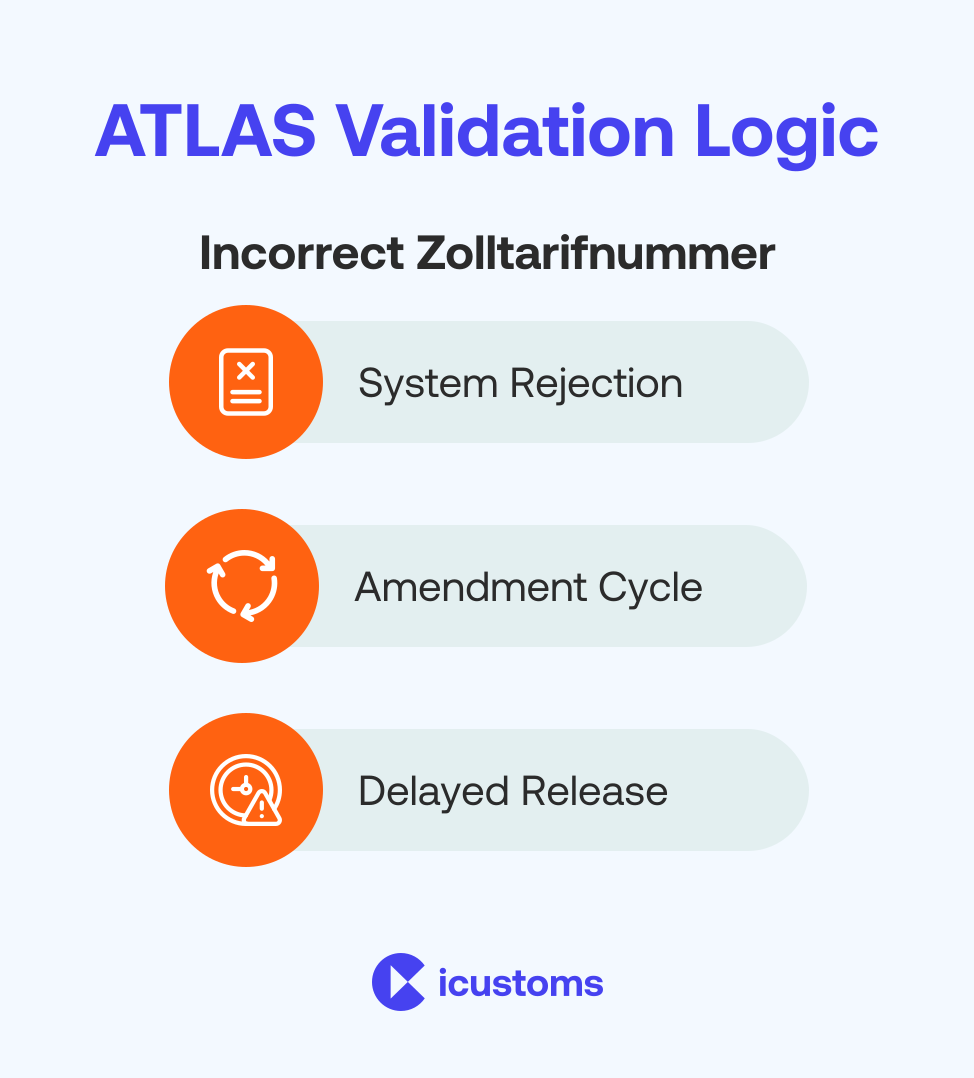
ATLAS, Germany’s electronic customs clearance system, validates tariff numbers against:
- TARIC measures
- ational administrative codes
- Required documentation references
- Trade defence instruments
If the declared code conflicts with encoded measures, the system generates rejection before release. For operators managing high volumes of declarations, tariff discipline directly affects clearance predictability.
Compliance Strategy for Logistics Operators
For freight forwarders and importers managing trade between the UK, EU and US, Zolltarifnummer governance should include:
- Centralised master classification database
- Annual review aligned with EU updates
- Alignment between ATLAS and ICS2 filings
- Documentation of classification rationale
- Cross-border consistency across EU Member States
As EU Customs Reform advances and the EU Customs Data Hub evolves, structured and harmonised tariff classification will become increasingly visible across jurisdictions.
Intelligent Document Processing for Zolltarifnummer Compliance
Accurate Zolltarifnummer governance in Germany depends on structured, declaration-ready data before submission into ATLAS. Intelligent Document Processing, iCustoms iDP, transforms unstructured commercial documents into standardised datasets aligned with EU tariff logic and TARIC requirements. Instead of relying on manual extraction, iDP creates a controlled data layer that supports classification precision, audit defensibility, and consistent customs filing across high-volume B2B operations.
Eliminating Invoice-to-Declaration Data Inconsistencies
One of the most common triggers of ATLAS rejection cycles is mismatch between invoice descriptions and declared Zolltarifnummer details. iDP extracts commodity descriptions, material composition, declared values, origin references, and consignee data directly from source documents. By structuring this information before classification occurs, operators reduce misalignment between commercial documentation, ENS filings, and formal customs declarations, strengthening compliance stability.
Enabling Structured Zolltarifnummer Governance at Scale fixed
For logistics operators managing thousands of SKUs, manual document handling creates classification drift across teams and depots. iDP standardises product data inputs that feed into tariff determination workflows, supporting consistent 10 and 11 digit Zolltarifnummer assignment. This improves audit traceability, reduces post-clearance exposure, and aligns customs documentation with Germany’s digitally enforced ATLAS and TARIC validation environment.
How iCustoms Supports Zolltarifnummer Governance
iCustoms integrates structured classification logic directly into customs workflows.
The platform enables:
- Controlled assignment of ten and eleven-digit tariff numbers
- Alignment with ATLAS import and export filings
- ENS consistency under ICS2
- Audit traceability for classification decisions
- Reduction of rejection cycles through pre-submission validation
For logistics operators managing thousands of declarations, classification governance must shift from reactive searching to structured control. In Germany’s high-volume digital customs environment, tariff precision is not optional. It is a compliance infrastructure.
Zolltarifnummer FAQs:
What is a Zolltarifnummer in Germany customs?
A Zolltarifnummer is the German customs tariff number used to classify goods for import and export. It extends the global HS code into EU and national levels, determining duties, trade measures, and compliance requirements under TARIC and ATLAS systems.
How is a Zolltarifnummer different from an HS code?
An HS code is a six-digit global classification, while a Zolltarifnummer extends this to ten or eleven digits under EU Combined Nomenclature and TARIC. This extended structure determines duties, quotas, and regulatory requirements for imports into Germany.
How do I find the correct Zolltarifnummer for my products?
Finding the correct Zolltarifnummer requires applying EU classification rules, including product composition, function, and intended use. The process involves identifying the HS chapter, extending it through TARIC, and validating against applicable trade measures.
What happens if the wrong Zolltarifnummer is declared?
Incorrect classification can lead to wrong duty payments, shipment delays, or rejection by ATLAS. It may also trigger audits, penalties, or additional trade defence measures if tariff codes do not match regulatory requirements.
How does automation improve Zolltarifnummer classification?
Automation improves classification by structuring trade data, validating tariff codes, and reducing manual errors. Platforms like iCustoms enable consistent tariff assignment, improve compliance accuracy, and minimise rejection risks in ATLAS-driven customs environments.

Connect Destin8 with Customs Automation
Eliminate manual work and streamline clearance with integrated workflows
You may also like:
How TARIC Codes Influence Import Duties
Struggling to Extract, Catagorise & Validate Your Documents?

Capture & Upload Data in Seconds with AI & Machine Learning
Subscribe to our Newsletter
About iCustoms
iCustoms is an all-in-one solution helping businesses automate customs processes more efficiently. With AI-powered and machine-learning capabilities, iCustoms is designed to streamline your all customs procedures in a few minutes, cut additional costs and save time.
Struggling to Extract, Catagorise & Validate Your Documents?
Capture & Upload Data in Seconds with AI & Machine Learning