

Top 5 Benefits of Using HS Codes Software for Large Enterprises
-
 Freya Jane
- Director of Customer's Success
Ever thought about how large enterprises tackle the complexities of international trade and customs clearance? The answer lies in the Harmonised System (HS) codes!
HS code software for businesses help in product classification for seamless global trade, making things easier for everyone involved.
HS codes offer a common language for businesses to discuss products, streamlining trade and customs procedures. These codes are especially advantageous for large businesses with widespread international activities.
This blog post will walk you through how HS codes can be beneficial for large enterprises.
What are HS codes?
Harmonised System (HS) codes are global numerical goods classification systems for classifying importing and exporting goods. They are created and maintained by the World Customs Organisation (WCO) and accepted by all customs authorities worldwide.
HS codes cover around 98% of goods in international trade and are adopted by 200+ countries. These are six-digit codes, each representing a specific category to give a hierarchical structure to the system.
By ensuring consistency in product classification, HS codes make customs procedures easier in international trade.
Learn more about HS codes for importers and exporters. Read out!
Top 5 benefits of using HS code Softwares for Business
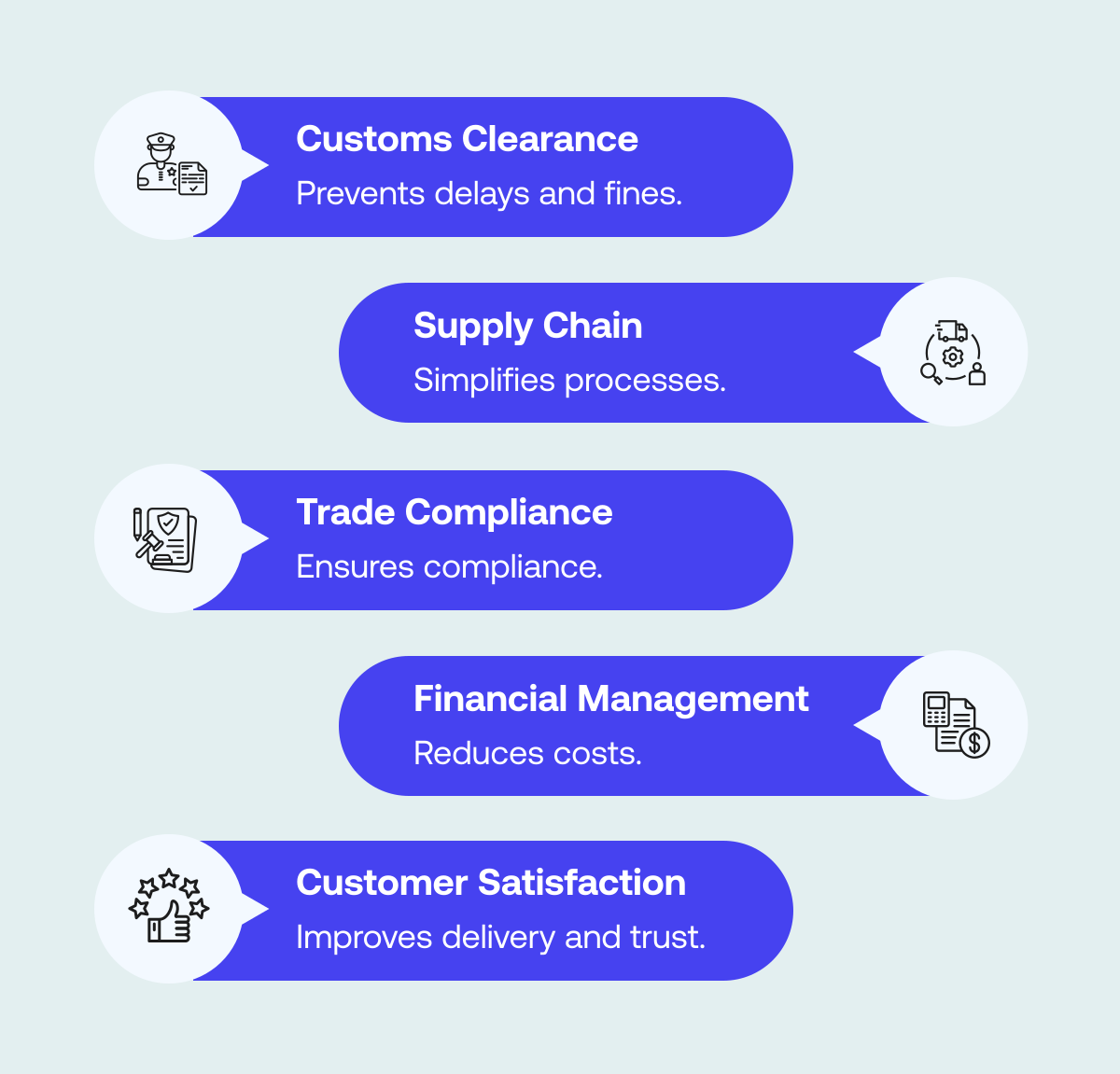
Using HS code softwares for business can offer several benefits, including:
1. Accurate customs clearance and duty payment
Harmonised System (HS) codes simplify the customs clearance procedure by ensuring that goods are classified correctly. When goods arrive at the border, the customs authorities check the HS code to find out the right amount of taxes and duties. The HS code software helps in accurate product classification and thus avoid unnecessary delays at customs and financial burdens.
By using the correct HS code, you can help ensure that your goods pass through customs smoothly and enjoy a hassle-free experience without unnecessary delays. It helps large enterprises pay accurate duties, saving them from customs penalties and delays.
2. Enhanced supply chain efficiency
HS codes are really important for making the supply chain work more smoothly, especially for large enterprises; they help everything run more efficiently. These codes enable businesses to expedite the movement of goods by simplifying the documentation and reducing administrative burdens.
This standardised language fosters clear communication between the parties involved in the trading, minimising delays and misunderstandings.
Additionally, HS codes help businesses manage their inventory more accurately, forecast demand effectively, and gain better visibility into their supply chain. This empowers large enterprises to optimise their operations and reduce risks along the way.
In a nutshell, HS codes play a crucial role in enhancing the efficiency and effectiveness of the supply chain. This helps large enterprises boost their competitiveness and profitability efficiently!
3. Improved trade compliance
Another crucial factor that is impacted by HS codes is international trade compliance. This standardised system of classification offers a common language for classifying products, making it easier for businesses to identify and categorise their items. This helps everyone stay in line with international trade regulations.
Accurate HS codes also help large enterprises mitigate potential risks proactively by enabling them to identify trade barriers, including quotas and tariffs.
Moreover, businesses can guarantee compliance with the trade agreements by using accurate HS codes, which helps reduce the financial burden, legal risks, and complexity of trade operations.
By sticking to the right HS code, we demonstrate our dedication to responsible trade practices. This not only strengthens our commitment but also helps build positive relationships with our international partners.

Get accurate HS codes in seconds with iCustoms!
Simplify customs clearance and ensure compliance.
4. Better financial management
Harmonised system code plays a crucial role in the financial management of a company. Managing finance is usually a challenging task for large enterprises; it requires meticulous planning.
With the uniform goods classification platform, HS codes enable businesses to calculate taxes and customs duties accurately. This helps them pay the right amount and steer clear of penalties, making sure they can avoid any unnecessary financial stress.
Furthermore, HS codes offer a great way to uncover potential cost-saving opportunities and help reduce financial risks linked to international trade. By carefully examining financial data tied to HS codes, businesses can make well-informed decisions and enhance their financial performance.
5. Improved customer satisfaction
HS codes have proven to boost the customer experience of many businesses. It contributes to customer satisfaction in these ways:
Timely arrival of the goods
Minimising product loss or damage
Provide clear and accurate product information
Furthermore, it also benefits customers by reducing costs, building credibility, and calculating accurate customs duties and taxes. Summarising, HS codes play a key role in helping businesses craft a truly positive customer experience, foster lasting relationships, and boost their overall reputation.
The bottom line
HS code serves as a standard language to classify goods crossing the borders for customs clearance. The correct HS code for large enterprises can be beneficial in many aspects, including accurate tax payments, improved supply chain management, guaranteed compliance with rules, better financial management, and increased customer satisfaction.
Looking for a reliable HS code finder for your business?
With iCustoms’ innovative HS code lookup tool, iClassification, businesses can ensure 99% accuracy in product classification and avoid fines and delays.

Ready to unlock the power of AI-driven iClassification tool?
Get expert guidance from our customs specialist!
You may also like

Streamline Product Classification

Uncover iClassification for precise Global Trade, Delivering Time-Saving Accuracy.
Subscribe to our Newsletter
About iCustoms
iCustoms is an all-in-one solution helping businesses automate customs processes more efficiently. With AI-powered and machine-learning capabilities, iCustoms is designed to streamline your all customs procedures in a few minutes, cut additional costs and save time.
Streamline Product Classification
Uncover iClassification for precise Global Trade, Delivering Time-Saving Accuracy.