
What Is UK CDS? What Replaced CHIEF? A Complete Explainer
- John Hall
- Customs Specialist at iCustoms.ai
If you have filed UK customs entries for years, you have lived through a big change. The system you knew, CHIEF, has gone, and a new platform has taken its place. So what is UK Customs Declaration Service, the system that replaced it, and why did the switch happen? This explainer tells the migration story from start to finish. It covers what CHIEF was, why HMRC retired it, what CDS is, how the two differ, and what changed for freight agents. By the end, you will understand the new system and how to get started.
What was CHIEF?
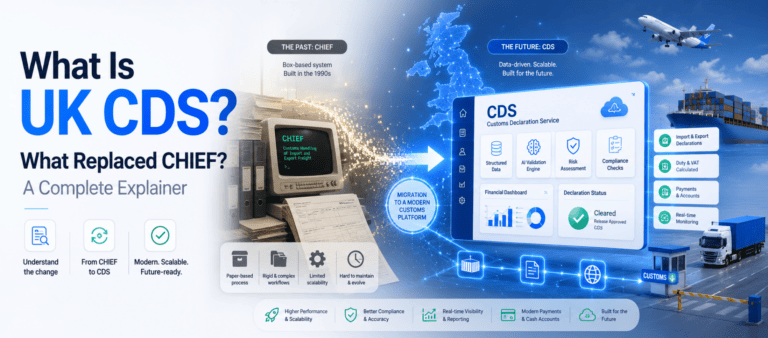
First, CHIEF stood for Customs Handling of Import and Export Freight. HMRC introduced it back in 1994, and for nearly three decades it processed the UK’s customs declarations. In its day, it was one of the largest and most reliable customs systems in the world. Agents built entire workflows around it, so it became second nature to a whole generation of the trade.
However, CHIEF was a product of its time. It used a box-based layout, modelled on the old paper Single Administrative Document. Each declaration filled a numbered set of boxes. That approach worked for decades, yet it was rigid, and it grew harder to maintain as trade changed.
To picture it, think of CHIEF as a reliable old workhorse. It did the job for a generation of agents, and it rarely let them down. Yet by the 2020s it was running on decades-old foundations, while the world of trade around it had moved on. That growing gap is what set the replacement in motion.
Why did CHIEF get replaced?
Several pressures came together, so understanding what replaced CHIEF UK customs relied on means understanding why the old system reached its limits. Three factors stand out.
Ageing technology
First, CHIEF was old. Maintaining a system built in the early 1990s became costly and slow. It could not easily adopt modern features, and its box-based model no longer matched international standards.
In addition, maintaining such an old platform tied up resources that HMRC wanted to invest elsewhere. Every change took longer and cost more than it would on a modern system.
The post-Brexit volume surge
Second, Brexit changed everything. When the UK left the EU, EU trade suddenly needed full customs declarations. As a result, the projected number of annual declarations jumped enormously, into the hundreds of millions. CHIEF was never designed for that scale, so HMRC needed a platform that could grow.
To put the change in context, the volume of declarations was expected to rise from tens of millions a year to a figure many times higher. A system from 1994 was never going to absorb that jump comfortably.
Alignment with modern customs rules
Third, the UK wanted a system built on the modern Union Customs Code data model. That model uses structured data elements rather than fixed boxes, which supports better validation and clearer reporting. CDS was designed around it from the start.
A brief timeline of the migration
The move from CHIEF to CDS did not happen overnight. HMRC ran it in stages so the trade could adjust. The timeline below shows the key dates.
| Date | Milestone |
|---|---|
| 1994 | CHIEF (Customs Handling of Import and Export Freight) goes live. |
| From 2018 | The Customs Declaration Service (CDS) begins rolling out, initially supporting import declarations. |
| 30 September 2022 | CHIEF closes for UK import declarations, with imports moving to CDS. |
| 4 June 2024 | CHIEF closes for UK export declarations, completing the migration to CDS. |
| Today | CDS is the UK’s sole customs declaration platform for both import and export declarations. |
Phasing the change gave agents time to migrate, test, and retrain. Even so, the deadlines were firm, and once each one passed, CHIEF was no longer an option for that traffic.
What is the UK Customs Declaration Service (CDS)?
In short, the Customs Declaration Service, or CDS, is HMRC’s platform for import and export declarations. It is cloud-based, scalable, and built on the Union Customs Code data model. In short, it does the job CHIEF used to do, but in a modern, data-driven way. For a quick definition of the term, see our Customs Declaration Service glossary entry.
How does CDS work?
So how does CDS work in practice? Instead of filling boxes, you complete structured data elements grouped into sections that cover the parties, the goods, transport, valuation, and the customs procedure. The system validates the data, calculates duty and VAT, and confirms clearance. It also gives you a Financial Dashboard to manage payments and view your accounts in one place.
What CDS does better
Beyond replacing CHIEF, CDS brings real improvements. Because it is built on structured data, it validates entries more thoroughly and reports more clearly. The main gains include the points below:
- Stronger validation that catches errors earlier
- A Financial Dashboard that shows accounts and payments in one place
- Support for modern payment methods, including the cash account
- A scalable platform that copes with post-Brexit volumes
Key differences between CHIEF and CDS
Meanwhile, for anyone who used CHIEF, the differences are the fastest way to get up to speed. The table below sets them side by side.
| Aspect | CHIEF | CDS |
|---|---|---|
| Introduced | 1994 | Phased in from 2018 |
| Data Model | Box-based (Single Administrative Document) | Data element structure aligned with the Union Customs Code (UCC) |
| Procedure Codes | Single 7-digit Customs Procedure Code (CPC) | 4-digit Procedure Code plus 3-digit Additional Procedure Code (APC) |
| Payment Options | Legacy payment methods | Cash account, duty deferment account, immediate payment, and financial guarantees |
| Accounts View | Limited account visibility | Integrated Financial Dashboard for payments, statements, and balances |
| Current Status | Closed for imports (30 September 2022) and exports (4 June 2024) | The UK’s only live customs declaration platform for import and export declarations |
The biggest day-to-day change is the move from boxes to data elements, closely followed by the new procedure code format. If you want the detail on codes, our procedure codes guide breaks them down.
For example, here is a simple before-and-after. On CHIEF, you might have entered a seven-digit CPC in a numbered box. On CDS, you now enter a four-digit Procedure Code plus a three-digit Additional Procedure Code within the relevant data element. The information is similar, yet the format and the place you enter it have changed.
What changed for freight agents
The migration was not just a back-end swap. It changed how agents work every day. The main shifts include the points below:
- Relearning the data model, from boxes to structured data elements
- Using the new 4-digit and 3-digit procedure code format
- Setting up CDS payment methods, such as a cash account or duty deferment
- Checking that filing software is CDS-compatible
- Getting used to the Financial Dashboard for payments and statements
For many teams, the learning curve was real. However, once the new habits set in, the structured data and clearer validation made entries easier to get right.
It also changed how agents choose software. Because CDS uses a different data model, tools built only for CHIEF could not simply carry over. As a result, many teams treated the migration as a chance to move to software that validates entries and reduces manual work.
Two things former CHIEF users should watch
If you filed on CHIEF for years, muscle memory is both a help and a risk. Two habits in particular need attention.
Do not reuse old codes blindly
However, the procedure code format changed, so a code that worked on CHIEF may not map cleanly to CDS. Always check the code against current guidance rather than copying it from memory or an old entry.
Check your payment setup
In addition, payments work differently on CDS, with the cash account and the Financial Dashboard playing a bigger role. Confirm your duty deferment or cash account is linked correctly before you file, so a live entry does not stall over payment.
In addition, payments work differently on CDS, with the cash account and the Financial Dashboard playing a bigger role. Confirm your duty deferment or cash account is linked correctly before you file, so a live entry does not stall over payment.
Life under CDS today
In short, that is what replaced CHIEF UK customs: a modern, scalable platform. Today, CDS is simply how UK customs works. New agents learn it as the only system, while experienced agents have largely adjusted. The structured data takes a little longer to learn, yet it pays back in fewer rejected entries and clearer records.
Meanwhile, for importers and exporters, the change is mostly invisible when an agent handles the filing. Behind the scenes, though, the move to CDS means tighter validation and better reporting, which helps everyone in the supply chain.
CDS and Northern Ireland
In addition, movements involving Northern Ireland add another layer. Because NI trade follows its own arrangements, the requirements differ from a standard GB import, and many businesses use dedicated support for them. CDS still sits at the centre, but the rules around it are not identical.
How to get started with CDS
Also, getting started is straightforward if you take it step by step. Broadly, the route is as follows:
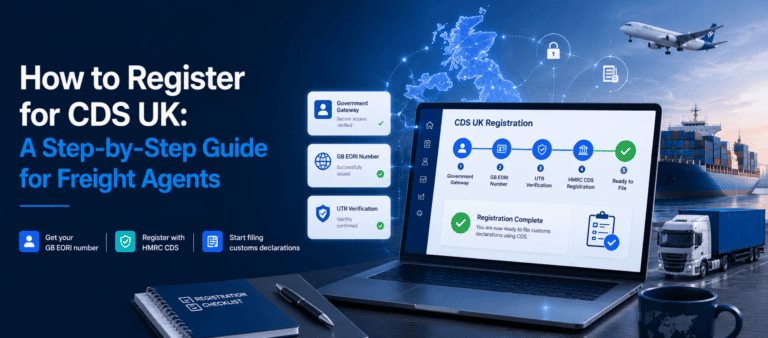
- Make sure you hold a GB EORI number.
- Set up or sign in to your Government Gateway account.
- Subscribe to CDS through HMRC.
- Choose a payment method, such as a duty deferment or cash account.
- Use CDS-ready software to file your declarations.
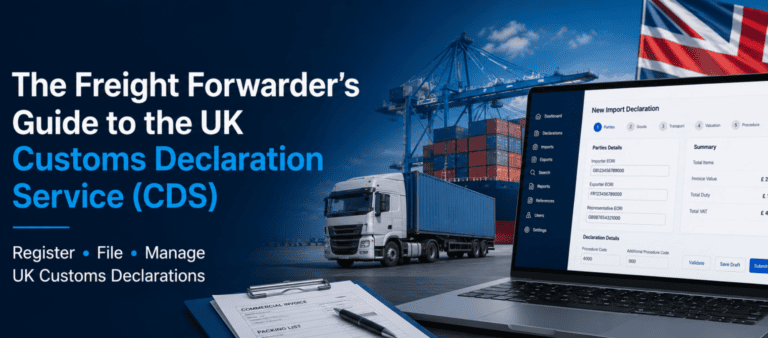
If you want a filing platform built for CDS, iCDS from iCustoms is an HMRC-recognised tool that validates entries and submits a UK declaration in around three minutes. For the wider picture, read our pillar guide, the Freight Forwarder’s Guide to the UK Customs Declaration Service.
Whatever tool you choose, start early rather than at the last minute. Set up your EORI and payment method first, then test a declaration before you rely on the system for live freight. A short run-through now saves stress later.
Frequently Asked Questions
What is UK Customs Declaration Service in simple terms?
It is HMRC's online platform for import and export declarations. CDS replaced CHIEF and uses structured data elements based on the Union Customs Code.
What replaced CHIEF for UK customs?
CDS, the Customs Declaration Service, replaced CHIEF. HMRC closed CHIEF for imports in 2022 and for exports in 2024.
How does CDS work?
You complete structured data elements rather than boxes. CDS validates the data, calculates duty and VAT, and confirms clearance, with a Financial Dashboard for payments.
Is CHIEF still available?
No. CHIEF has closed for both imports and exports. All UK customs declarations now go through CDS.
Do I need new software for CDS?
You need CDS-compatible software. Many older CHIEF tools were retired, so most agents moved to a CDS-ready platform.
When did CHIEF close?
HMRC closed CHIEF for import declarations on 30 September 2022 and for export declarations on 4 June 2024.
Why did HMRC replace CHIEF with CDS?
CHIEF was ageing, could not scale to post-Brexit volumes, and did not match the modern Union Customs Code data model. CDS was built to solve all three.
You may also like:

Struggling to Extract, Catagorise & Validate Your Documents?

Capture & Upload Data in Seconds with AI & Machine Learning
Subscribe to our Newsletter
About iCustoms
iCustoms is an all-in-one solution helping businesses automate customs processes more efficiently. With AI-powered and machine-learning capabilities, iCustoms is designed to streamline your all customs procedures in a few minutes, cut additional costs and save time.
Struggling to Extract, Catagorise & Validate Your Documents?
Capture & Upload Data in Seconds with AI & Machine Learning