

Freight Forwarders: Stay Ahead with Customs Import Declaration Best Practices
-
 Freya Jane
- Director of Customer's Success
The challenging environment in which freight forwarders operate has a significant impact on their business profitability and operations. Customs import declaration is an essential part of shipping, but they can be difficult to complete because of prolonged paperwork requirements, complicated restrictions, and the possibility of costly mistakes.
Do you know that misclassifying a product might result in serious fines and delays? Or that untransparent cargo information might lead to increased operating expenses and unsatisfied customers? These are a few of the problems that freight forwarders face regularly.
This blog post discusses the common challenges freight forwarders encounter while handling customs import declarations. Moreover, we’ll also discover the best practices freight forwarders should use to cope with these challenges.
Common challenges faced by freight forwarders
Freight forwarders commonly face the following problems while submitting customs import declarations:
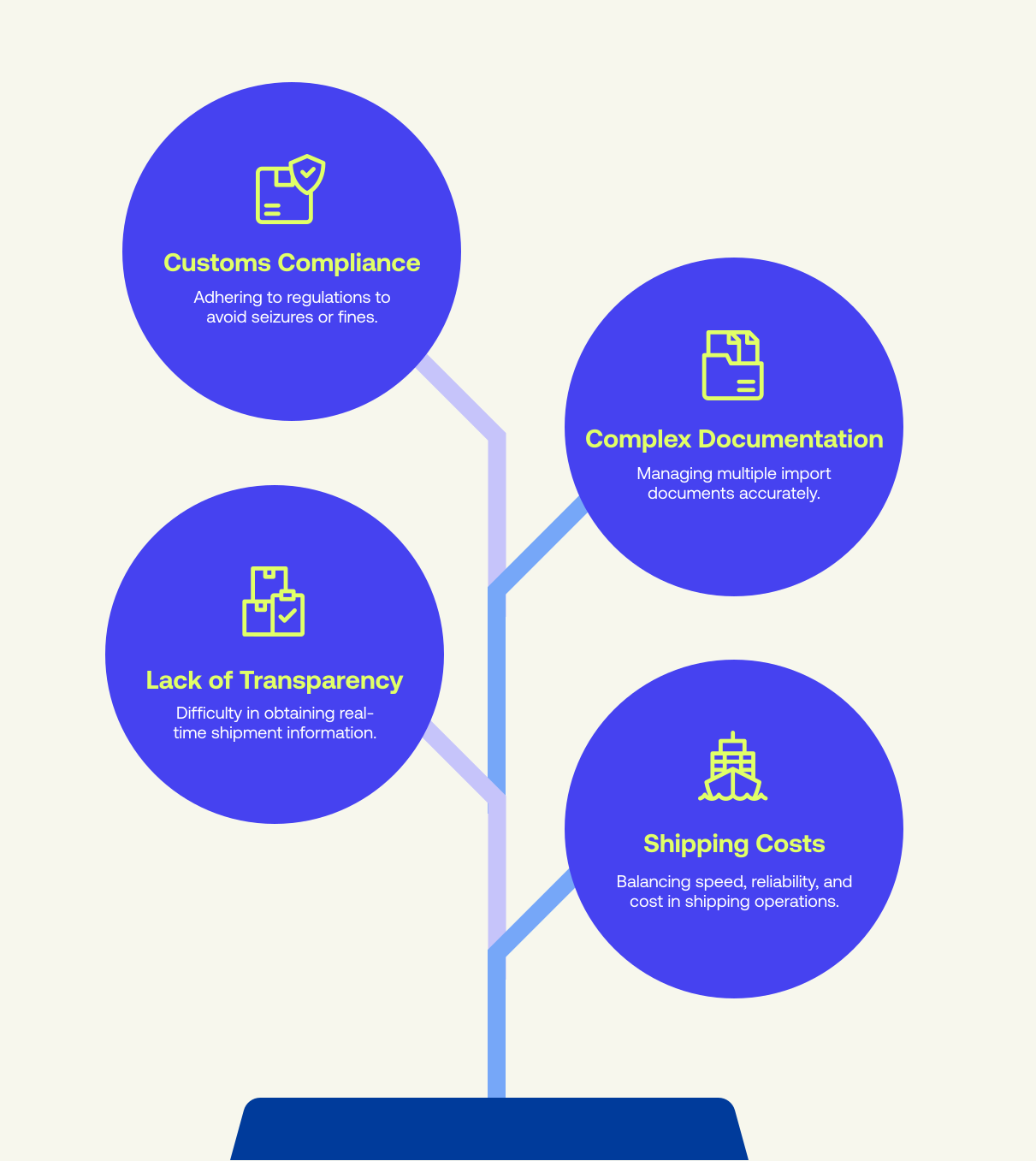
Complex documentation
Preparing numerous import documents, such as invoices, bills of lading, and certificates of origin, is a hectic and error-prone task. Any inconsistencies in documents may lead to additional costs and delays.
Lack of Transparency
It can be difficult for freight forwarders to get real-time information about shipments, which can lead to higher operating expenses and poor decision-making. Missing or incorrect information can lead to extra costs, delays, and dissatisfaction of clients.
Shipping costs
Shipping costs depend on various factors, such as:
- Weight
- Mode of transfer
- Distance
- Insurance fees
- Exchange rates
- Fuel prices
Freight forwarders are required to balance speed, reliability, and cost, which can be challenging and cause hurdles.
Customs compliance
To avoid the seizure of goods or fines, freight forwarders need to comply with a number of regulations and standards for a smooth import clearance process. The most important compliance requirements include:
- Environmental protection
- Product safety
- Sanitary and phytosanitary regulations
Moreover, EU freight forwarders may also encounter:
- Human and labour rights
- Intellectual property regulations
- Export control

Worried about import compliance and potential delays?
Reduce the risk of penalties and ensure seamless clearance with iCustoms!
Customs Import Declaration Best Practices
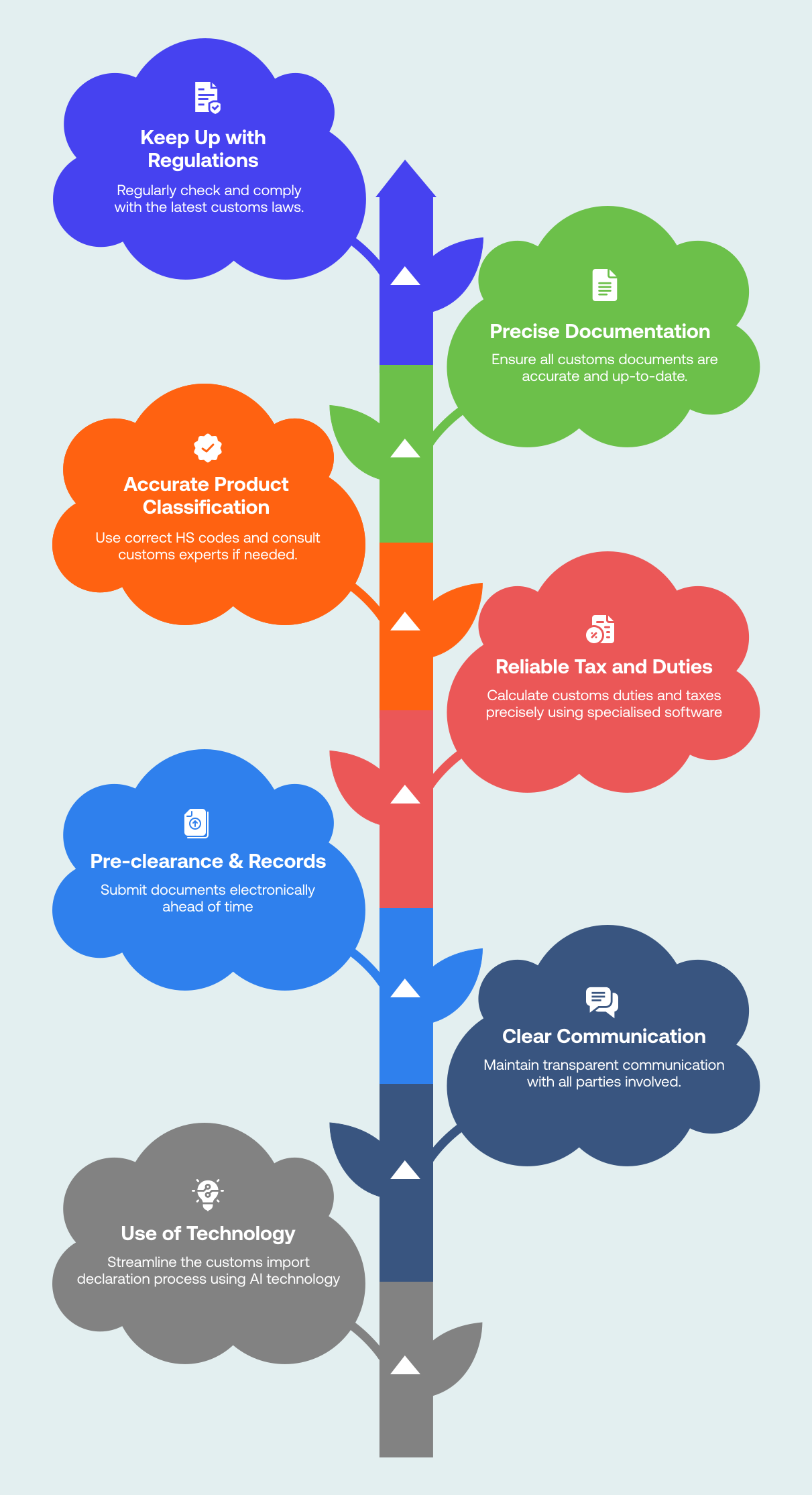
Keep up with import regulations
Privacy laws are different for each country and are continuously being updated. Thus, it is crucial to regularly check and ensure you comply with the most recent laws.
Here’s how you can do this:
- Participate in training sessions and workshops on customs compliance.
- Get newsletters and updates from different customs agencies.
Precise documentation
A successful customs declaration depends on accurate and thorough documentation. Verify that the following customs documents are up-to-date and accurate:
- Commercial invoices
- Bill of lading
- Packing list
- Import licenses
- Certificate of origin
Drowning in customs paperwork?
Automate documentation with AI-powered IDP, reducing errors and saving you 70% of your time!
Accurately classify products
Make sure that the products are accurately classified to facilitate customs clearance and prevent financial penalties. Improper classification of commodities may result in penalties and delays.
To accurately classify things, adhere to these steps:
- Utilise the Harmonised System (HS) codes to classify products
- Examine the importing country’s schedule of customs tariffs
- Ask customs experts for help
Determine tax and duties reliability
For accurate financial forecasting, it is crucial to find out customs duties and taxes precisely. Make sure that taxes, tariffs, and other levies are calculated accurately:
- Understand the duty rates that apply to the particular HS codes
- Take into account any trade agreements or preferential tariffs
- Make use of specialised software or duty calculators
Pre-clearance and detailed records
To expedite the clearing procedure via customs, submit your paperwork electronically ahead of time. If available, make use of pre-clearance programs.
Communicate clearly
Continue to communicate openly and honestly with all parties involved:
- Inform clients on a regular basis about the progress of their shipments.
- To guarantee prompt clearance, communicate with customs brokers and other partners.
Communicate clearly
The customs import declaration process can be streamlined by using AI technology such as Intelligent Document Processing (IDP), HS code lookup tool, and Customs Declaration Software (CDS). Leveraging AI technology can help reduce errors and improve compliance.
Using Artificial Intelligence: Customs Declaration Software
AI capabilities can greatly expedite import declaration processing and enhance compliance. Principal advantages consist of:
Automated data input: To precisely and quickly fill out import declaration forms, CDS can extract data from a variety of sources, such as shipping documents and ERP systems.
Real-time compliance checks: CDS is able to compare data with customs laws, spot possible problems, and provide solutions.
Duty and tax calculation: Based on the value, country of origin, and classification of the product, duties and taxes are automatically calculated.
Document management: Safe storage and convenient retrieval of supporting documentation and import declarations.
Integration with customs systems: Electronic import declaration filing through seamless interaction with customs portals.
Freight forwarders can increase their efficiency, accuracy, and compliance in customs import declarations by implementing CDS.
The bottom line
Freight forwarders can greatly increase customer satisfaction, cut costs, and improve operations by comprehending and resolving the typical issues surrounding customs import declarations. Through adherence to best practices, which include keeping abreast of rules, maintaining accurate documentation, and making use of technology, you can more easily manage the intricate process of customs clearance.
Are you prepared to modify your customs import declarations? Get in touch with iCustoms right now to find out more about our innovative solution and how it can help your business.
Frequently Asked Questions
What documents does a freight forwarder need to complete a customs import declaration?
A freight forwarder typically needs a commercial invoice, bill of lading, packing list, certificate of origin, and any applicable import licences. Each document must be accurate and consistent with the others. Discrepancies between documents cause delays at the border and may trigger HMRC inspections, additional costs, or seizure of goods.
What are the consequences of misclassifying goods on a customs import declaration?
Misclassifying goods with the wrong HS code leads to incorrect duty and tax calculations, which can result in financial penalties, post-clearance demand notices, and potential seizure. Customs authorities treat repeated misclassification seriously. Freight forwarders should use verified HS code lookup tools and consult customs experts to classify goods accurately before submission.
How can freight forwarders stay compliant with changing import regulations?
Freight forwarders can maintain compliance by attending customs training sessions, subscribing to updates from customs agencies such as HMRC, and monitoring changes to trade agreements and tariff schedules. Using customs declaration software that applies real-time compliance checks against current rules also reduces the risk of submitting declarations with outdated regulatory data.
How does Customs Declaration Software improve accuracy for freight forwarders?
Customs Declaration Software uses AI to extract data from shipping documents and ERP systems, populating declaration forms accurately and quickly. It performs real-time compliance checks, calculates duties and taxes automatically based on HS code, country of origin, and value, and integrates directly with customs portals for electronic filing. This reduces manual errors and speeds up clearance.
What is pre-clearance and how does it help freight forwarders reduce delays?
Pre-clearance involves submitting customs documentation electronically before goods arrive at the port or border. This allows customs authorities to review and process declarations in advance, so goods clear faster on arrival. Freight forwarders who use pre-clearance programmes reduce the risk of unexpected holds, lower storage costs, and improve delivery reliability for their clients.
How does AI-powered IDP help freight forwarders handle customs paperwork faster?
AI-powered Intelligent Document Processing (IDP) reads and extracts data from any document format, including PDFs, images, and spreadsheets, and automatically populates customs declarations. iCustoms IDP processes documents in seconds with 99% accuracy, reducing manual data entry by up to 70%. This allows freight forwarders to handle higher shipment volumes without increasing headcount or error rates.
What compliance requirements must EU freight forwarders consider beyond standard import rules?
EU freight forwarders face additional compliance obligations beyond product safety and sanitary regulations. These include human and labour rights requirements, intellectual property rules, and export control regulations. Freight forwarders moving goods across EU borders must verify that shipments meet all applicable requirements before filing, as non-compliance can result in goods being detained or refused entry.
You may also like:

Automate Your Customs Process

Reduce Paperwork, Improve Accuracy & Enhance Customs Compliance
Subscribe to our Newsletter
About iCustoms
iCustoms is an all-in-one solution helping businesses automate customs processes more efficiently. With AI-powered and machine-learning capabilities, iCustoms is designed to streamline your all customs procedures in a few minutes, cut additional costs and save time.
Automate Your Customs Process
Reduce Paperwork, Improve Accuracy & Enhance Customs Compliance