
ICS2 and EU Import Control: What It Means for Your Cargo and How the Right Software Changes Everything
-
 Freya Jane
- Director of Customer's Success
What is ICS2?
If you move goods into the European Union by air, road, sea, or post, ICS2 is a regulatory requirement you cannot afford to ignore. The Import Control System 2 is the EU’s second-generation advance cargo information system, designed to improve customs risk assessment and enhance security across EU borders.
ICS2 replaced the original ICS system and introduced a fundamentally different approach to how cargo data is submitted. Rather than waiting until goods arrive at the border, the EU now requires an Entry Summary Declaration (ENS) to be filed before cargo departs its origin or before it arrives in EU territory, depending on the transport mode.
For businesses that were already comfortable with traditional customs processes, ICS2 introduced a significant operational change. The data requirements are more granular, the timelines are tighter, and the consequences of non-compliance include cargo delays, refusal of entry, and financial penalties.
The Three-Phase Rollout: Where Does ICS2 Stand Today?
The EU rolled out ICS2 in three phases across different transport sectors. Understanding which phase applies to your business determines your current compliance obligations.
- Phase 1 (March 2021): Covered postal and express carriers. Operators in these sectors were the first to submit ENS data under the new system.
- Phase 2 (March 2023): Extended ICS2 obligations to air cargo operators and air express carriers. If you move goods by air into the EU, your carrier and your customs software must be fully ICS2-compliant.
- Phase 3 (2024 onwards): The final phase extends ICS2 to maritime and inland waterway transport, completing the EU-wide rollout.
By the time all three phases are complete, virtually every mode of freight entering the EU will require advance security declaration data submitted through the ICS2 system.
What Data Does an ICS2 Declaration Require?
One of the most significant operational challenges with ICS2 is the level of detail required in each ENS submission. The EU specifically moved away from accepting incomplete or approximate data, and instead demands item-level detail for each shipment.
A compliant ICS2 declaration must include:
- A complete and accurate commodity description (vague descriptions such as ‘parts’ or ‘general cargo’ are no longer accepted)
- The 6-digit Harmonised System (HS) commodity code for each item in the shipment
- Gross weight of the consignment
- The EORI number of the exporter or the declarant
- The shipper and consignee names and addresses
- The country of origin and country of destination
- The UN location code of the first EU point of entry
- Unique Master Reference Number (MRN) for each declaration
The requirement for a 6-digit HS code at item level is where many operators encounter problems. If your existing processes rely on freight descriptions rather than commodity codes, ICS2 compliance will require a significant workflow change, or software that can classify commodities automatically.
ICS2 and Air Cargo: The Highest-Impact Sector
Air cargo operators faced some of the most significant operational changes under ICS2. The Phase 2 rollout introduced the concept of ‘pre-loading advance cargo information’, meaning that for many shipment types, ENS data must be submitted before the goods are loaded onto the aircraft.
This pre-loading requirement is particularly demanding for operators managing high volumes of mixed cargo across multiple origins and destinations. An ICS2 air cargo software solution must be capable of receiving data from multiple sources, validating it against EU requirements, and submitting it to the EU ICS2 system within the required filing window.
For air express operators, the volume of individual consignments processed each day makes manual ICS2 compliance impossible. Air express ICS2 compliance software needs to handle batch submissions, automate commodity code lookup, and flag exceptions for human review without slowing down the overall throughput.
ICS2 for Postal Operators: Unique Challenges and Compliance
Postal operators were first in scope for ICS2 and continue to face some of the most complex compliance requirements. The volume of individual items, combined with the international origin of many postal shipments, makes data completeness a genuine challenge.
The EU’s PLACI (Pre-Loading Advance Cargo Information) programme, which sits within ICS2, specifically targets postal and express shipments. Under PLACI, designated carriers must supply minimum data sets to customs authorities before goods are loaded at the origin location.
Postal cargo ICS2 compliance software must integrate with postal manifests, extract consignment-level data, map it to the required ICS2 data fields, and submit it within mandated deadlines, all while processing thousands of items per hour. This is not a task that can be managed through manual processes or general-purpose logistics software.
What Makes ICS2 Software Effective?
Choosing the right ICS2 filing system can be the difference between seamless cross-border operations and costly clearance delays. Here is what to look for in an ICS2 compliance solution:
- Direct connectivity to the EU ICS2 system via accredited technical channels
Any solution you choose must be certified to submit directly to the EU Customs ICS2 platform, not just prepare declarations offline.
- Automatic commodity code lookup and HS classification
The most common data gap in ICS2 submissions is missing or incorrect HS codes. Software with AI-powered classification capability solves this at the point of data entry.
- Batch processing for high-volume operators
Air cargo and postal operators processing thousands of shipments daily need software that supports bulk uploads and automated batch submission.
- Real-time validation before submission
ENS submissions rejected by the EU ICS2 system cause delays. Software that validates all data fields against EU requirements before submission prevents this.
- Multi-modal support
If you operate across air, road, and sea, a single ICS2 platform that handles all modes is significantly more efficient than separate tools.
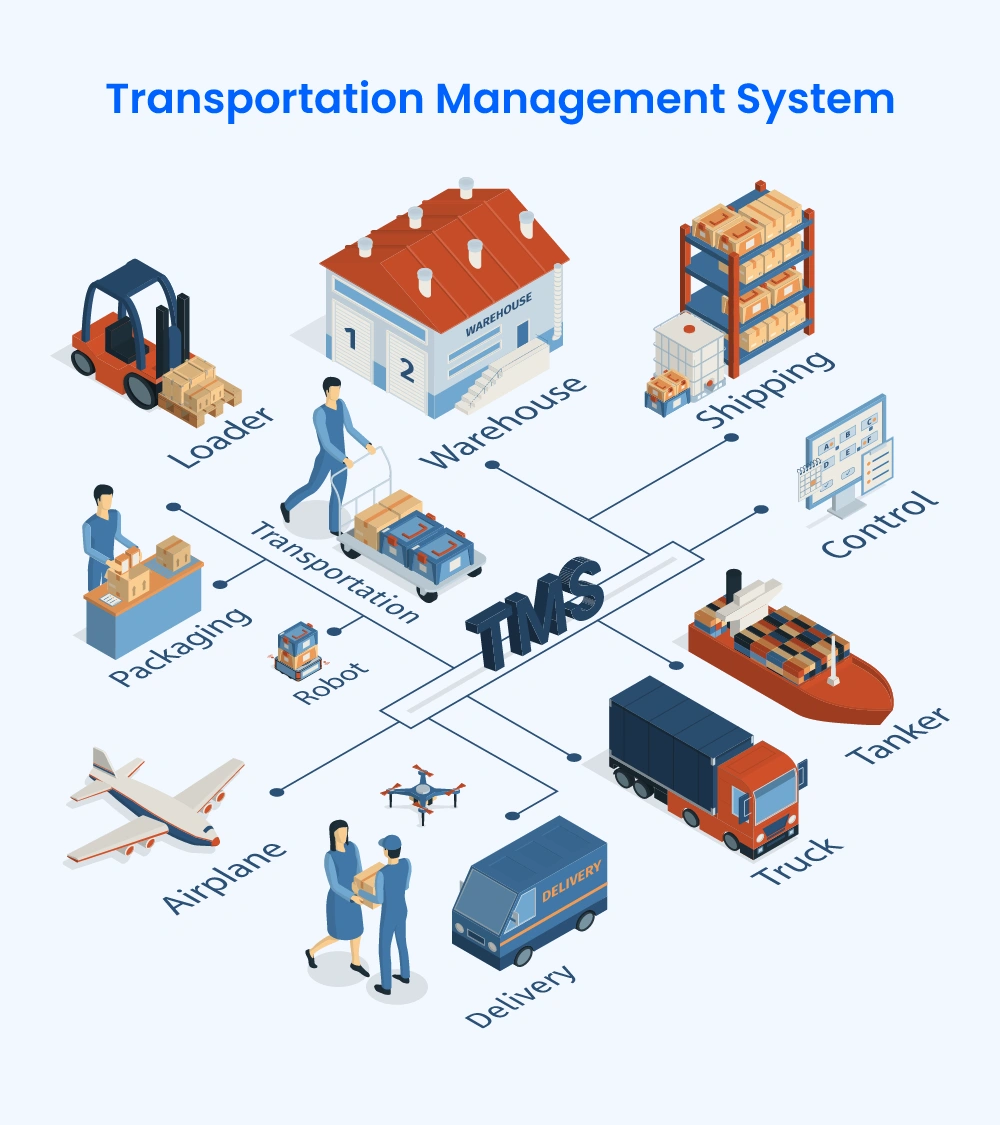
- Integration with your existing TMS or customs management platform
ICS2 data requirements overlap significantly with the data already held in your TMS. Software that pulls this data automatically avoids duplication and reduces error rates.
ICS2 and Your Transport Management System: Why Integration
- One of the most common inefficiencies in ICS2 compliance is data being entered manually into a separate ICS2 system when all the required information is already present in the operator’s TMS. This duplication increases the risk of data entry errors, slows down the pre-departure filing process, and adds operational cost.
- A modern advance cargo information system for the EU should integrate directly with your TMS. When a new shipment record is created in the TMS, the ICS2 solution should automatically extract the relevant data fields, run validation checks, and queue the ENS submission for filing within the required timeline.
- This integration approach eliminates manual re-entry, reduces error rates significantly, and ensures that ICS2 declarations are submitted on time regardless of shipment volumes. For freight forwarders and customs agents managing multiple clients across multiple trade lanes, this automation is not a nice-to-have; it is a business-critical requirement.
ICS2 Customs Declaration: Common Mistakes and How to Avoid Them
The EU ICS2 system performs automated risk assessments on every ENS declaration submitted. Errors or omissions in the declaration do not just delay that shipment; they can flag your business for enhanced scrutiny on future shipments.
The most common ICS2 filing mistakes include:
- Using vague commodity descriptions instead of specific HS codes. The EU ICS2 system flags generic descriptions and can hold cargo pending additional information.
- Submitting incorrect consignee or shipper EORI numbers. An invalid EORI triggers an immediate rejection from the ICS2 system.
- Missing the filing deadline. Each transport mode has a specific timeline for ENS submission. Air cargo arriving from non-EU countries requires filing at least 4 hours before arrival at the first EU airport. Express and postal require even shorter windows.
- Incorrect UN location codes for the first EU point of entry. Using the wrong port or airport code causes routing errors in the risk assessment process.
- Submitting incomplete item-level data. Aggregating multiple distinct items under a single commodity line is no longer acceptable under ICS2 rules.
ICS2 software with built-in validation rules catches the majority of these errors automatically before submission, protecting your business from penalties and operational disruption.
Who Needs to File an ICS2 Declaration?
ICS2 filing obligations are defined by your role in the supply chain. The filing responsibility sits with different parties depending on the transport mode and the nature of the shipment.
- Air carriers: Responsible for submitting the Master ENS for the overall consignment.
- Freight forwarders acting as NVOCCs (Non-Vessel Operating Common Carriers): Responsible for filing House ENS declarations for individual shipments consolidated under a master consignment.
- Express operators: Responsible for submitting item-level advance cargo information for each individual parcel or consignment.
- Postal operators: Responsible for PLACI minimum data sets for international postal items.
- Customs agents and ITSPs (Indirect Tax Simplified Procedures): May file on behalf of their clients as authorised representatives.
If you are a customs agent or freight forwarder filing ICS2 declarations on behalf of clients, your ICS2 software needs to support multi-client management, allowing you to handle declarations for multiple importers and exporters from a single platform without data being mixed between client accounts.

Conclusion
In a nutshell, the correlation of ICS2 Transportation Management Systems with iCustoms delivers a solution that completely transforms the landscape for companies that deal with customs. To thrive in today’s cutthroat market, essential issues that must be taken into consideration include the simplification of customs procedures, the reduction of associated costs, and the enhancement of freight management.
Recognising iCustoms as a crucial facilitator when delving into TMS integration is necessary because it will elevate your operational efficiency and guarantee compliance. Take advantage of this powerful relationship to bring the full potential of your supply chain to accomplishment.
Switch to iCustoms today and empower your business to accelerate its progress and pursue new advancements in the world of trade!
FAQ's
What is ICS2 in EU customs?
ICS2 stands for Import Control System 2. It is the European Union's advance cargo security and safety programme, requiring carriers and logistics operators to submit Entry Summary Declarations (ENS) before cargo enters EU territory. The system enables EU customs authorities to perform risk assessments before goods arrive.
What is an SAP transportation management system?
SAP Transportation Management (SAP TM) is an end-to-end software system for managing logistics and transportation processes. It improves transportation operations planning, carrying out, and monitoring. Some key features are collaboration between carriers, goods order management, analytics, event management, real-time visibility, and smooth connection with other SAP modules.
What are the benefits of TMS in SAP?
The following are the benefits of TMS in SAP
- Real-time Visibility
- Efficient Planning
- Carrier Collaboration
- Cost Savings
- Streamlined Freight Management
- Proactive Issue Resolution
- Global Compliance
- Data-driven Optimisation
- SAP Integration
Who uses transportation management systems?
- Supply Chain Administrators
- Directors of Transportation
- Logistics Providers
- Producers and Shippers
- Logistics Companies
- Trucking Firms and Carriers
- Retailers
- Wholesalers
- Import/Export Brokers
- Logistics Experts
You may also like:



Automate Your
Customs Process

Reduce Paperwork, Improve Accuracy & Enhance Customs Compliance
Subscribe to our Newsletter
About iCustoms
iCustoms is an all-in-one solution helping businesses automate customs processes more efficiently. With AI-powered and machine-learning capabilities, iCustoms is designed to streamline your all customs procedures in a few minutes, cut additional costs and save time.
Automate Your
Customs Process
Reduce Paperwork, Improve Accuracy & Enhance Customs Compliance