
Free Trade Agreement Compliance Strategies: A Must Read for UK Businesses
-
 Freya Jane
- Director of Customer's Success
International trade is controlled by a variety of laws, regulations, and trade agreements, and meeting these standards is critical for enterprises involved in global trade. A free trade agreement (FTA) is no exception, and firms in the UK that want to benefit from these accords must comprehend how they affect trade compliance.
It aims to promote international commerce by eliminating or lowering trade restrictions such as tariffs and quotas.
By giving goods and services exchanged between FTA partner nations preferential treatment, they provide UK businesses the chance to enter new markets and become more competitive.
To fully reap the advantages, firms must comply with the precise compliance requirements of free trade agreements.
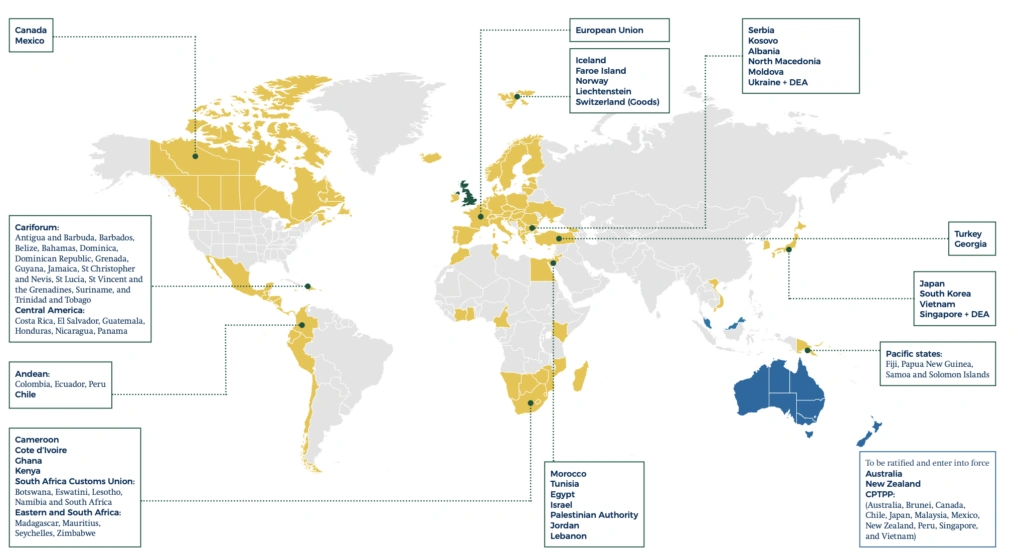
UK FTAs in force as at April 2023
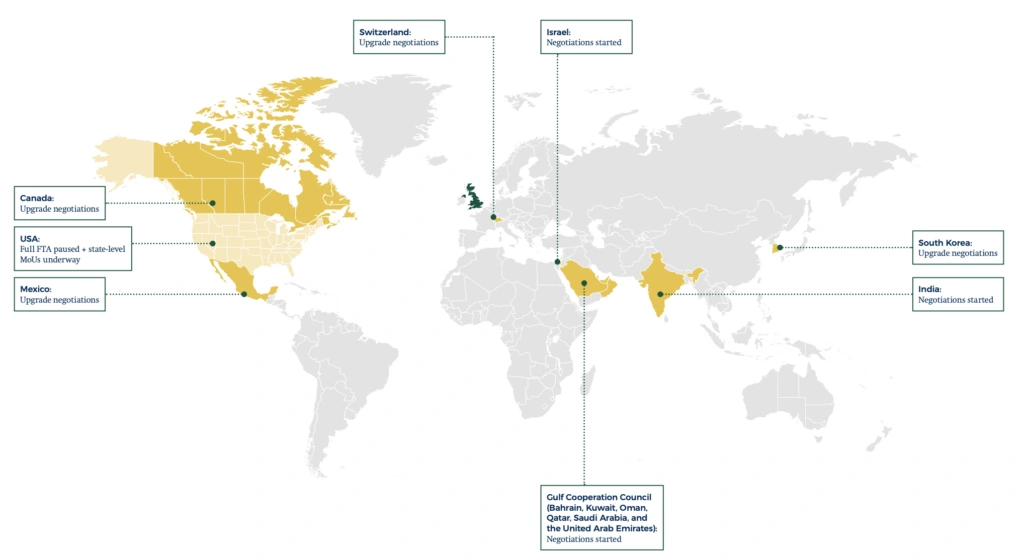
UK FTAs under negotiation as at April 2023
Let’s examine how FTAs affect trade compliance for firms in the UK in more detail.
Rules of Origin
The rules of origin are a crucial component of compliance requirements in free trade agreements. The rules of origin decide whether items are eligible for preferential treatment under an FTA.
Goods must meet the origin requirements outlined in this agreement in order to be eligible for reduced or zero tariffs. These requirements may include using materials sourced from FTA partner countries, meeting product-specific requirements, or meeting other requirements like value-added or regional content requirements.
For UK businesses, adhering to regulations of origin may be difficult.
It necessitates meticulous monitoring and verification of the origin of commodities across the supply chain and an in-depth understanding of the specific regulations of each free trade agreement.
Businesses may face severe financial and operational implications if they violate the rules of origin, which can include fines, increased tariffs, and losing preferential status.
Record-Keeping and Documentation
Another important component of trade compliance that is impacted by free trade agreements is record-keeping and documents.
It often requires firms to keep accurate and full records of all transactions involving the covered products or services.
Businesses in the UK must demonstrate compliance with the rules of origin and other FTA standards by adhering to record-keeping and documents requirements.
It entails keeping thorough and well-organised records, making sure they are easily available for audit or verification needs, and keeping them around for as long as each FTA requires.
The trade compliance and reputation of a firm may suffer from penalties or fines, resulting from noncompliance with record-keeping and documentation standards.
Verifications and audits
FTAs may also require enterprises to conduct audits or verifications to guarantee compliance with the rules of origin and other FTA provisions.
Customs officials or other approved agencies from FTA partner countries may conduct audits or verifications, such as on-site inspections, sample testing, and other verification processes.
It can take a lot of time, effort, and resources to conduct audits and verifications, and businesses must provide comprehensive information, supporting documents, and proof of origin to support their claims.
To guarantee compliance with FTA regulations, UK enterprises need to have strong internal controls, keep correct records, and be ready for audits or verifications.
Fines and remedies
UK businesses may face substantial financial and operational repercussions if they fail to adhere to free trade agreement obligations.
Depending on how serious the violation was, there may be monetary fines, a revocation or suspension of preferential treatment, and other consequences for non-compliance.
It’s critical that UK businesses take proactive steps to guarantee compliance with FTA regulations and are aware of the fines and punishments linked with non-compliance.
Reducing risks and guaranteeing compliance may include making significant investments in comprehensive compliance programmes, carrying out frequent internal audits, and consulting experts.
How can iCustoms help with UK FTA compliance?
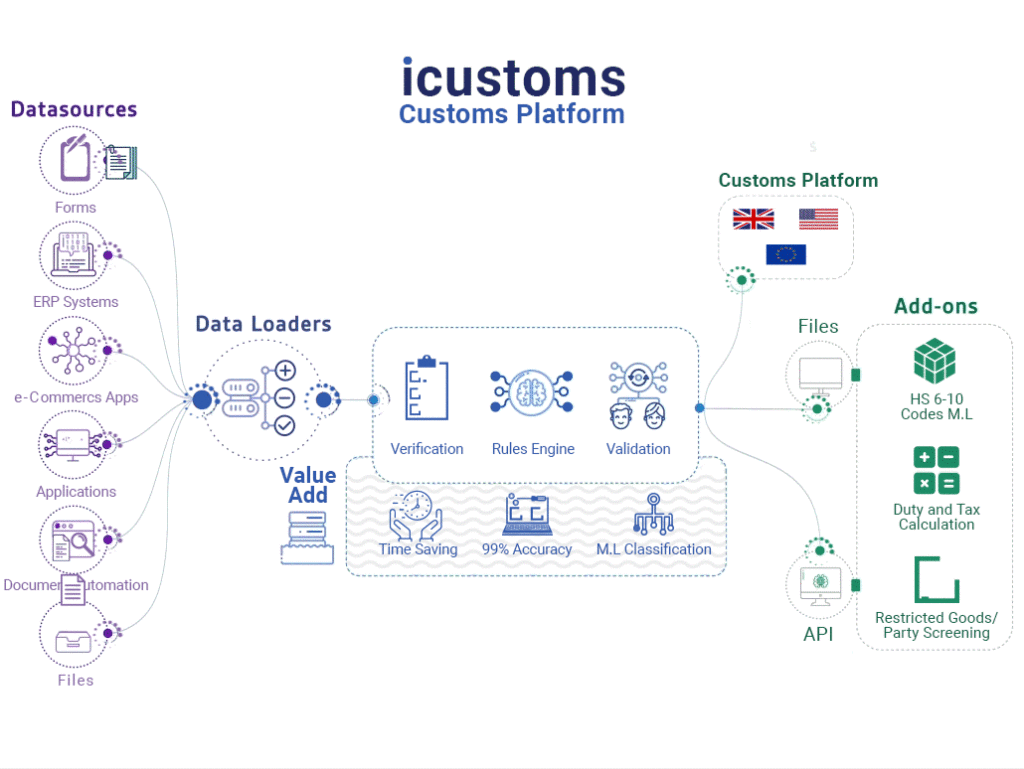
One of the top providers of trade compliance technologies, iCustoms.ai, has creative solutions that may help firms in the UK comply with free trade agreements (FTAs).
iCustoms.ai can help UK firms comply with trade agreements under free trade agreements in the following ways:
Automated rules of origin management
The intricate task of managing rules of origin is made simple by iCustoms’ sophisticated algorithms and machine learning rules engine. In order to ascertain whether items qualify for preferential treatment under free trade agreements (FTAs), the platform can precisely gather, validate, and handle the relevant data, guaranteeing adherence to rules of origin regulations.
Customs management
iCustoms customs management software offers real-time compliance checks with customs rules and regulations, generates correct customs documentation, automates data entry, and streamlines customs operations. To guarantee adherence to FTA regulations, the platform also provides functions including tariff categorisation, value management, and duty optimisation.
Data analytics
Businesses may study trade data and spot patterns and trends by using their business intelligence reports. The technology helps firms proactively manage risks and guarantee compliance with FTA regulations by using AI and machine learning to deliver actionable information.
Digital documentation
iCustoms.ai’s digital document management features make the generation, administration, and exchange of trade-related documents easier. By providing features like digital signatures, electronic document production, and document tracking, the platform lowers the possibility of mistakes and delays in documentation while guaranteeing adherence to FTA regulations.
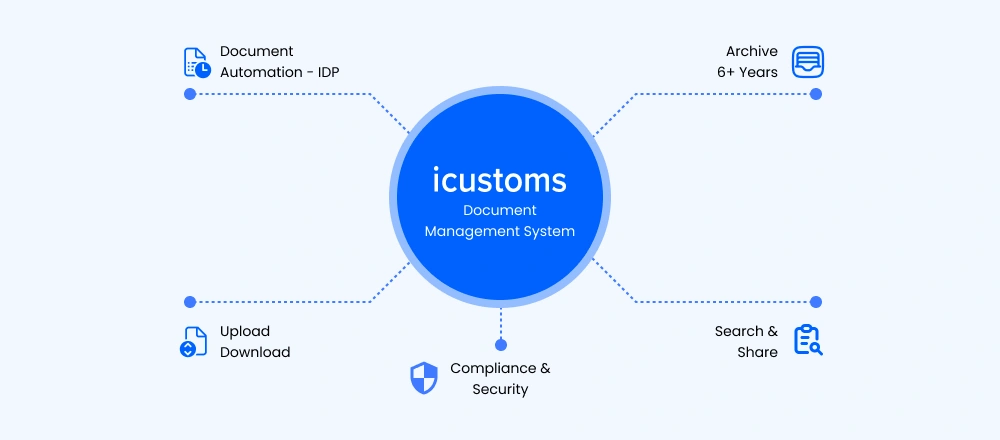
To summarise, iCustoms provides a wide range of trade compliance solutions that can assist firms in the UK in adhering to free trade agreements. Utilising cutting-edge technologies like artificial intelligence (AI), data analytics, and digital documentation, iCustoms helps companies optimise their trade procedures, improve transparency and management of their supply chains, and guarantee adherence to the intricate regulations of free trade agreements (FTAs). This minimises the possibility of non-compliance fines and maximises the advantages and prospects presented by these agreements.
So, get your journey started by scheduling a demo.
And info@icustoms.ai welcomes your inquiries.
Frequently Asked Questions
What are rules of origin and why do they determine FTA eligibility for UK businesses?
Rules of origin are the criteria that determine whether goods qualify for preferential tariff treatment under a free trade agreement. To claim reduced or zero tariffs, goods must meet the specific origin requirements set out in each agreement. These may include sourcing materials from FTA partner countries, meeting product-specific requirements, or satisfying value-added or regional content thresholds. Businesses that cannot demonstrate compliance lose access to preferential rates and face standard tariffs instead.
What documentation must UK businesses maintain to demonstrate FTA compliance?
UK businesses must keep accurate and complete records of all transactions involving goods covered by a free trade agreement. This includes evidence of origin, supplier declarations, transport documents, and any other paperwork that demonstrates compliance with rules of origin. Records must remain accessible for audit or verification purposes and be retained for the period each FTA stipulates. Inadequate documentation can result in penalties, fines, and loss of preferential treatment.
How do customs authorities conduct FTA compliance audits and what should businesses prepare?
Customs authorities or approved agencies from FTA partner countries may conduct on-site inspections, sample testing, and other verification processes to confirm compliance with rules of origin and FTA provisions. Businesses must provide comprehensive information, supporting documents, and proof of origin when audited. Strong internal controls, well-organised records, and clearly documented supply chain processes help businesses respond efficiently and reduce the risk of findings that lead to penalties.
What penalties can UK businesses face for failing to comply with free trade agreement obligations?
Non-compliance with free trade agreement obligations can result in monetary fines, revocation or suspension of preferential tariff treatment, and increased duties on affected goods. The severity of penalties depends on the nature and extent of the violation. Businesses that lose preferential status may face significantly higher costs on imports or exports covered by the agreement. Proactive compliance programmes and regular internal audits are the most effective way to avoid these consequences.
What are value-added and regional content requirements under free trade agreement rules of origin?
Some free trade agreements require goods to meet a minimum value-added or regional content threshold to qualify for preferential treatment. This means a specified proportion of the product's value must originate from within FTA partner countries, through manufacturing, processing, or use of qualifying materials. Businesses must calculate and document these thresholds accurately for each product across their supply chain, as the specific percentage or calculation method varies between different FTA agreements.
Why is supply chain monitoring essential for maintaining free trade agreement compliance?
FTA compliance depends on accurately tracing the origin of materials and components throughout the entire supply chain. Changes in suppliers, manufacturing locations, or sourcing arrangements can affect whether goods continue to meet rules of origin requirements. Without consistent monitoring, businesses risk unknowingly losing preferential eligibility, which can lead to retroactive tariff charges and penalties. Systematic supply chain oversight ensures that any changes are assessed against FTA requirements before they affect shipments.
What steps should UK businesses take to build an effective FTA compliance programme?
An effective FTA compliance programme should include a thorough review of each applicable agreement's origin requirements, a documented process for classifying goods and verifying supplier origin, and a record-keeping system that supports audit readiness. Regular internal audits help identify gaps before external verification occurs. Businesses should invest in staff training, seek expert guidance when navigating complex multi-agreement scenarios, and use technology to automate origin determination and documentation workflows where possible.
You may also like:
Subscribe to our Newsletter
About iCustoms
iCustoms is an all-in-one solution helping businesses automate customs processes more efficiently. With AI-powered and machine-learning capabilities, iCustoms is designed to streamline your all customs procedures in a few minutes, cut additional costs and save time.