

AI Agent vs. AI Assistant: Understanding the Key Differences
- Freya Jane
- Director of Customer's Success
Have you ever been overwhelmed by paperwork, manual tasks, and attempts to stay ahead of constantly changing customs laws? This is the common challenge of whether you are a freight forwarder or importer/exporter.
Imagine having a digital agent or assistant by your side to reduce the burden of never-ending trade compliance tasks. Usually, two types of digital helpers,i.e., AI agents and AI assistants, are used to automate the workflows. But how are these two different from each other, and which one is better to choose?
Let’s get into the differences between AI agents and AI assistants in detail.
What is an AI assistant?
First, let’s talk about the more well-known term: AI assistant. It is a tool made to help you with particular tasks or provide answers to your queries. Consider them as useful allies who automate routine or repetitive tasks to make your life easier.
Important features of AI assistants:
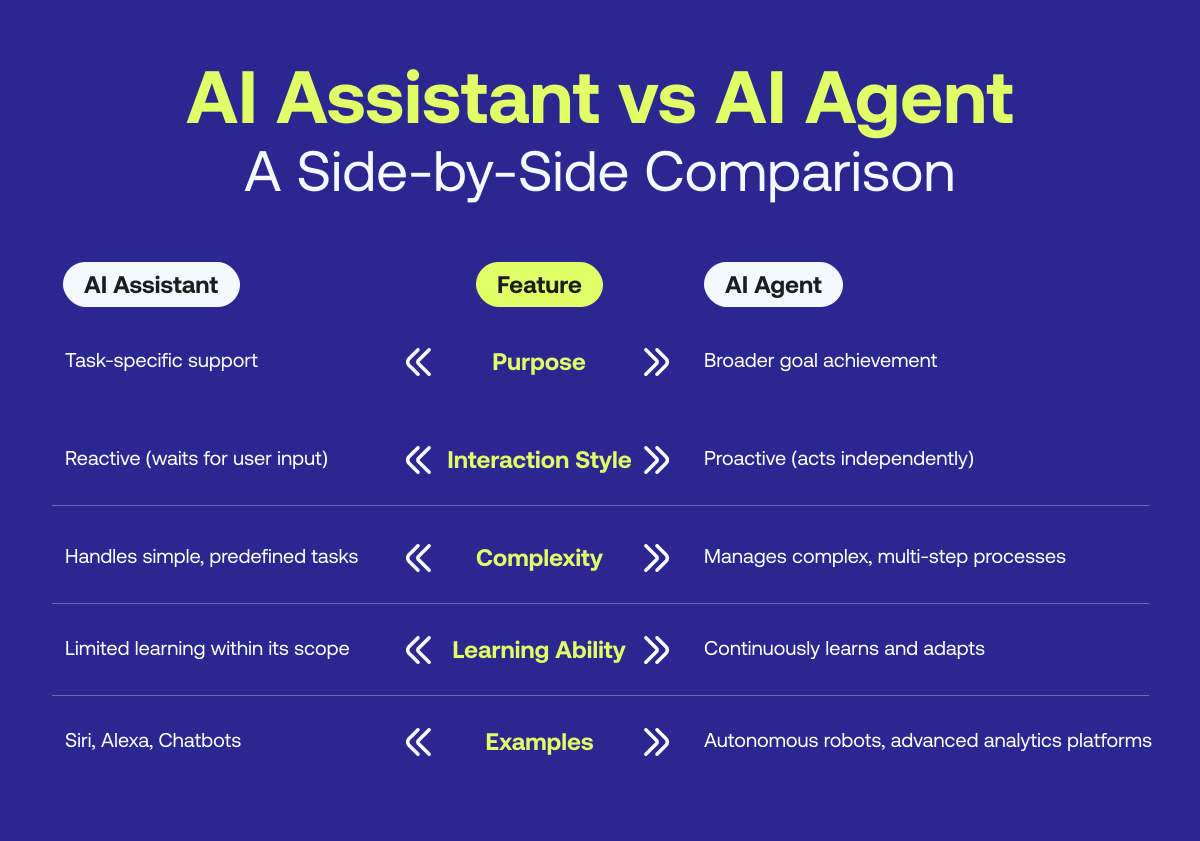
- Task-oriented: AI assistants are usually designed to perform particular tasks. They can set up meetings, issue reminders, or respond to simple questions, for instance.
- User-friendly: They are intended to be conversational and intuitive. To utilise them, you don’t have to be an expert in technology.
- Reactive: The majority of AI assistants react to straightforward instructions or enquiries. They wait till you start the conversation.
How are AI assistants helpful in trade compliance?
Consider yourself a trade compliance officer managing several shipments, paperwork, and due dates. It’s similar to having an informed coworker who is always there for you.
For example, an AI assistant may advise whether documents are missing from a customs declaration, warn you of upcoming filing deadlines, or offer prompt responses to commonly asked queries on import/export laws.
What is an AI agent?
Let’s now discuss the somewhat more complex idea of an AI agent. An AI agent is more of a proactive problem-solver than an AI assistant. These systems are made to function independently, frequently without requiring continual human input.
Important features of AI agents
- Goal-oriented: AI agents aim to accomplish more general objectives as opposed to AI helpers, which concentrate on specific tasks. To accomplish such goals, they assess circumstances, decide, and act.
- Proactive: AI bots anticipate requirements and respond appropriately rather than passively waiting for commands. For example, they could see possible hazards in a supply chain and suggest fixes before problems happen.
- Adaptive: These systems gain knowledge over time and modify their actions in response to new information or evolving conditions.
- Complex workflows: AI agents are capable of managing multi-step procedures and coordinating with several stakeholders or systems.
How are AI agents helpful in trade compliance?
An AI agent has the potential to completely transform the way companies handle regulatory obligations and customs declarations in the field of trade compliance.
Imagine this: An AI agent may continuously monitor international trade regulations, highlight irregularities in documentation, and even submit filings to customs officials on your behalf. It saves you the trouble of manually checking each cargo. It is comparable to having a capable compliance manager who works around the clock and never overlooks anything.
For instance, an AI agent may notify your team right away of a sudden change in export limits or tariff rates in a certain country, update your internal systems, and make sure that all shipments going forward adhere to the new regulations.
Want to learn more about AI Agents? Click here!
AI Assistant vs. AI Agent: A Side-by-Side Comparison
Importance of knowing the difference between AI agent and AI assistant
Knowing the distinction between AI agents and assistants has practical applications for how businesses use technology, making it more than just an academic matter.
This is why it’s important:
- Selecting the appropriate tool for the task: AI agents are not necessary for every business issue. Sometimes all you need is a well-designed AI assistant. Understanding the difference enables you to make the best investment.
- Scalability: Your organisation’s issues will also expand as it does. An AI agent is more suited for scaling operations due to its capacity for handling complexity and adaptability, particularly in domains like AI trade compliance where regulations are always changing.
- Cost-effectiveness: Since they focus on narrow tasks, AI assistants are typically less expensive to deploy. However, with automation and optimisation, AI agents can provide more long-term value at a higher initial cost.
Wrapping up
This blog summarises the differences between AI agents and AI assistants. Although they have different uses, both are effective tools. An AI assistant is the best option if you want to make everyday chores easier. However, an AI agent is the best option if you require a system that can anticipate needs, address issues, and handle complexity.
Furthermore, understanding the distinctions between these two forms of AI may assist you in selecting the best solution for the task, whether you’re handling trade compliance, submitting customs declarations, or simply attempting to maintain organisation.
You may also like:


Simplify Customs with our Powerful Customs Management Software

Automate declarations, track shipments, & ensure compliance.
About iCustoms
iCustoms is an all-in-one solution helping businesses automate customs processes more efficiently. With AI-powered and machine-learning capabilities, iCustoms is designed to streamline your all customs procedures in a few minutes, cut additional costs and save time.
Simplify Customs with our Powerful Customs Management Software
Automate declarations, track shipments, & ensure compliance.