
Best 5 CDS Customs Import Software for UK Retailers and Manufacturers (2026)
-
 Freya Jane
- Director of Customer's Success
If you import goods into the UK and want to manage your own customs declarations, you need CDS-compatible software that connects directly to HMRC. Since the Customs Declaration Service replaced the old CHIEF system in November 2023, every UK importer submitting their own declarations has had to use approved CDS software. Getting this right can save you thousands of pounds a year in broker fees, duty errors, and compliance delays.
This guide walks you through the five best CDS customs import software options available to UK retailers and manufacturers in 2026. We cover what each platform does, who it is best suited for, key features, and how to decide which one fits your business. We also include a straight comparison table so you can assess your options quickly.
Key Fact: All UK import declarations must now be submitted through the Customs Declaration Service (CDS). Businesses that submit their own declarations require software that is compatible with HMRC’s CDS API. Using a non-compliant tool or outdated system will result in rejected declarations and potential financial penalties.
What is CDS Customs Import Software?
CDS customs import software is a digital tool that allows businesses to prepare, validate, and submit import declarations directly to HMRC’s Customs Declaration Service. It replaces the need to complete paper C88 entries or to go through a customs agent for every shipment.
The right software handles the technical connection to HMRC on your behalf, validates your commodity codes, calculates duty and VAT liabilities, generates the Movement Reference Number (MRN), and stores your declaration history for audit purposes.
More advanced platforms, such as iCustoms, also use artificial intelligence to automate commodity code classification using the HS code system, reducing the risk of misdeclaration and the associated penalties.
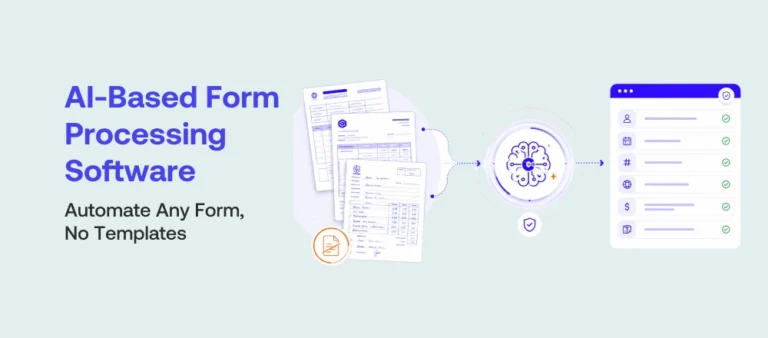
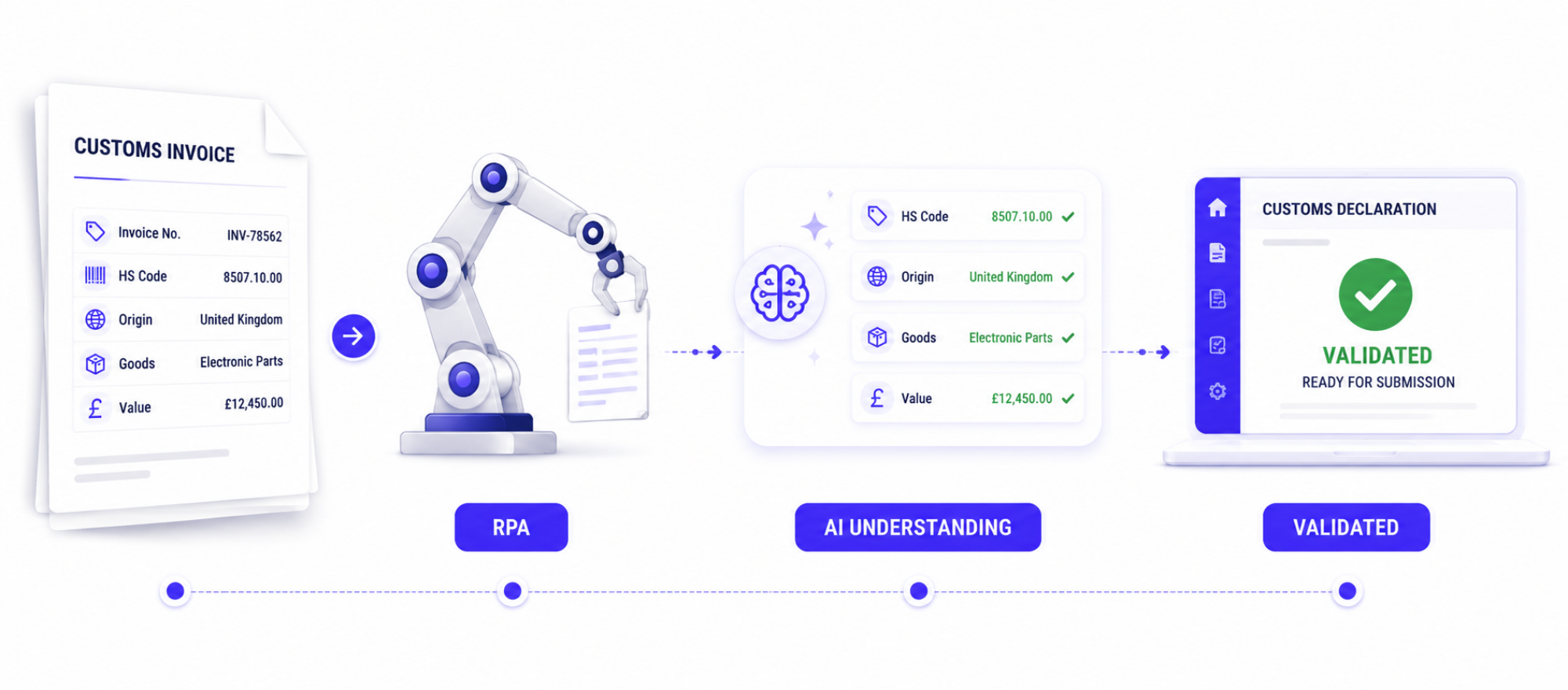
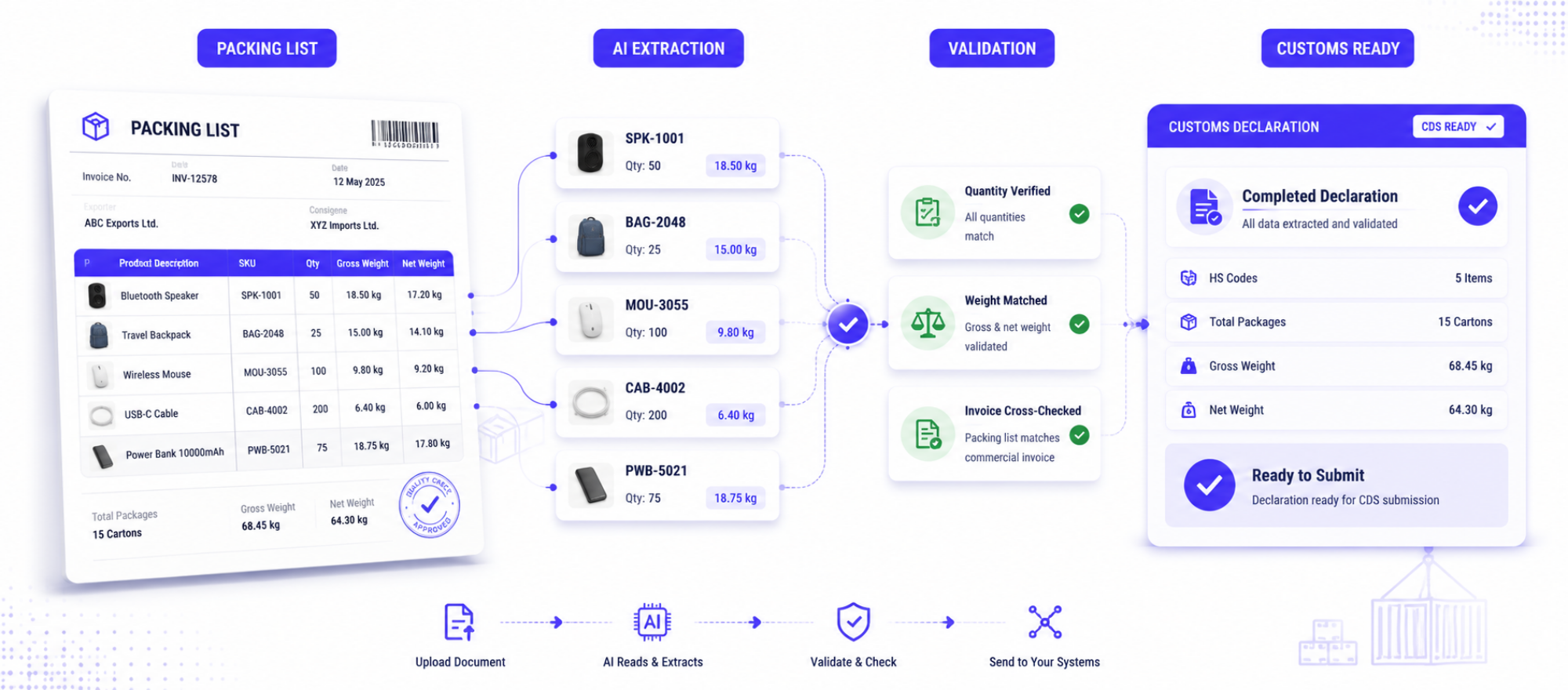
Many of these advanced platforms also function as customs form autofill software — reading supplier invoices and packing lists directly, extracting the relevant data, and auto-populating the corresponding CDS declaration fields without manual re-entry. This is one of the most impactful time savings available to importers processing regular shipment volumes.
Key customs system terminology you will encounter:
CDS: Customs Declaration Service. The HMRC system for all UK import and export declarations.
CHIEF: Customs Handling of Import and Export Freight. The legacy system replaced by CDS in 2023.
MRN: Movement Reference Number. The unique number assigned to each accepted declaration.
HS Code: Harmonised System commodity code used to classify goods for duty and VAT purposes.
NCTS: New Computerised Transit System. Used for transit declarations through the UK and EU. iCustoms supports full T1 transit document processing via iNCTS, covering T1 and T2 transit movements under the Common Transit Convention.
ENS: Entry Summary Declaration. Required for safety and security purposes on certain imports. iCustoms includes safety and security declaration automation via iZap, supporting both UK S&S GB ENS filings and EU ICS2 ENS declarations in batch.
Why Retailers and Manufacturers Need Dedicated CDS Software
Many smaller importers assume they can manage declarations manually or rely entirely on a freight forwarder. In practice, this creates three significant problems.
First, you lose visibility. When a third party handles your declarations, you do not get real-time access to your MRNs, duty calculations, or compliance records. This makes audits difficult and slows down your ability to identify duty savings.
Second, errors are expensive. Misdeclared commodity codes are the most common cause of overpaid import duty in the UK. HMRC data consistently shows that businesses using automated classification tools make fewer errors and recover overpaid duty more quickly.
Third, volume adds up. Retailers importing from multiple suppliers may make hundreds of declarations per year. At the rates charged by brokers per entry, self-declaration software typically pays for itself within the first few months for any business processing more than 20 declarations per month.

The 5 Best CDS Customs Import Software Options in 2026
1. iCustoms: Best for AI-Powered Automation and HMRC Direct Connection
iCustoms is a UK-built customs management platform designed specifically for the CDS era. It connects directly to HMRC using the approved CDS API, meaning your declarations are submitted in real time without relying on a third-party gateway.
What sets iCustoms apart from the competition is its artificial intelligence layer. The platform uses machine learning to classify commodity codes automatically based on your product descriptions, reducing the time spent on tariff lookups and virtually eliminating classification errors for standard goods categories.
For retailers and manufacturers dealing with high volumes of SKUs, this is a significant time saver. Instead of manually assigning HS codes to hundreds of product lines, the AI handles the initial classification and flags exceptions for human review.
iCustoms also supports both import and export declarations, transit movements under NCTS, and Entry in Declarant’s Records (EIDR), making it a comprehensive platform for businesses with complex supply chains.
The platform’s iList feature also functions as a customs archive and reuse tool — storing validated declaration records from previous shipments so that repeat imports of the same goods can be filed in seconds by pulling from historical data rather than re-entering fields from scratch.
For businesses that need end-to-end customs clearance automation software — from document intake and data extraction through to HMRC submission, MRN receipt, and duty calculation — iCustoms delivers the complete clearance workflow in a single platform, without requiring separate tools for each stage.
- Direct HMRC CDS API connection
- AI-powered commodity code classification
- Import, export, and transit declarations
- Bulk declaration processing
- Duty calculation and deferment account management
- Audit trail and declaration history
- API and customs document processing EDI integration with ERP, WMS, and TMS systems — enabling structured trade data to flow directly from your operational systems into CDS declarations without duplicate entry
Customs declaration auto-fill software capability — by reading your commercial invoice and packing list, iCustoms pre-populates all CDS declaration fields automatically, saving you 20 minutes per entry.
Best suited for: UK retailers and manufacturers seeking import declaration automation software that combines HMRC-direct CDS filing with AI document processing, reducing reliance on customs brokers and cutting declaration preparation time at scale.
2. Descartes e-Customs: Best for Large Enterprise Importers
Descartes is a global logistics software company with a long track record in customs compliance. Their e-Customs module for CDS is built for large enterprises with complex supply chains spanning multiple countries and regulatory environments.
The platform integrates deeply with major ERP systems including SAP and Oracle, making it a natural choice for businesses that need their customs data to flow directly into their financial systems. Descartes also provides strong support for EU customs regimes alongside UK CDS, which is relevant for businesses operating across both markets post-Brexit.
The trade-off is complexity and cost. Descartes is not the right fit for smaller importers or businesses looking for a quick setup. Implementation typically requires a project team and technical resource.
- Enterprise-grade CDS and EU customs coverage
- SAP and Oracle ERP integration
- Multi-country customs management
- Strong compliance documentation and audit tools
Best suited for: Large enterprise importers with dedicated compliance teams and existing ERP infrastructure.
3. AEB Import Filing (CDS Module): Best for Multi-Jurisdiction Compliance
AEB offers a modular customs software platform with dedicated support for CDS import filings. The AEB platform is particularly well regarded for businesses that need to manage customs compliance across multiple jurisdictions simultaneously, including UK, EU, and US regulations.
Their CDS module handles all standard import declaration types and includes robust tariff management tools. AEB is a strong option for manufacturers importing components from multiple countries who need consistent classification and compliance across their entire supplier base.
- CDS import declaration management
- Multi-jurisdiction compliance (UK, EU, US)
- Tariff and commodity code management
- Trade agreement optimisation for duty relief
Best suited for: Manufacturers with global supply chains who need consistent compliance across multiple customs regimes.
4. Customs4trade (CAS): Best for End-to-End Process Automation
Customs4trade offers their Customs Automation System (CAS), which takes a process automation approach to customs management. Rather than simply providing a declaration tool, CAS aims to automate the entire customs workflow from goods arrival through to release.
The platform has strong coverage across EU member states and is used extensively by companies managing pan-European logistics. For UK importers, their CDS support is solid, though the platform’s primary strength lies in EU customs regimes where it has the deepest functionality.
- End-to-end process automation
- Strong EU customs regime coverage
- Workflow management and exception handling
- Document generation and management
Best suited for: Businesses with significant EU import and export activity alongside UK operations.
5. Customs Gateway: Best for Straightforward SME Importers
Customs Gateway takes a more accessible approach to CDS software, targeting smaller and medium-sized importers who need a simple, reliable platform without enterprise-level complexity. Their CustUK platform supports CDS import declarations, provides clear duty calculations, and offers a practical onboarding experience for teams without dedicated customs expertise.
The platform is less feature-rich than iCustoms or Descartes but has the advantage of lower cost and faster setup, which makes it a practical starting point for businesses just beginning to self-declare.
- Simple CDS import declaration interface
- Duty and VAT calculation
- HMRC direct connection
- Basic reporting and declaration history
Best suited for: Small to medium-sized importers making fewer than 50 declarations per month who want a straightforward tool without a long implementation process.
How to Choose the Right CDS Import Software for Your Business
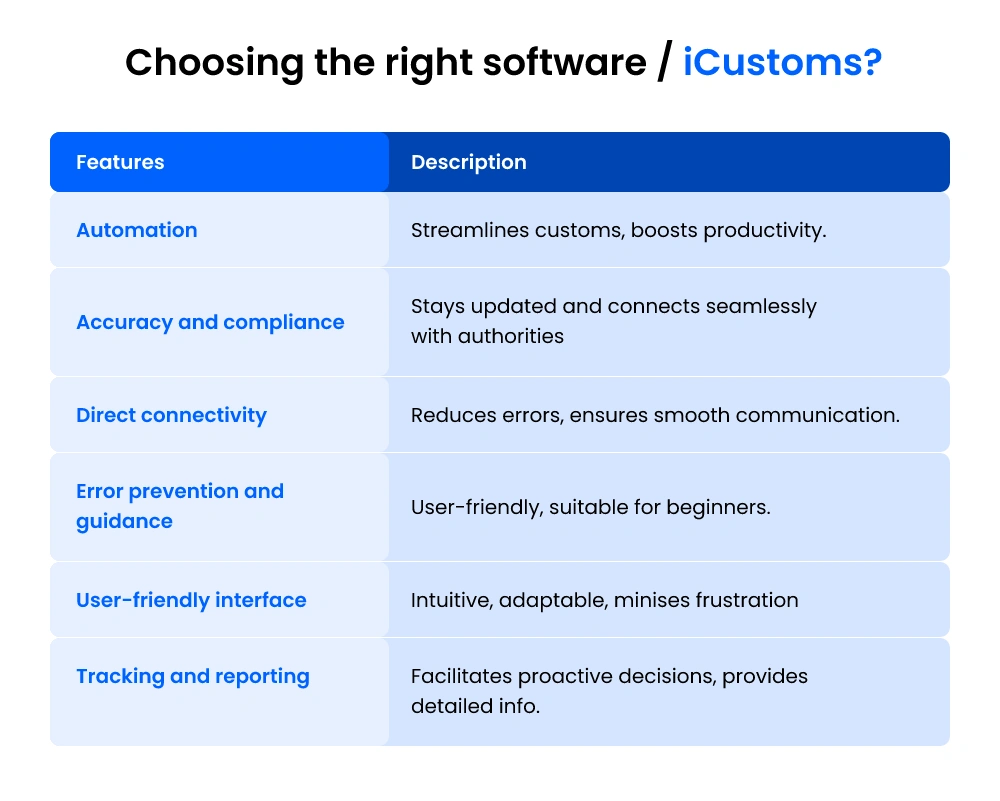
Choosing the wrong platform is an expensive mistake. Here are the five questions to answer before making a decision:
1. How many declarations do you make per month?
If you are making fewer than 20 declarations per month, a straightforward platform like Customs Gateway may be sufficient. If you are making hundreds of declarations, you need a platform with bulk processing, automation, and an API that connects to your existing systems.
2. Do you import goods with complex commodity codes?
Manufacturers importing components with precise HS code requirements will benefit most from AI-powered classification. iCustoms is particularly strong here because it learns from your historical declarations and improves accuracy over time.
3. Do you trade with EU countries as well as the UK?
If you import from or export to EU member states and need to comply with EU customs regimes as well as UK CDS, you need a platform with multi-jurisdiction support. Descartes, AEB, and Customs4trade are better suited for this than UK-only platforms.
4. What systems does the software need to connect to?
Retailers using Shopify or Magento for order management and manufacturers using SAP or Microsoft Dynamics for ERP will need to check API compatibility carefully. iCustoms offers open API integration, while Descartes and AEB have pre-built connectors for major enterprise systems.
5. What level of support do you need?
If your team has no customs expertise in-house, choose a platform with strong onboarding support and clear documentation. iCustoms includes UK-based support and guided onboarding specifically for importers new to self-declaration.
CDS Software for Retailers vs Manufacturers: Key Differences
Retailers
Retailers typically import a wide range of consumer goods from multiple suppliers, often with tight delivery windows and variable volumes. The key priorities for retail importers are speed of clearance, accurate duty calculation across a large number of commodity codes, and integration with stock management systems. AI classification is particularly valuable for retailers with hundreds of SKUs, as it eliminates the manual overhead of tariff lookups.
Manufacturers
Manufacturers importing raw materials and components tend to have more consistent commodity codes but greater sensitivity to classification accuracy, since a misclassified component can affect the duty relief schemes they are entitled to. Manufacturers also tend to have more complex supply chains, making ERP integration and customs duty management (including inward processing relief and authorised use procedures) more important buying criteria.
The Bottom Line: Which CDS Software Should You Choose?
For most UK retailers and manufacturers looking to self-declare their imports efficiently and accurately, iCustoms offers the most compelling combination of AI-powered automation, HMRC direct connection, SME-friendly setup, and UK-based support.
For businesses managing shipments across both UK and EU borders, iCustoms also delivers cross-border trade document automation covering CDS import and export, ICS2 ENS, NCTS transit, and Irish Revenue AIS/AES declarations all from a single platform login, removing the need to switch between systems for different trade lanes.
If you are a large enterprise with complex multi-country operations and existing SAP or Oracle infrastructure, Descartes or AEB may be better fits, though they require significantly more investment in implementation.
Whatever platform you choose, the most important thing is to ensure it is CDS-compatible, HMRC-approved, and capable of growing with your import volumes.
AI Powered Customs Declaration Software for Importers Ireland
Businesses searching for customs declaration software for importers Ireland increasingly require more than basic declaration filing tools. Importers operating between the UK, Ireland, and wider EU markets need platforms that support HMRC CDS, Irish Revenue AIS, transit movements under NCTS, and safety and security filings within a single workflow. Modern AI powered customs declaration software also reduces reliance on customs brokers by automating declaration preparation, commodity code assignment, document processing, and MRN tracking.
For Irish and UK importers managing regular cross-border trade, customs declaration software for importers Ireland should include direct customs authority connectivity, AI-powered HS code classification, automated duty and VAT calculation, and integration with ERP, WMS, and freight systems. Platforms such as iCustoms provide these capabilities through a single interface, allowing importers to process declarations faster, reduce manual data entry, and maintain full visibility across customs operations.
Key capabilities importers should look for include:
- HMRC CDS and Irish Revenue AIS compatibility
- Automated customs declaration preparation
- AI-powered commodity code classification
- API and EDI integration with ERP and warehouse systems
- MRN tracking and customs audit history
- Bulk declaration processing for high shipment volumes
- Transit declaration support through NCTS
- ENS and ICS2 safety and security filing support
For importers moving goods between Great Britain, Northern Ireland, Ireland, and the EU, using a platform that supports both UK and EU customs systems significantly reduces operational complexity and lowers the risk of declaration errors.
Frequently Asked Questions About CDS Customs Import Software
What is the Customs Declaration Service and why does my software need to support it?
The Customs Declaration Service (CDS) is HMRC's current system for processing UK import and export declarations. It replaced the CHIEF system in November 2023. Any software used to submit declarations must connect to CDS via an approved API. Without CDS compatibility, declarations cannot be submitted electronically to HMRC.
Does using CDS software mean I do not need a customs broker?
Not necessarily. CDS software gives you the technical ability to submit declarations yourself, but you still need the knowledge to complete them accurately. Many importers use CDS software alongside an in-house customs coordinator. If your imports are complex, involving special procedures such as inward processing or authorised use, professional customs advice remains valuable even when using self-declaration software.
How long does it take to set up CDS import software?
Setup time varies by platform. Simple platforms like Customs Gateway can be operational within a day or two once your EORI number is confirmed and your CDS authorisation is in place. More complex platforms like Descartes require a proper implementation project. iCustoms is designed for quick setup, with most retailers and manufacturers completing their first declaration within 48 hours of starting their trial.
Is there free CDS customs software available?
HMRC provides basic guidance and some tools through the GOV.UK website, but there is no fully functional free CDS declaration software for regular commercial use. Most providers offer free trials, which allow you to test the platform before committing. iCustoms offers a free trial period that lets you complete real declarations before you pay.
What is the difference between CDS software and customs broker software?
CDS software is designed for importers and exporters to submit their own declarations. Customs broker software is designed for customs intermediaries to manage declarations on behalf of multiple clients. Broker platforms include additional features like client management and billing. If you are a retailer or manufacturer submitting declarations for your own goods, you want importer-facing CDS software, not broker software.
What is an MRN and how does CDS software generate it?
An MRN, or Movement Reference Number, is the unique reference number that HMRC assigns to each accepted customs declaration. Your CDS software submits the declaration to HMRC, and when it is accepted, HMRC returns the MRN. This number is used by your carrier to release the goods from customs. Good CDS software displays the MRN immediately upon acceptance and notifies the relevant parties automatically.
Can CDS software help me reclaim overpaid import duty?
Yes. Accurate commodity code classification is the most important factor in ensuring you pay the correct duty rate. If your goods have historically been misdeclared, you may have overpaid. iCustoms includes duty optimisation tools that identify potential reclaims based on your declaration history and apply for amendments where permitted by HMRC.
You may also like:
Master Imports with iCustoms CDS

Seamlessly Conquer Import Control System Release 2
Subscribe to our Newsletter
About iCustoms
iCustoms is an all-in-one solution helping businesses automate customs processes more efficiently. With AI-powered and machine-learning capabilities, iCustoms is designed to streamline your all customs procedures in a few minutes, cut additional costs and save time.
Master Imports with iCustoms CDS
Seamlessly Conquer Import Control System Release 2