

Step by step Guide to Automating Mexico's Advance Manifest Rule
- John Hall
- Customs Specialist at iCustoms.ai
Building on 2024’s record of over $860 billion in bilateral trade, the flow of goods continues to intensify, with daily crossings now valued at over $2.8 billion. Every day, over $2.1 billion worth of goods cross the border, moving through a complex and highly regulated customs environment governed by the Servicio de Administración Tributaria (SAT).
For businesses, this represents an immense opportunity but also a significant risk. In the same year, Mexican customs authorities initiated over 65,000 verification procedures and issued fines for non-compliance that can reach up to 70% of the omitted tax contribution or the commercial value of the goods. A single error in documentation can lead to delays costing thousands of dollars per day in demurrage and detention fees.
Understanding SAT’s procedures, led by its operational agency ANAM (Agencia Nacional de Aduanas de México), is no longer a logistics function—it is a core business competency for anyone engaged in cross-border trade with Mexico. This guide will demystify the process, focusing on the critical Advance Manifest requirement, to help you ensure compliance, avoid penalties, and keep your goods moving.
Foundational Concepts and Authorities
1.1 Key Mexican Authorities
SAT (Servicio de Administración Tributaria): The overarching body for tax and customs policy, legislation, and enforcement.
ANAM (Agencia Nacional de Aduanas de México): The operational arm of SAT, responsible for the day-to-day administration of customs facilities and procedures.
1.2 Core Electronic Systems
VUCEM (Ventanilla Única de Comercio Exterior Mexicana): The “Mexican Single Window”. This is the primary digital platform for submitting all foreign trade documentation, including customs declarations (Pedimentos), electronic value certificates (COVE), and permits.
PITA (Proyecto de Integración Tecnológica Aduanera): The technological backbone integrating customs processes, including electronic data interchange and automated inspection gates.
1.3 Key Documentation Acronyms
Pedimento: The official customs declaration form for import or export.
COVE (Comprobante de Valour Electrónico): The Electronic Value Certificate, required to justify the declared value of goods.
Complemento Carta Porte: A mandatory digital supplement for invoices that tracks the national transport of goods within Mexico, crucial for planning inland logistics after customs clearance.
II. Advance Manifest Requirement (The 24-Hour Rule Equivalent)
1.1 Overview of the Mandatory Requirement
System Name: Commonly known as the “24-Hour Rule for Mexico”.
Purpose: To allow SAT/ANAM to perform security and risk assessments on cargo before it loads at the origin port.
Applicable Modes: Mandatory for Ocean Freight. While the “24-hour” term is ocean-specific, air, rail, and road freight also have strict advance electronic manifest requirements.
1.2 Submission Timeline (Ocean Imports)
Mandate: The carrier (or their authorised agent) must transmit the complete electronic cargo manifest data to Mexican Customs no later than 24 hours before the cargo is loaded onto the vessel at the foreign port of departure.
Scope: This applies to all cargo destined for Mexican ports, including Freight Remaining On Board (FROB), which requires a specific movement manifest.
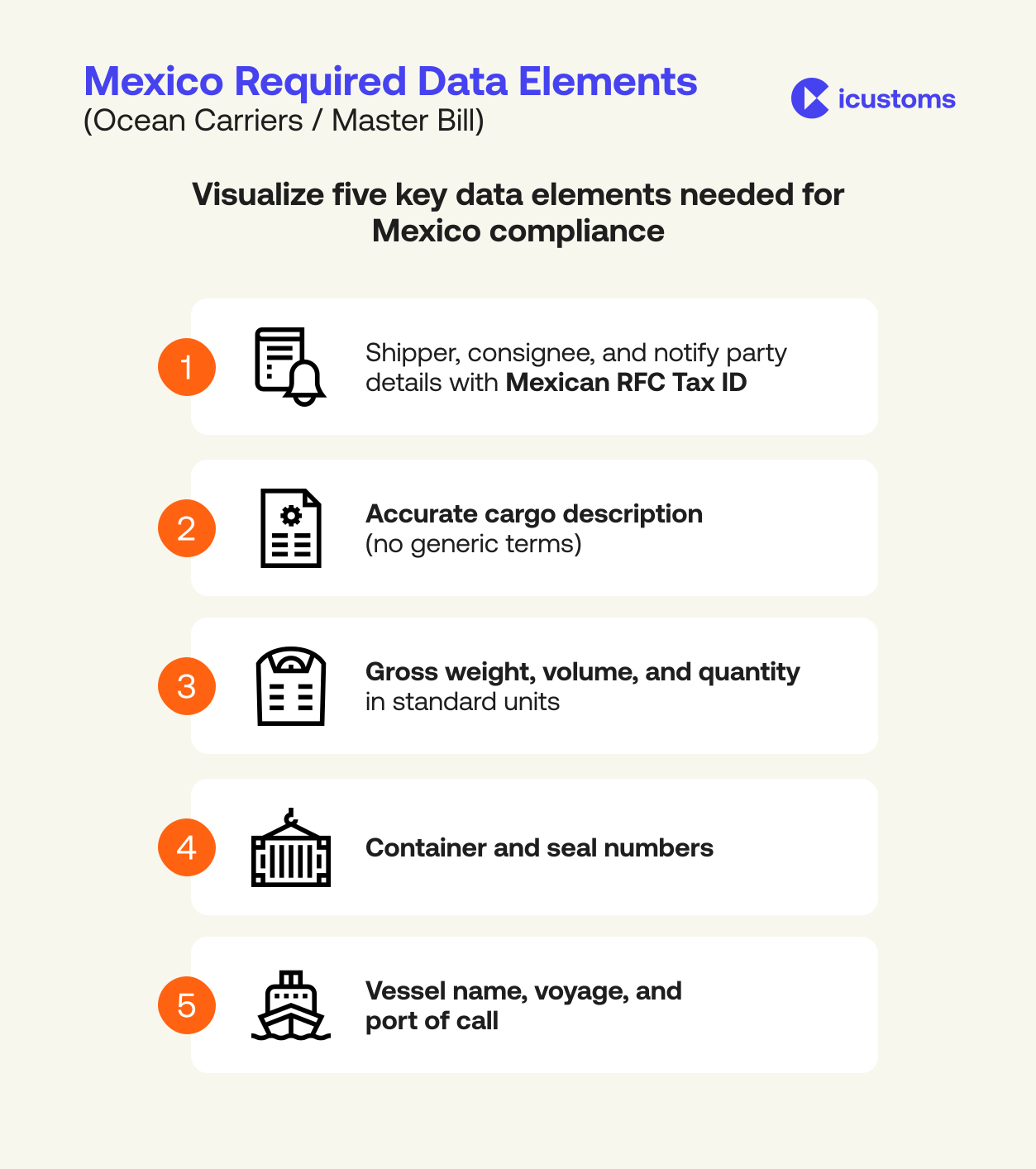
1.3 Required Data Elements (Ocean Carriers/Master Bill)
Complete names and addresses (including Mexican RFC Tax ID) for the shipper, consignee, and notification party.
Precise, detailed cargo description (generic terms like “FAK” or “General Merchandise” are prohibited and will cause rejection).
Gross weight, volume, and quantity of goods (using standard units of measure).
Container numbers and seal numbers.
Vessel name, voyage number, and port of call information.
1.4 House Bill Submission Differences
Unlike the US system, Mexican Customs mandates that the ocean carrier is primarily responsible for filing the Master Bill of Lading (MBL) manifest.
For House Bill of Lading (HBL) shipments, freight forwarders/NVOCCs must ensure their HBL data is accurately provided to the carrier well in advance of the 24-hour deadline. In some cases, direct submission to SAT via authorised systems may be required, but this is always coordinated through the carrier or an authorised third party.
III. Customs Procedures and Requirements
Mexico’s customs clearance process involves multiple stages designed to ensure compliance with SAT (Servicio de Administración Tributaria) regulations. The process integrates both advanced reporting and on-arrival inspection procedures through the Ventanilla Única de Comercio Exterior Mexicano (VUCEM) platform. Below is a procedure breakdown of how goods move from pre-departure documentation to final release:
- Advance Manifest Filing: The carrier submits manifest data 24+ hours before loading.
- Pre-arrival Preparation: The importer/exporter and their customs broker gather all required documents (invoice, COVE, permits, etc.).
- Customs Declaration (Pedimento): Upon arrival, the licensed Customs Broker submits the Pedimento via VUCEM, attaching all supporting documents.
- SAT Review & Inspection: SAT reviews the declaration. It may be selected for a documentary review, a physical inspection, or granted immediate release.
- Payment of Duties/Taxes: The broker pays the calculated duties and taxes on behalf of the importer.
- Release of Cargo: Once SAT is satisfied, the cargo is released for pickup and inland transport.
Example:
A U.S. electronics company imports computer components into Mexico through the Port of Veracruz. The ocean carrier submits the Advance Manifest 24 hours before loading. Before the vessel arrives, the importer and customs broker prepare all required documents, including the invoice, COVE, and import permits.
Upon arrival, the broker files the Pedimento via VUCEM, attaching supporting documents. SAT reviews the submission and selects the shipment for a brief documentary inspection. After verification, the broker pays the applicable IVA and duties, and SAT releases the cargo within 48 hours, allowing it to move inland to the company’s warehouse in Mexico City.
Common Challenges & Best Practices:
When navigating Mexico’s customs and trade filing requirements, businesses frequently encounter recurring challenges that can result in costly delays or compliance issues. One common problem is the use of generic cargo descriptions, which can trigger customs queries or misclassification.
To avoid this, always provide detailed, HS-code-aligned product descriptions in your filings. Another frequent issue involves missing or incorrect RFC numbers for importers, exporters, or consignees. Verifying the RFC details of all Mexican parties before submission ensures data accuracy and prevents rejections.
Additionally, non-compliance with NOMs (Normas Oficiales Mexicanas)—Mexico’s product-specific standards—can result in shipment holds or penalties. Companies should proactively identify and obtain all necessary NOM permits and certificates well in advance of shipment.
Finally, the tight 24-hour submission window for advance manifest filing remains a key operational challenge. The best practice is to provide complete and accurate shipping instructions to carriers or freight forwarders as early as possible, allowing sufficient time for validation and electronic submission through VUCEM or other authorized platforms.
Import (Definitive) Requirements
1.1 Mandatory Registration
RFC (Registro Federal de Contribuyentes): A Mexican tax ID number is mandatory for all commercial importers.
Padrón de Importadores (Importers’ Registry): General registration is required for most importers.
Special Sector Registries: Additional registration is required for sensitive goods, including chemicals, pharmaceuticals, and used machinery.
1.2 Required Documentation at Clearance
Pedimento de Importación: The completed import declaration.
Commercial Invoice (CFDI): Must be a compliant Mexican digital tax invoice, issued in Spanish.
Bill of Lading / Air Waybill: Surrendered or endorsed for release.
The COVE/ E-Value Manifest (New Format E2): The electronically validated value certificate submitted via VUCEM.
Proof of Origin: For claiming preferential duty rates under treaties like USMCA/T-MEC.
Compliance Documentation: Any required NOM certificates, import permits, or health/safety licences.
1.3 The Customs Broker (Agente Aduanal)
The use of a licensed Mexican customs broker is mandatory for all commercial import transactions.
The broker acts as your legal representative, preparing and submitting the Pedimento, managing the VUCEM process, and ensuring compliance with all customs laws.
Export (Definitive) Requirements
1.1 Required Documentation
Exporting goods from Mexico involves strict documentation requirements governed by Mexico’s Customs Law (Ley Aduanera) and managed by the Servicio de Administración Tributaria (SAT). Each document serves a specific purpose in ensuring transparency, regulatory compliance, and traceability of goods leaving the country. Below is an overview of the key documents typically required for export clearance:
1. Pedimento de Exportación (Export Declaration)
The Pedimento de Exportación is the cornerstone of Mexico’s customs documentation.
- It is an official customs form that declares the nature, value, quantity, and destination of exported goods.
- The document must be electronically filed through the Ventanilla Única de Comercio Exterior Mexicano (VUCEM) and validated by a licensed customs broker (Agente Aduanal).
- It includes details such as the exporter’s RFC number, tariff classification, applicable trade agreements (e.g., T-MEC), and tax obligations.
- Without a validated Pedimento, no shipment can legally exit Mexico.
2. Commercial Invoice (CFDI – Comprobante Fiscal Digital por Internet)
The CFDI serves as the digital tax invoice required under Mexico’s electronic invoicing system.
- It must be generated through an authorized PAC (Proveedor Autorizado de Certificación) and include specific fields such as HS code, product description, quantity, and value.
- The invoice must reference the export type, the corresponding Pedimento number, and indicate whether it qualifies under a free trade agreement.
- The CFDI ensures fiscal compliance and acts as proof of transaction for both taxation and customs audit purposes.
3. Transport Document (Bill of Lading / Air Waybill)
The transport document establishes the contract of carriage between the exporter and the carrier.
- For ocean shipments, this is the Bill of Lading (B/L); for air shipments, the Air Waybill (AWB).
- It provides critical logistics details—consignor and consignee information, ports of loading and discharge, and cargo description.
- Customs authorities use it to verify that the cargo declared in the Pedimento aligns with what is actually being shipped.
In multimodal or consolidated shipments, a House Bill of Lading (HBL) and Master Bill of Lading (MBL) may both be required.
4. Certificates of Quality and Quantity
For regulated goods, particularly in sectors such as agriculture, mining, and food processing, exporters must include Certificates of Quality and Quantity issued by accredited laboratories or government agencies.
- These certificates confirm that goods meet Mexican standards (NOMs) or international specifications agreed upon with the buyer.
Such certifications help facilitate customs clearance, avoid shipment delays, and maintain compliance with importers’ destination-country regulations.
5. Additional Supporting Documents (as applicable)
Depending on the product type and export destination, the following may also be required:
- Certificate of Origin (T-MEC, EU-MX FTA, etc.) to claim preferential tariff treatment.
- Packing List, detailing contents, dimensions, and weight of each package.
- Insurance Certificate, covering loss or damage during transit.
- Export Permits or Licenses, for goods under restricted control, such as chemicals, textiles, or defense items.
- Sanitary or Phytosanitary Certificates, for agricultural or food products.
Proper organization and electronic submission of all documents ensure faster clearance by Mexican Customs (SAT) and minimize the risk of fines or delays.
1.2 Exporters' Registry
General RFC Registration: Required for all commercial exporters. Registro de Exportadores en Sectores Específicos: Required for specific sectors like beverages, energy, and tobacco.
1.3 Advance Information (Manifest)
Export cargo data must be accurately included in the carrier’s outbound manifest, submitted electronically to SAT/ANAM according to the mode of transport (e.g., for ocean freight, a similar 24-hour rule applies before vessel departure from Mexico).
Non-Compliance and Penalties
1.1 Sanctioning Body
SAT/ANAM (Agencia Nacional de Aduanas de México) is the sanctioning authority responsible for enforcing penalties under the Mexican Customs Law (Ley Aduanera).
Penalties may include monetary fines, cargo seizure, or suspension of importer/exporter registration for repeated violations.
Common causes of non-compliance include inaccurate declarations, missing documentation, undervaluation, or late manifest submissions.
1.2 Common Infractions
- Missing the 24-hour advance manifest deadline.
- Inaccurate, incomplete, or generic cargo descriptions.
- Operating without the required Importer/Exporter Registry (Padrón).
- Errors in the Pedimento or supporting documents (e.g., incorrect valuation).
1.3 Consequences
Monetary Fines: Significant financial penalties for various infractions.
Seizure of Goods (Embargo Precautorio): Goods can be held or seized for severe non-compliance, incorrect classification, or lack of proper permits.
Loss of Registry Privileges: Repeated non-compliance can lead to suspension from the Importers’ Registry, halting your ability to import.
Turn Mexico Customs Challenges into Opportunities with iCustom
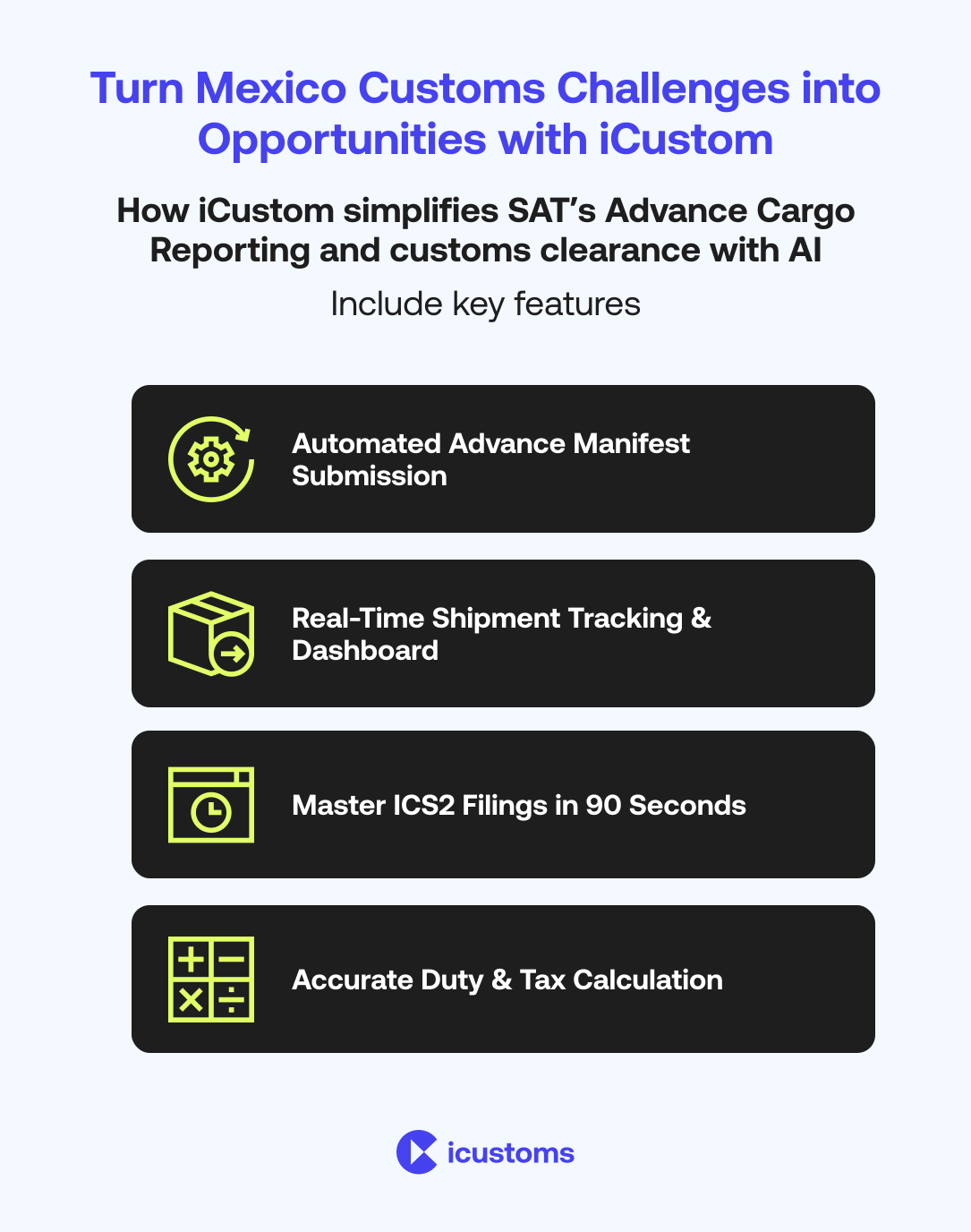
Conquering the complexities of SAT’s Advanced Cargo Reporting and customs clearance requires precision, speed, and deep regulatory knowledge. iCustom is a powerful AI digital platform designed to streamline this entire process, ensuring compliance and efficiency.
Intelligent Document Processing (iDP)
Forget manual data entry and the fear of missing a deadline. iCustoms automates the entire customs workflow, empowering your team to focus on strategy, not spreadsheets.
Intelligent Document Processing (IDP): However you receive documents—email, PDF, scanned copies—our smart AI instantly reads, extracts, and validates the key information, transforming unstructured data into a perfectly formatted submission for SAT. No more human error, no more wasted hours.
Real-Time Shipment Tracking & Dashboard: Gain complete visibility from port to porch. Our centralized dashboard provides a live status update for every shipment, allowing you to proactively manage exceptions and keep your supply chain—and your customers—informed.
Blazing-Fast ICS2 Filings: While other systems bog you down with 15-20 minute processes, iCustom’s AI validates your data and completes filings in under 90 seconds. Reclaim precious time and accelerate your European Union trade alongside your Mexican operations.
Accurate Duty & Tax Calculation: Eliminate costly surprises. Our calculation engine provides precise estimates of duties, VAT, and other taxes based on the latest Mexican tariff codes, giving you full financial control and ensuring you never overpay or face penalties for undervaluation.
Why risk delays and penalties? Let iCustoms automate your SAT filings and customs clearance from end to end. Stop Guessing. Start Complying.
Conclusion
Success in international trade with Mexico depends on a thorough understanding and execution of SAT’s customs regulations, particularly the Advance Cargo Reporting (“24-Hour Rule“) and the meticulous Pedimento clearance process. Non-compliance carries significant financial and operational risks.
Staying informed, working with experienced partners like licensed customs brokers, and leveraging technology platforms like iCustom are the best strategies to ensure compliance, minimise delays, and streamline your cross-border operations. For complex situations, always seek professional guidance to protect your business and your shipments.
You may also like:


Struggling to Extract, Catagorise & Validate Your Documents?

Capture & Upload Data in Seconds with AI & Machine Learning
Subscribe to our Newsletter
About iCustoms
iCustoms is an all-in-one solution helping businesses automate customs processes more efficiently. With AI-powered and machine-learning capabilities, iCustoms is designed to streamline your all customs procedures in a few minutes, cut additional costs and save time.
Struggling to Extract, Catagorise & Validate Your Documents?
Capture & Upload Data in Seconds with AI & Machine Learning